The amendment to the Special Act on Research and Development Zones has been promulgated and will take effect from August. This is expected to give momentum to the high-density development of the Daejeon Daedeok Special Zone.
According to the Ministry of Science and ICT on the 16th, the revised enforcement decree of the "Special Act on the Promotion of Research and Development Zones" (hereinafter referred to as the R&D Zone Act) will be enforced from August 15.
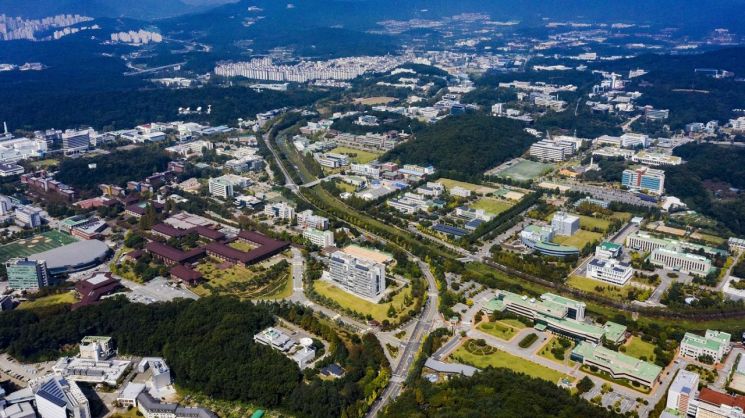
The amendment includes provisions to increase the building coverage ratio and floor area ratio of education, research, and commercialization facility zones within the special zone. The building coverage ratio in these zones will be raised from the existing 30% to 40%, and the floor area ratio from 150% to 200%.
This measure reflects the difficulty of new development due to the concentration of universities, government-funded research institutes, and laboratories in the education, research, and commercialization facility zones.
Through this, research institutions, startups, and small and medium enterprises within the special zone will be able to secure space for research and business activities by high-density construction or expansion.
The amendment also simplifies the procedures for minor changes to the special zone and expands the range of permissible buildings within the zone.
The simplification of procedures for minor changes allows changes to the special zone without consultation with the heads of related central administrative agencies or review and resolution by the Research and Development Zone Committee when the change involves less than 10% of the special zone development project area.
Additionally, the amendment expands the range of permissible buildings by use zone within the special zone to include financial institutions, electric vehicle charging stations, sports facilities such as tennis courts, and data centers.
The simplification of minor changes and the addition of permissible buildings within the special zone are scheduled to take effect from the 14th.
With the enforcement of the amendment by the Ministry of Science and ICT, Daejeon City expects to gain momentum in the high-density development of the Daedeok Special Zone.
Since the launch of the 8th local government, Daejeon City has drawn a blueprint to transform the research-centered Daedeok Special Zone into a high-density "urban-type science cluster" linking research and industry, fostering future strategic technologies and new industries.
For the same reason, Daejeon City has continuously proposed amendments to the R&D Zone Act to the political circles, the Ministry of Land, Infrastructure and Transport, and the Ministry of Science and ICT. This is why Daejeon City welcomes the enforcement of the amendment in August.
The Daedeok Special Zone I District (Daedeok Research Complex), developed as a rural-type research complex in the 1970s, faced difficulties in securing additional space due to low building coverage and floor area ratios (low-density development area). Of the total 8.4 million pyeong of the Daedeok Special Zone, 7.1 million pyeong (84%) is green space, resulting in low land utilization.
Because of this, there were limitations in establishing branch research institutes, creating exchange and convergence hub spaces, and securing space to support new industries. There was also continuous outflow of companies wishing to expand their businesses.
However, with the amendment to the enforcement decree, the Daedeok Special Zone now has the capacity to expand its building area by 1.3 million square meters and total floor area by 6,504,000 square meters.
It means that beyond the limitations of low-density development areas, new spaces for new technologies, new industries, research, and startups can be secured to support the demand of those wishing to move into the Daedeok Special Zone.
Lee Jang-woo, Mayor of Daejeon, said, "The amendment to the R&D Zone Act will serve as a catalyst to promote proactive development by existing institutions and companies in the Daedeok Special Zone struggling with space shortages, while also expanding new occupancy spaces. Daejeon City will spare no support to enable the Daedeok Special Zone to achieve a spatial transformation and grow into an integrated global innovation hub leading the next 50 years."
© The Asia Business Daily(www.asiae.co.kr). All rights reserved.
![Clutching a Stolen Dior Bag, Saying "I Hate Being Poor but Real"... The Grotesque Con of a "Human Knockoff" [Slate]](https://cwcontent.asiae.co.kr/asiaresize/183/2026021902243444107_1771435474.jpg)















