"Political Intent Ahead of Presidential Election" Criticism
"Europe Divided Due to War... Alliance Not Strong"
China's Counterattack Card Limited
Tariff Increases and Subsidy Strengthening Expected for Agricultural Products
There is a prospect that if European countries follow the United States in raising tariffs against China, some of China's industries, which have been criticized for overproduction, will undergo restructuring. It is also speculated that, in retaliation, the Chinese government may increase tariffs on low-tech American products such as agricultural goods that are easy to substitute or expand subsidies in the affected sectors.
On the 15th, Hong Kong's South China Morning Post (SCMP), citing experts, reported, "U.S. President Joe Biden's decision, driven by political motives ahead of elections, is spreading as collective action among Western countries, potentially putting China?already facing concerns of oversupply?under tariff threats."
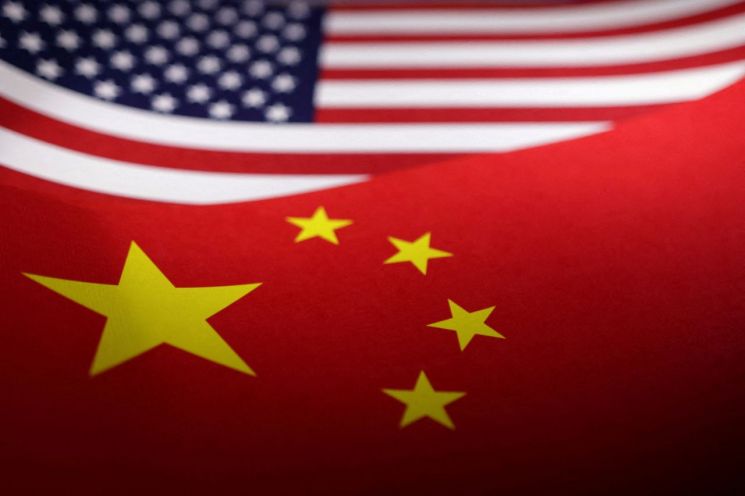
Tian Fengying, a senior researcher at the China Institute of Contemporary International Relations, told SCMP, "The European Union (EU) is about to conclude an anti-subsidy investigation into China's electric vehicle sector, and with senior U.S. officials visiting China to warn about oversupply, they are already 'synchronized' in blocking China's new energy exports." The day before, the U.S. announced plans to raise tariffs on Chinese electric vehicles from 27.5% to 100%. Tariffs on solar cells, semiconductors, batteries, and aluminum products were also increased to 25-50%.
Researcher Tian noted, "Exports of these products to the U.S. are relatively small," adding, "The intention is more psychological?to encourage (Europe) to follow suit?rather than to cause immediate and substantial damage."
There is also a view that the EU's consistent follow-up actions will be limited. Wang Yiwei, a professor in the Department of International Relations at Renmin University, explained, "Europe is already divided due to the Ukraine war, so the alliance is not solid," and "the tariff increases will not offset the overall advantages (competitiveness) of China's new energy industry."
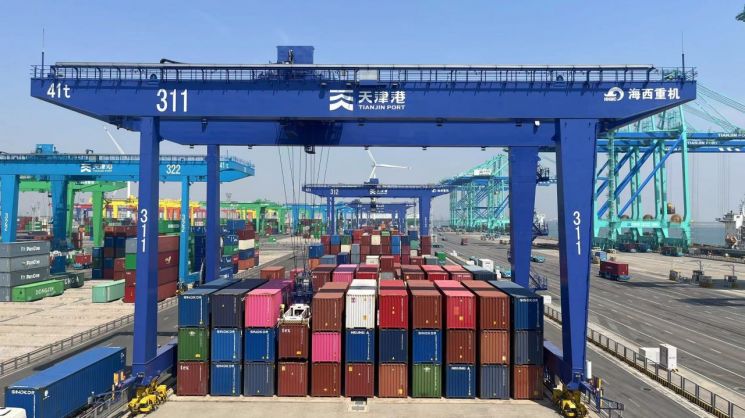
There is also speculation that the U.S. tariff hike decision will coordinate China's actual overproduction issues and ultimately lead to industrial restructuring and reorganization. Researcher Tian said, "It is true that China's production capacity is excessive in some industries," and predicted, "With increased Western pressure, there will be more mergers and acquisitions in the new energy sector." He suggested, "Inefficient companies should be eliminated, and companies that can go overseas should do so," proposing expansion into new markets such as Africa.
Jiang Chengwei, an international trade specialist at the World Economy Research Institute, said, "The U.S. tariff increase signifies the start of a long-term strategy to suppress not only finished vehicles and parts but also China's entire new energy industry," and predicted, "If the U.S. does not block China early, China will hold a significant share of the global new energy market in the future."
There is also analysis that China's countermeasures against U.S. tariff pressure may be limited. Donald Low, a professor at the Hong Kong University of Science and Technology's Public Policy Institute, said, "China's options for retaliation are somewhat limited," pointing out, "While tariff increases on U.S. products are possible, doing so on high-tech goods could harm China's technological innovation efforts." He added, "If tariffs are raised on low-tech products such as agricultural goods, Chinese consumers could choose substitutes from other countries without much impact."
He also saw that government subsidy policies for industries affected by increased tariffs could be strengthened. However, he anticipated that this would involve cost burdens and could encourage other countries to raise tariffs as well.
© The Asia Business Daily(www.asiae.co.kr). All rights reserved.
![Clutching a Stolen Dior Bag, Saying "I Hate Being Poor but Real"... The Grotesque Con of a "Human Knockoff" [Slate]](https://cwcontent.asiae.co.kr/asiaresize/183/2026021902243444107_1771435474.jpg)

















