Na Kyung-won and Yoon Chang-hyun Hold Seminar on Low Birthrate and Pension Reform
"Parents Each Get 1 Year, Total 2 Years... Need to Rename Childcare Credit"
Discussion on 30% Government Budget + 70% Fund → 100% Government Budget
As a pension reform measure to address low birth rates, there is a claim that the 'childbirth credit' system, which currently applies from the birth of the second child, should be raised to apply from the first child and benefits should be extended to both parents.
Na Kyung-won, the elected member of the People Power Party for Dongjak District, Seoul, and Yoon Chang-hyun, a member of the People Power Party, held a seminar titled "Low Birth Rate and Pension Reform for a Sustainable Tomorrow in Korea" at the National Assembly Members' Office Building on the 16th, where they discussed this issue. Dr. Kwon Da-eun, a researcher at the Population Policy Research Office of the KDI Graduate School of International Policy, who presented at the seminar, proposed a revision plan for the 'childbirth credit' system as a pension reform measure from the perspective of low birth rates.
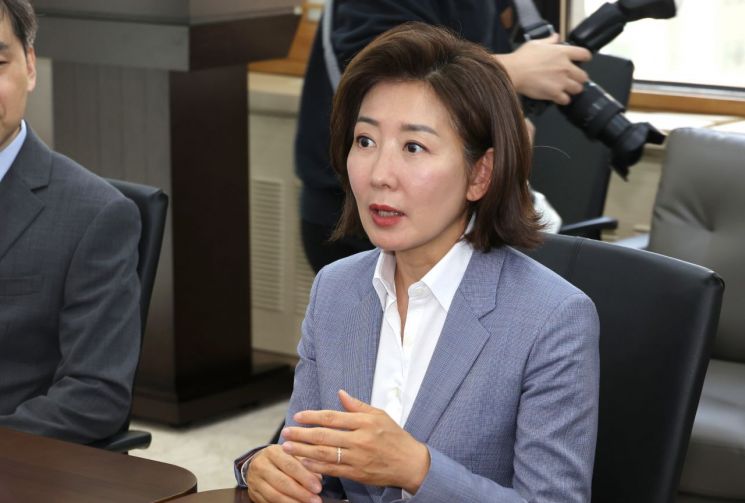 Na Kyung-won, Elected Member of the National Assembly for Dongjak-eul, People Power Party
 [Photo by Yonhap News]
Introduced in 2008, the childbirth credit system grants additional National Pension subscription periods to subscribers who have given birth to or adopted a second or subsequent child: 12 months for the second child and 18 months per child for the third child or beyond. The maximum recognized period is up to 50 months. As of June 2021, there were 2,494 recipients of childbirth credits, of whom only 39 were women. The childbirth credit is recognized when National Pension subscribers who have paid premiums for more than 10 years claim their old-age pension, but many women do not receive the actual credit benefits because they fail to meet the 10-year subscription period required for pension eligibility due to career interruptions caused by childbirth and childcare.
Dr. Kwon argued, "The childbirth credit is economically applied more to men rather than to women, who are the primary parties responsible for childbirth and childcare," and insisted that the childbirth credit should be recognized from the first child, granting two years per child (one year for the father + one year for the mother), supporting at the time of occurrence rather than at the pension payment stage, and renaming the childbirth credit to 'childcare credit.'
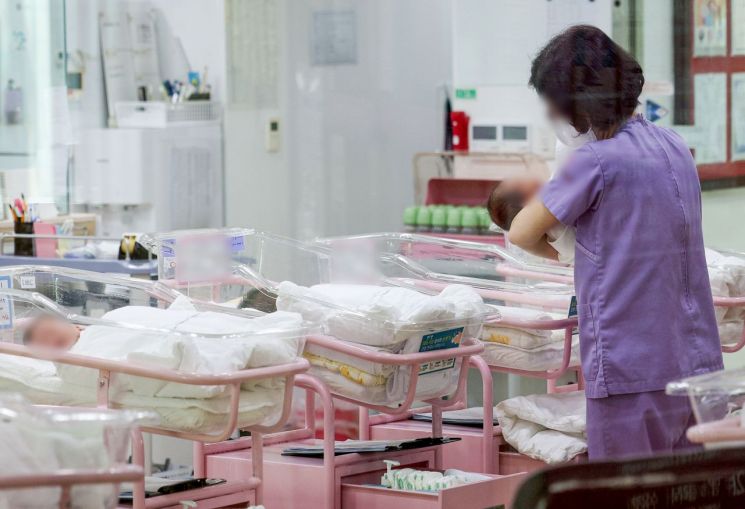
Jung In-young, a deputy researcher at the Pension System Research Office of the National Pension Research Institute, presented financial cost estimates for various childbirth credit plans during the discussion. If the childbirth credit is applied retrospectively, granting 12 months from the first child and an additional 12 months for the second child (up to a maximum of 50 months), the estimated financial cost is 256.8 billion KRW in 2040, 1.1637 trillion KRW in 2050, and 2.8032 trillion KRW in 2060. The second plan, which grants 12 months for the first child and 18 months per child thereafter (up to 50 months) and applies this support in advance, is expected to cost 1.6781 trillion KRW in 2040, 1.8331 trillion KRW in 2050, and 2.1050 trillion KRW in 2060.
© The Asia Business Daily(www.asiae.co.kr). All rights reserved.
![Clutching a Stolen Dior Bag, Saying "I Hate Being Poor but Real"... The Grotesque Con of a "Human Knockoff" [Slate]](https://cwcontent.asiae.co.kr/asiaresize/183/2026021902243444107_1771435474.jpg)
















