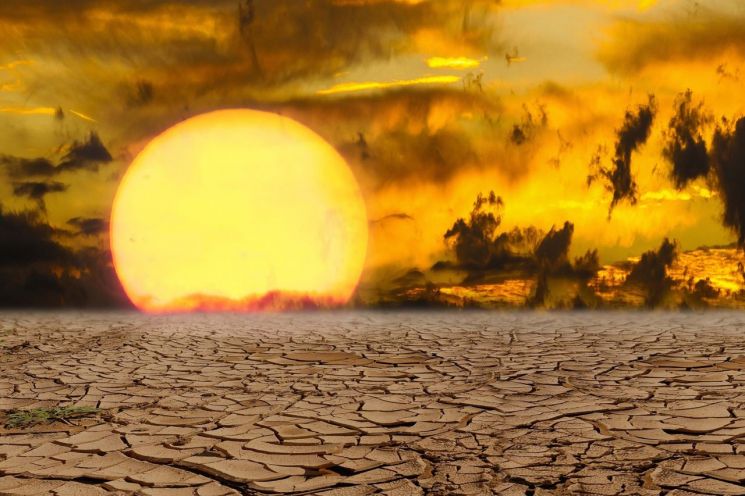
There is a claim that global warming will have a greater negative impact on the world economy than previously expected. Research results from both domestic and international sources have continuously highlighted that the rise in the Earth's average temperature triggers extreme climate disasters such as heatwaves, droughts, and floods, which in turn make people poorer.
According to the paper titled "The Macroeconomic Impact of Climate Change," published in the May working paper of NBER (National Bureau of Economic Research), a 1-degree Celsius increase in the Earth's temperature could reduce global GDP (Gross Domestic Product) by up to 12%. The paper was authored by Adrien Bilal, Assistant Professor of Economics at Harvard University, and Diego Kanzig, Assistant Professor at Northwestern University.
Previous related studies estimated that a 1-degree Celsius rise in global temperature would reduce global GDP by about 1-3%, but this paper finds a larger negative impact. The authors explained that while previous studies estimated overall results based on temperature increases in specific countries or regions, this paper expanded the research scope to include temperature changes across the entire globe.
The paper stated that the research was conducted by combining comprehensive data on temperature, wind speed, and precipitation from 173 countries over the past 120 years with economic information on GDP, population, consumption, investment, and productivity.
The study found that temperature shocks have led to an increase in extreme climate changes such as severe heatwaves, droughts, and floods, causing economic damage. In particular, when the Earth's temperature rises by 1 degree, the global real GDP drops by more than 10% about six years later, and this negative effect lasts for more than ten years. Temperature increases negatively affected key economic factors such as investment, capital reduction, productivity decline, and national income decrease. The paper emphasized that this is a shock comparable to a severe global financial crisis.
The Intergovernmental Panel on Climate Change (IPCC), under the United Nations (UN), projected that if warming continues at the current rate, the Earth's temperature could rise by up to 4.4 degrees Celsius by 2100 compared to today. This suggests that if we fail to control global warming, we will face numerous economic threats during the remaining period.
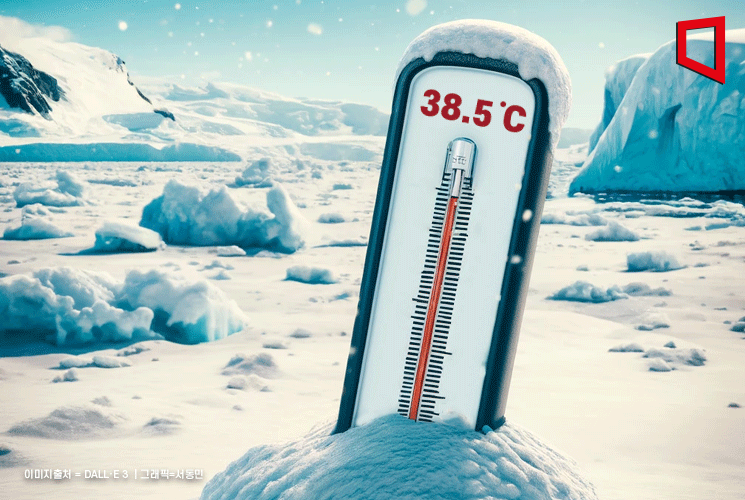
Hotter and Poorer Countries Suffer Greater Warming Shocks
Extreme climate changes are estimated to have different impacts depending on the country and region. In particular, hotter countries with an average annual temperature above 20 degrees Celsius are more vulnerable to climate change and suffer greater economic damage. This mainly applies to regions such as Sub-Saharan Africa and Southeast Asia. Analysts suggest this is also related to the lack of disaster infrastructure in these countries.
According to recent research by the University of Delaware in the United States, climate change is estimated to have reduced global GDP by about 1.8% (1.5 trillion dollars) last year. The tropical regions suffered the most from climate change, with Southeast Asia's GDP decreasing by 14.1% and Southern Africa's GDP by 11.2%, respectively.
On the other hand, Europe saw its GDP increase by nearly 5% last year, thanks to an unusually warm winter. However, this effect is expected to be offset in the long term by summer heatwaves. Professor James Rising of the University of Delaware stated, "The world has become trillions of dollars poorer due to climate change, and most of the burden has been concentrated on poor countries."
Research on the economic impact of global warming is also ongoing domestically. According to a paper titled "The Domestic Ripple Effects of Overseas Climate Change Physical Risks through Export-Import Channels," published by the Bank of Korea last October, if the Earth's average temperature continues to rise, domestic economic growth will be constrained through export-import channels.
The paper was authored by Jae-yoon Kim, Manager of the Sustainability Growth Research Team at the Financial Stability Department of the Bank of Korea; Sun-moon Jeong, Professor of Accounting at Dongguk University; and Sung-tae Lee, Professor of Electronic and Electrical Engineering at Hongik University.
The authors argued that global climate shocks caused by warming negatively affect the world economy and that these effects ripple through export-import channels to impact the domestic economy. They predicted that if warming continues, South Korea's GDP could decrease by 2.0 to 5.4% around 2100. Industries with high export dependence such as automobiles, petroleum refining, chemicals, and steel are expected to be hit.
Manager Kim emphasized, "If physical damage caused by natural disasters, which was not covered in this report, expands, overseas climate risks could cause greater damage to the domestic economy through global supply chains than expected. Domestic companies and financial institutions need to proactively respond to overseas climate risks."
© The Asia Business Daily(www.asiae.co.kr). All rights reserved.
![Clutching a Stolen Dior Bag, Saying "I Hate Being Poor but Real"... The Grotesque Con of a "Human Knockoff" [Slate]](https://cwcontent.asiae.co.kr/asiaresize/183/2026021902243444107_1771435474.jpg)
















