NYT "Cocoa Prices Fluctuate Due to Financial Speculators"
This year, cocoa futures prices, which had soared to unprecedented heights, plummeted by about 20% in a single day. This was due to growing expectations that the cocoa crop, the raw material for cocoa, would improve as humid weather was forecasted in major producing countries.
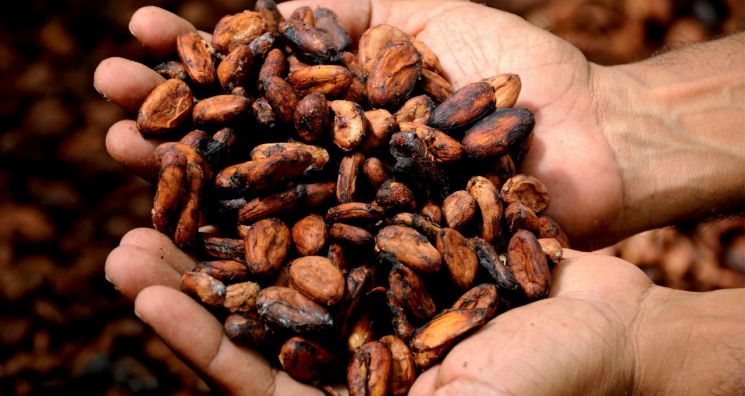
According to Bloomberg on the 13th (local time), the July delivery cocoa futures price fell by about 19.8% in one day to $7,130 per ton (t). This is the largest drop since 1960. Although cocoa prices in the U.S. futures market more than doubled this year, a sudden sharp decline unfolded.
The reason cocoa prices are so volatile is undoubtedly due to poor cocoa production caused by climate, but it is pointed out that speculative forces have further widened the price swings. The U.S. New York Times (NYT) recently analyzed that financial speculators are behind the recent sharp fluctuations in cocoa prices.
As supply became unstable, major traders worsened the situation by engaging not only in physical trading but also in futures contracts that commit to future transactions. This situation is compounded by speculation from financial investors such as hedge funds.
Tracy Allen, an agricultural strategist at JP Morgan, said in a report in early April, “All of this is becoming more complicated and driving prices up due to investor speculation,” adding, “In the past six weeks, there has been investor-driven price movement. Currently, non-commercial investors hold more than 60% of the total open interest in cocoa futures and options in the New York market. This is an all-time high.”
This led to the unusual phenomenon of cocoa futures prices surpassing $10,000 per ton this year. The impact reached South Korea as well. Lotte Wellfood, the only domestic company producing products using raw cocoa, announced that it will raise the prices of chocolate-containing products by an average of 12% next month. Ghana Mild chocolate will increase from 1,200 won to 1,400 won, Pepero from 1,700 won to 1,800 won, and Kancho from 1,200 won to 1,300 won.
For cocoa production to increase significantly, it is analyzed that more rain must fall in C?te d'Ivoire, the world's largest producing country. Cocoa prices are likely to show high volatility depending on weather forecasts in the West African region.
John Goodwin, a commodity analyst at Arrowstream, forecasted, “Price fluctuations could be significant depending on updates to West African weather forecasts and signs of demand destruction.”
© The Asia Business Daily(www.asiae.co.kr). All rights reserved.
![Clutching a Stolen Dior Bag, Saying "I Hate Being Poor but Real"... The Grotesque Con of a "Human Knockoff" [Slate]](https://cwcontent.asiae.co.kr/asiaresize/183/2026021902243444107_1771435474.jpg)















