Possibility of Plenary Session Amid Veto of 'Corporal Chae Special Investigation Act'
"Legal Controversy May Arise Depending on Timing of Veto Exercise"
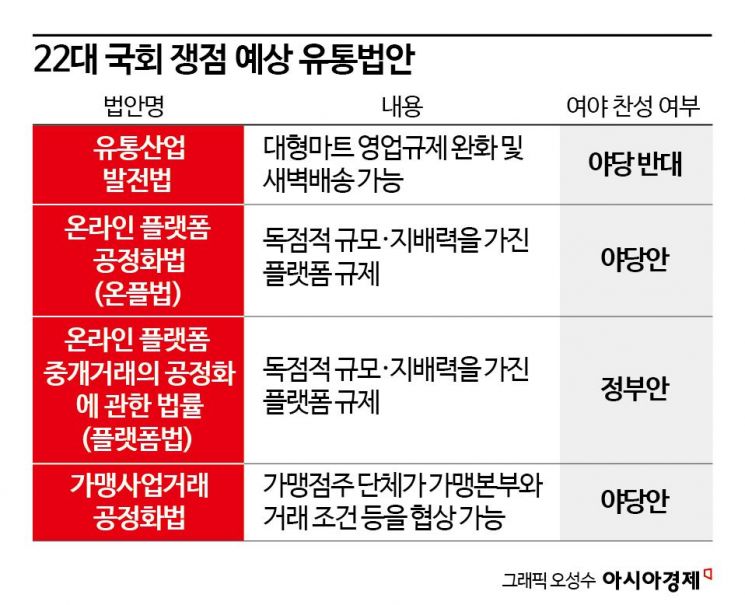
Attention is focused on whether the amendment to the Franchise Business Act, which grants collective bargaining rights to franchise owners, will pass in the final plenary session of the 21st National Assembly. As President Yoon Seok-yeol is expected to exercise his veto power regarding the 'Sergeant Chae Special Prosecutor Act,' a plenary session is anticipated before the end of the 21st National Assembly. With the Democratic Party of Korea holding an overwhelming majority, there is speculation that they may suddenly submit and forcibly pass the Franchise Business Act amendment and other bills directly referred to the plenary session.
According to the distribution industry and political circles on the 14th, the last plenary session of the 21st National Assembly is expected to be held within this month as President Yoon expressed his intention to veto the Sergeant Chae Special Prosecutor Act, which passed the National Assembly on the 2nd. If President Yoon exercises his veto, there is a high possibility that the re-vote on the Sergeant Chae Special Prosecutor Act will take place at the National Assembly plenary sessions on the 27th and 28th.
Final Plenary Session of the 21st National Assembly... Heightened Attention on Forced Passage of Franchise Business Act
Industry insiders are concerned that if this plenary session is held, contentious bills such as the Special Act on Jeonse Fraud, the Grain Management Act, and the Act on Democratic Meritorious Persons, along with the Franchise Business Act amendment directly referred to the plenary session, may be submitted.
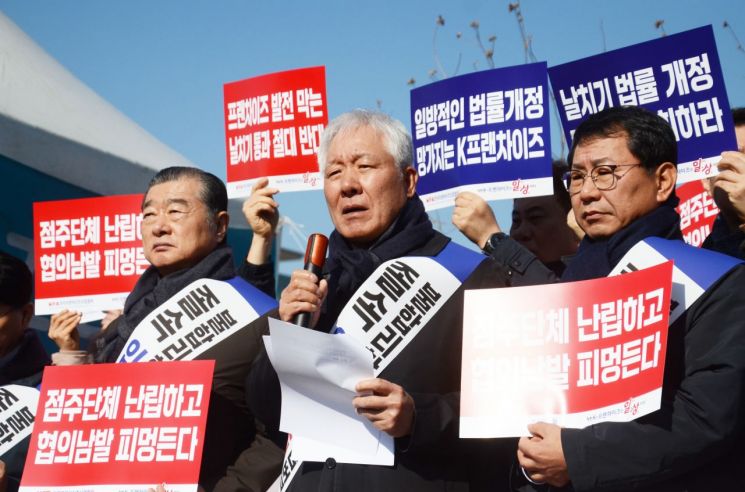
The Franchise Business Act amendment includes provisions allowing self-employed franchise owners to form groups similar to labor unions and guarantees their right to bargain with franchisors. The Democratic Party proposed the bill after repeated cases where franchise owners' councils were rejected on the grounds of lacking representation when requesting negotiations with headquarters. On the 23rd of last month, the National Assembly's Committee on Economy and Finance unilaterally referred the bill directly to the plenary session by the opposition party, but the ruling People Power Party opposed it, causing the bill not to be submitted to the plenary session.
If the amendment passes, franchise owners will be able to form groups and register with the Fair Trade Commission (FTC). Registered groups can request negotiations with franchisors. If franchisors do not respond, the FTC can impose corrective orders or file complaints as sanctions.
For this reason, franchise owners are urging the prompt passage of the amendment. On the 9th, the National Franchise Owners Council and lawmakers from the Democratic Party's Euljiro Committee held a press conference at the National Assembly, calling for the passage of the Franchise Business Act to guarantee cooperative negotiation rights for franchise owners. Kim Jin-woo, co-chairman of the National Franchise Owners Council, said, "It took more than 10 years to bring a bill containing negotiation rights to the plenary session," adding, "The Franchise Business Act must be passed and implemented as soon as possible to reduce damages to franchise stores and create a healthy franchise business environment."
On the other hand, franchisor groups, including the Franchise Association, strongly oppose the amendment. On the 25th of last month, Jung Hyun-sik, chairman of the Franchise Industry Association, stated at a National Assembly press conference, "The 1.2 million franchise industry workers oppose this one-sided and unrealistic bad law," emphasizing, "(The current amendment) must never pass the National Assembly plenary session, and if it does, we will recommend the president exercise his veto power."
President Yoon Exercises Veto... Complications in National Assembly Term
The Democratic Party plans to pass the amendment if the plenary session is held this month. Jin Sung-jun, policy chief of the Democratic Party, said at the franchise owners' council press conference on the 9th, "Democratic Party lawmakers are determined to pass the Franchise Business Act amendment no matter what before the end of the 21st National Assembly's term." Woo Won-shik, a Democratic Party lawmaker who is running for the 22nd National Assembly Speaker, also urged Speaker Kim Jin-pyo at the event to "please submit it (to the plenary session)."
However, if the amendment is passed in the final plenary session of the 21st National Assembly, the process will become complicated if President Yoon exercises his veto. According to Article 53 of the Constitution, the president must promulgate a bill passed by the National Assembly within 15 days and may exercise veto power within that period if there are objections to the bill. The problem is that the 21st National Assembly's term ends after this plenary session. If President Yoon exercises his veto after the 22nd National Assembly's term begins on the 30th of this month, there will likely be controversy over whether the new National Assembly can review (reconsider) the bill again.
A staff member from a lawmaker's office in the National Assembly's Committee on Economy and Finance said, "If the related bill is passed at the plenary session on the 28th, the Cabinet meeting should be held immediately on the 29th for the president to exercise veto power to avoid controversy," adding, "Exercising veto power after the 21st National Assembly ends on the 29th would prevent the National Assembly's reconsideration itself."
Some political circles believe that even if President Yoon exercises his veto on the Sergeant Chae Special Prosecutor Act, the possibility of the amendment being submitted to this plenary session is low. According to the National Assembly Act, the agenda for the plenary session is decided by agreement between the ruling and opposition parties, but the People Power Party opposes the amendment and other contentious bills directly referred to the plenary session. Therefore, the opposition party is urging Speaker Kim Jin-pyo to exercise his authority to submit the bill. However, it is widely expected that Speaker Kim will not recklessly use the authority to submit the bill as his term is about to expire.
However, once the 22nd National Assembly convenes, it is expected that the amendment will be processed more quickly. Most lawmakers from the Euljiro Committee, including Jin Sung-jun, who have led the amendment's processing, will continue to serve in the 22nd National Assembly. A franchise industry official said, "Jin Sung-jun was appointed as the Democratic Party's policy chief this time, and lawmakers like Park Ju-min and Min Byung-duk, who voiced strong opinions, will remain in the 22nd National Assembly, increasing the likelihood of the amendment's passage," adding, "Since the election results were a landslide victory for the opposition, there is also a resigned atmosphere saying this law is 'what the people want.'"
© The Asia Business Daily(www.asiae.co.kr). All rights reserved.
![Clutching a Stolen Dior Bag, Saying "I Hate Being Poor but Real"... The Grotesque Con of a "Human Knockoff" [Slate]](https://cwcontent.asiae.co.kr/asiaresize/183/2026021902243444107_1771435474.jpg)

















