US Oil Industry Entangled in Lawsuits
At Least 10 Class Actions
Expected to Keep Flooding In
US Oil Company Allegedly Colluded with OPEC
to Maintain High Oil Prices, Claims US Antitrust Authorities
The major U.S. shale oil industry is embroiled in a class-action lawsuit alleging collusion to raise crude oil prices. This follows claims made earlier this month by U.S. competition authorities that the former head of Pioneer Natural Resources participated in conspiratorial activities to increase oil prices.
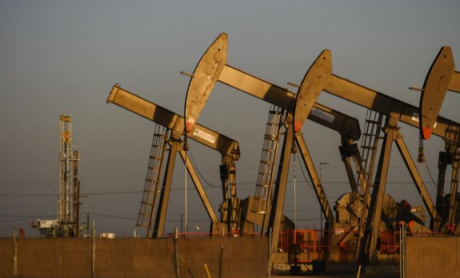
According to major foreign media on the 13th (local time), ExxonMobil, Occidental Petroleum, and Diamondback Energy have been named in at least 10 class-action lawsuits alleging that they coordinated and restricted shale oil production to drive up retail gasoline prices in the U.S.
The most recent lawsuit was filed the previous day in a New Mexico district court, targeting the industry's shift in recent years from rapidly increasing production amid high crude prices to a capital discipline model focused on paying dividends to investors. The plaintiffs argued, "Despite the sharp rise in crude prices following Russia's invasion of Ukraine, the U.S. industry collectively refrained from significantly increasing production, which is an unusual practice deviating from historical norms and rational self-interest."
The U.S. shale industry became subject to class-action lawsuits after the Federal Trade Commission (FTC) earlier this month alleged that Scott Sheffield, former CEO of Pioneer Natural Resources, conspired with the Organization of the Petroleum Exporting Countries (OPEC) to generate unfair profits by raising oil prices. The FTC discovered that during its antitrust investigation into ExxonMobil's $60 billion acquisition of Pioneer, Scott Sheffield sent hundreds of messages containing price and production level information to OPEC representatives, and approved the merger conditionally, requiring his exclusion from ExxonMobil's board of directors.
While ExxonMobil's acquisition of Pioneer marked a successful mega-deal in the fossil fuel industry since the late 1990s, Pioneer responded to the FTC's claims by stating that they "reflect a fundamental misunderstanding of the U.S. and global oil markets and mischaracterize the nature and intent of former CEO Sheffield's actions," and ExxonMobil also said in a statement that "the FTC's allegations do not align with how we conduct our business."
Nevertheless, more class-action lawsuits are expected to be filed. Thomas Burt, a partner at the law firm Wolf Haldenstein representing plaintiffs in New Mexico, explained, "We represent drivers in Illinois, Colorado, Nevada, and Massachusetts who claim they paid more for gasoline due to industry collusion."
Lawyers representing plaintiffs in a class-action lawsuit filed this week in Nevada have requested a judge to compel Pioneer to hand over communications, including former CEO Sheffield's social media WhatsApp messages. The plaintiffs allege that eight shale oil companies conspired with OPEC to raise marine fuel prices. Stuart Gross, an attorney at the law firm Gross Klein PC, said, "We now know there is evidence that the industry collusion was organized," adding, "It will be increasingly difficult for the defendants to deny this."
The plaintiffs in the class-action lawsuits against the shale oil industry argue that the industry violated the Sherman Act, state antitrust laws, and consumer protection laws designed to prohibit collusion or mergers for monopoly purposes and to promote competition.
However, legal experts say it is still uncertain whether the statements collected by the FTC from former CEO Sheffield constitute evidence of collusion. Eric Grannon, an antitrust specialist at the law firm White & Case, emphasized, "A unilateral statement that raising prices or reducing production is in the common interest is not a violation of antitrust laws. There must be an agreement (among the industry) for a violation to occur." Foreign media also reported that it is not yet known whether the FTC will refer the matter to the Department of Justice for further investigation of former CEO Sheffield.
© The Asia Business Daily(www.asiae.co.kr). All rights reserved.
![Clutching a Stolen Dior Bag, Saying "I Hate Being Poor but Real"... The Grotesque Con of a "Human Knockoff" [Slate]](https://cwcontent.asiae.co.kr/asiaresize/183/2026021902243444107_1771435474.jpg)















