Former Diplomat and Japanese Restaurant Kiriyamahonjin CEO
"Administrative Guidance, an Unprecedented System Worldwide"
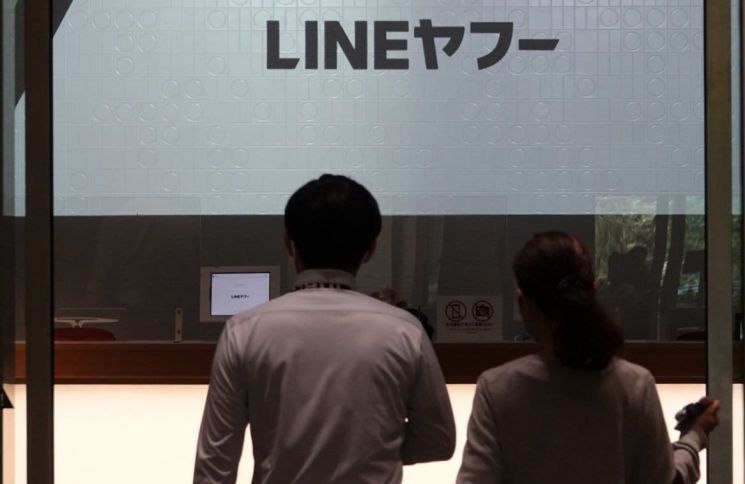
Shin Sang-mok, former first secretary of the Embassy of Korea in Japan, known as the "Diplomat-turned-Japanese Restaurant Owner," posted a critique on his SNS about the recent LINE incident, criticizing the archaic nature of Japan's unique administrative guidance system.
On the 12th, Shin wrote an article titled "The Difference Between the U.S. and Japan," questioning, "What is the difference between the U.S. forcing the sale of TikTok and Japan meddling with LINE's shareholding issues?" He pointed out the most significant difference as Japan's administrative guidance system, which is rare worldwide.
He noted that the U.S. crackdown on TikTok was led by Congress, which enacted the "TikTok Ban Act," allowing TikTok to challenge the constitutionality of the law in court. He described this as a "typical principle of the rule of law with checks and balances among the three branches of government." In contrast, regarding Japan, he explained, "The difference is that they touched on the shareholding issue through administrative guidance."
Shin stated, "The problematic aspect of administrative guidance is that, since it lacks enforceability, it is difficult to dispute in court." He added, "People are afraid of being labeled as uncooperative, so it is hard to file lawsuits, and even if they go to court, since it is not a formal administrative disposition, it is difficult to be recognized as a subject of administrative litigation." He also mentioned, "Many scholars believe its origin is a legacy of the prewar national mobilization system."
Shin explained, "As far as I know, except for China or similar socialist systems, only Korea and Japan have such a system where the government can 'blow its nose without using its hands.'" He added, "At least in Korea, administrative agencies tend to exercise self-restraint, but in Japan, administrative guidance is still frequently used." He criticized, "Even for Japan, directly mentioning corporate shareholding issues crosses the line."
Shin graduated from Whimoon High School and Yonsei University Law School and passed the 30th Foreign Service Examination in 1996. He served as the first secretary at the Embassy of Korea in Japan, among other positions. After leaving the diplomatic service, he opened a Japanese restaurant called "Kiriyama Honjin" near Gangnam Station in Seoul in 2012.
Based on his deep understanding of Japanese society, he has written books such as "Japanese History Not Taught in Schools" and currently writes a column titled "A Piece of Sushi by Shin Sang-mok" for the Chosun Ilbo.
© The Asia Business Daily(www.asiae.co.kr). All rights reserved.
![Clutching a Stolen Dior Bag, Saying "I Hate Being Poor but Real"... The Grotesque Con of a "Human Knockoff" [Slate]](https://cwcontent.asiae.co.kr/asiaresize/183/2026021902243444107_1771435474.jpg)















