Longest Decline Period in History
Japan's real wages for workers have declined for 24 consecutive months, the Nihon Keizai Shimbun (Nikkei) reported on the 9th.
According to the "March Labor Statistics Survey" (preliminary figures) released by Japan's Ministry of Health, Labour and Welfare on the same day, the average nominal monthly wage per worker at companies with five or more employees increased by 0.6% year-on-year to 301,193 yen (approximately 2.65 million KRW).
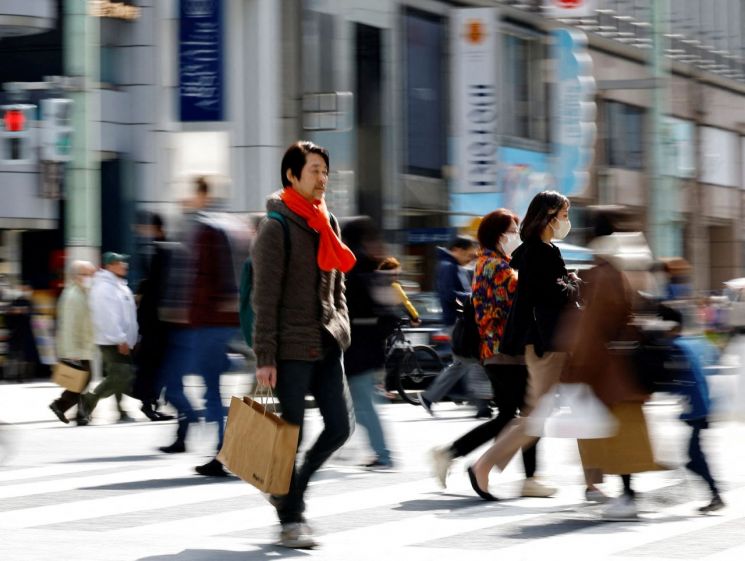
However, during the same period, real wages adjusted for price changes actually decreased by 2.5%.
The 24 consecutive months of decline in real wages is the longest on record since 1991. From September 2007 to July 2009, during the Lehman Brothers crisis which caused an economic downturn, real wages fell for 23 consecutive months.
The consumer price index used to calculate real wages rose by 3.1% in March. Although prices surged sharply, wage increases have not kept pace, resulting in a decline in real wages.
The Japanese government has encouraged companies to raise wages to escape deflation (falling prices amid economic stagnation). Japan's largest labor union organization, Rengo (Japanese Trade Union Confederation), announced last month that the average wage increase rate in spring wage negotiations was 5.24% based on interim results. The outcomes of the spring labor offensive are expected to be reflected starting as early as April.
Nikkei stated, "With the current rapid depreciation of the yen and soaring crude oil prices continuing, there is concern that inflation may accelerate again," adding, "The high wage increase rates achieved in the spring labor offensive could also be offset."
© The Asia Business Daily(www.asiae.co.kr). All rights reserved.

















