Financial Supervisory Service 'IPO Underwriting System Improvement Meeting'
Partial Standardization of Valuation Criteria in Company Due Diligence Previously Entrusted to Securities Firms
Strengthening Internal Controls
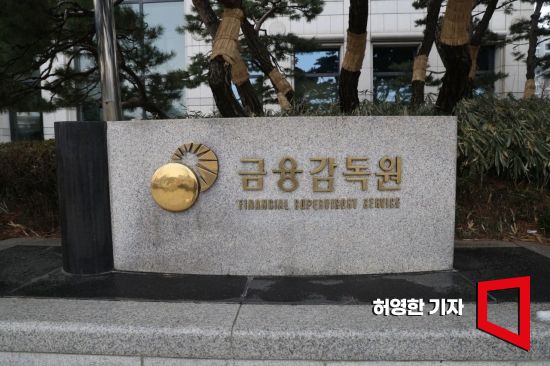
On the 9th, a plan to improve the system for initial public offering (IPO) underwriting was unveiled to prevent a "second Pado incident." The flawed practice of issuers not paying any fees to underwriters in the event of a failed listing will be overhauled. The valuation criteria during the due diligence process, which had been left entirely to the discretion of securities firms, will be partially standardized, and internal control regulations will be strengthened. Disclosure forms will also be standardized, and the due diligence officer responsible will be specified to establish grounds for sanctions in case of future due diligence failures.
Kim Jeong-tae, Deputy Governor of the Financial Supervisory Service (FSS), held an "IPO Underwriting System Improvement Meeting" at the Korea Financial Investment Association in Yeouido, Seoul, on the morning of the same day. He emphasized, "To restore market trust, it is necessary to △ enhance independence △ strengthen accountability in corporate due diligence △ improve rationality in public offering price calculation △ ensure thorough disclosure △ and reinforce internal controls," adding, "Underwriters will perform their duties with sufficient autonomy, but the FSS will take strict measures if market trust is seriously damaged."
The core of this system improvement plan is to strengthen the responsibility and independence of IPO underwriters. The essence of underwriting is to resolve information asymmetry between issuers and investors and to present an appropriate public offering price through corporate valuation. However, in reality, these fundamental functions have not been adequately fulfilled, leading to growing calls for system reform. For example, Pado, a fabless (semiconductor design specialist) company, entered the stock market last August through a technology evaluation. The annual sales estimate presented during this process was 120.2 billion KRW, but the actual sales in the second quarter of last year were only 59 million KRW, drawing criticism for excessively inflating performance. NH Investment & Securities and Korea Investment & Securities, which underwrote the IPO, were also criticized for inadequate corporate due diligence. The FSS formed a task force last December, including market experts and financial investment industry participants, and has been preparing improvement measures over four months.
First, the authorities will improve the fee structure to enhance the independence of underwriters. Previously, due to the business practice where underwriters did not receive compensation if the lead underwriting contract was terminated, underwriters sometimes proceeded with IPOs even when the listing eligibility was low. This led to forced listings, overvaluation of public offering prices, and omission of significant investment risks.
Going forward, the underwriting regulations will be revised so that underwriters can perform their duties independently without being swayed by unfair demands from issuers. It will be mandatory to include in contracts provisions regarding compensation for underwriting work performed up to the termination date in case of lead underwriting contract termination. Additionally, fee collection not specified in the contract will be prohibited, and the composition and payment conditions of fees must be transparently disclosed.
Formalistic corporate due diligence will also be strictly addressed. During the due diligence process, compliance items such as categories, methods, and verification procedures will be codified, and legal responsibilities, including grounds for sanctions in case of due diligence failures, will be strengthened. The due diligence officer will be disclosed, and verification procedures and opinion sections will be included in disclosure forms.
Internal standards related to public offering price calculation, which varied by securities firm, will also be established. Underwriters will be required to develop their own standards for estimates, peer group selection, and internal verification procedures to improve the appropriateness of public offering price calculation. The Korea Financial Investment Association will also prepare "IPO Public Offering Price Determination Standards and Procedures" to support securities firms in establishing internal standards.
Disclosure forms will be standardized and simplified to ensure that key investment decision information is not omitted. They will comprehensively include issues raised during exchange reviews, such as governance and internal control weaknesses, as well as past stock issuance information. Standardized disclosure forms will also be prepared for corporate due diligence and underwriting and underwriting fees.
Internal control standards related to IPO underwriting will be strengthened. Currently, obligations are only declaratively stipulated, lacking specific content that should be included in internal control standards. Accordingly, matters to be confirmed before contract signing, such as lead underwriting fees and contract termination conditions, will be specified. The underwriting regulations will also include standards for the composition of corporate due diligence teams, internal review decision criteria, methods for reflecting demand forecast results in public offering price calculation, internal review procedures before listing application, and documentation and retention procedures for underwriting activities.
To this end, the FSS plans to promote system improvements, including revisions to regulations on securities underwriting, by the second quarter of this year. Additionally, to ensure the stabilization of these improvements, a field inspection of major underwriters' operations will be conducted in the fourth quarter. The Korea Financial Investment Association will also revise financial investment business regulations by the third quarter.
Meanwhile, the FSS plans to prepare improvement measures for the demand forecasting system, which has been raised as a major issue in the IPO market, in the second half of this year.
© The Asia Business Daily(www.asiae.co.kr). All rights reserved.

















