Despite 8,000 Flight Cancellations from May to July 2022, Ticket Sales Continue
Agreement Reached on 90 Billion Won Fine and 18 Billion Won Customer Compensation
Qantas Airways of Australia, which was reported to authorities for continuing to sell tickets for flights that had been canceled, has agreed with the authorities to pay a fine and compensation totaling AUD 120 million (approximately KRW 108 billion) to settle the lawsuit.
On the 6th (local time), foreign media reported that Qantas Airways and the Australian Competition and Consumer Commission (ACCC) agreed that Qantas would pay a fine of AUD 100 million (approximately KRW 90 billion) and compensate more than 86,000 customers who booked so-called 'ghost flights' with AUD 20 million (approximately KRW 18 billion). This represents the largest fine ever imposed in the Australian aviation industry.
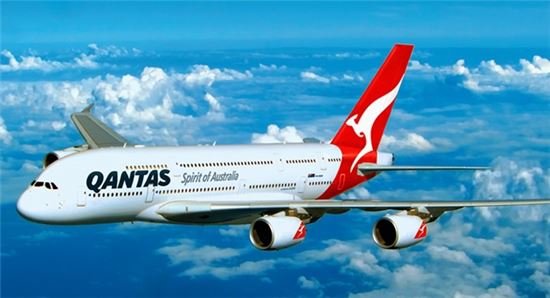
In August last year, the ACCC filed a lawsuit against Qantas Airways in federal court for violating consumer law, alleging that between May and July 2022, Qantas sold tickets for canceled flights and failed to properly notify customers who had already purchased tickets about the cancellations, causing harm.
At that time, about 15,000 flights, equivalent to approximately one-quarter of Qantas's 66,000 domestic and international flights, were canceled, and among these, 8,000 flights had tickets sold on the website for an average of two weeks, and in some cases more than a month, even after the cancellation was decided. Additionally, for more than 10,000 flights, customers who purchased tickets before the cancellation decision were not informed of the cancellation within two days.
Regarding this, the ACCC pointed out, "About 70% of Qantas's canceled flights continued to have tickets sold or failed to immediately notify buyers of the cancellations after the flights were canceled," adding, "Qantas's failure to provide real-time information on canceled flights left customers with insufficient time to arrange alternative flights, which may have caused customers to incur higher costs."
The Guardian Australia criticized Qantas for engaging in so-called 'slot hoarding' by over-scheduling flights on high-demand routes such as Sydney-Melbourne and Sydney-Canberra to block competitors from entering the market, resulting in many flight cancellations. As of April last year, Qantas's market share in Australia, including its wholly owned low-cost carrier (LCC) Jetstar, exceeded 60%.
Qantas explained, "The period from May to July 2022 was a time when people's movement increased again after COVID-19," calling it "an unprecedented period of upheaval in the aviation industry." Initially, Qantas loudly declared it would fight the matter through litigation but eventually reached a dramatic settlement, seemingly to prevent damage to the company's image due to a flood of customer complaints. The lawsuit will be concluded once the agreement between Qantas and the ACCC receives court approval.
Vanessa Hudson, CEO of Qantas Airways, stated in a press release, "We acknowledge that we disappointed our customers and fell short of our own standards." She added, "This settlement allows us to compensate customers more quickly than if the lawsuit had proceeded." Gina Cass-Gottlieb, Chair of the ACCC, said, "This fine agreed upon by Qantas will send a strong message to other companies."
© The Asia Business Daily(www.asiae.co.kr). All rights reserved.
















