Saving Bonuses to Buy Luxury Goods? Saying Goodbye to Spending Habits
Top Concern: Investment Information via Financial Accounts
Interest Shifts from Clothing Mall Purchases to ETF Buying
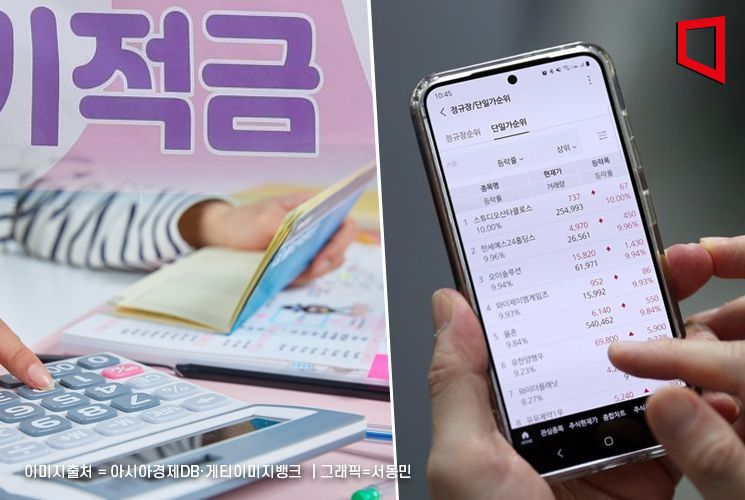
Choi Yoonji (28), a second-year office worker, has bid farewell to her habit of buying luxury goods once a year with her performance bonuses. Recently, her main interest has been gathering investment information through popular social networking service (SNS) finance accounts. Using the information she obtained there, Choi signed up for a savings account offering up to 6% interest. She also started investing her surplus funds in promissory notes. Previously busy paying off credit card bills due to overspending, she has now transformed into a finance novice waiting for the maturity dates of four savings accounts.
Lee Hyunji (30), a third-year office worker, has also started using the 300,000 won she used to spend monthly on online clothing shopping to purchase semiconductor-related exchange-traded funds (ETFs) this year. Recently, she has been accumulating points through a financial app that tracks her step count and rewards points. The points she collects are converted into cash and used to supplement stock purchase costs.

The MZ generation (Millennials + Generation Z), which had been the center of consumption, is turning its attention to finance amid the prolonged economic downturn. As the economy shows little sign of recovery, they have started tightening their belts instead of engaging in conspicuous consumption.
This frugality among the MZ generation is also reflected in statistics. According to a survey conducted last year by market research firm Embrain Trend Monitor on 1,000 adults nationwide, a tendency toward low consumption was prominent among people in their 20s and 30s. When asked about their thoughts on spending, 56% of respondents in their 20s and 58% in their 30s answered that "it is important to spend as little money as possible." The response rates for those in their 40s and 50s were in the 40% range.
Another characteristic distinguishing them from older generations is their active use of SNS and YouTube to find investment channels for finance. They find it more convenient to obtain information suited to their level through SNS posts and videos rather than books. Some YouTube finance channels operate paid finance courses targeting this audience. One finance channel with 600,000 subscribers has maintained its popularity with course fees in the 300,000 won range, continuing through its ninth session.
Lee (29), who has been working at an IT company for four years, said, "I joined an economic newspaper reading group through an online community for office workers, but I struggled to understand many parts due to lack of knowledge." He added, "Recently, I heard that a YouTuber offers lectures for beginners, so I signed up for a paid finance course."

On SNS, finance accounts consistently share information about high-interest special savings accounts and app-based finance (app-tech) that can generate additional income. Community groups on X (formerly Twitter), where members sharing common interests can form groups, are also popular among MZ generation interested in finance. The 'Women’s Finance Board' community, where female members gather to share investment information, has surpassed 5,000 members.
Kim Jihwan (29), who has been working at a marketing company for four years, said, "On X, members presumed to be financial industry professionals explain macroeconomic background knowledge such as U.S. interest rate forecasts and the yen exchange rate." He added, "It is very helpful for understanding the big picture, so I use X to gain insights."
Experts believe that the decrease in consumption due to the economic downturn has led to increased interest in finance among the MZ generation. Professor Lee Eunhee of Inha University’s Department of Consumer Studies analyzed, "As the MZ generation faces an era of high interest rates and high inflation with declining real income, they have realized that conspicuous consumption is not desirable." She added, "It appears to be the result of continuous reflection on how to live appropriately to prepare for the future amid harsh realities."
© The Asia Business Daily(www.asiae.co.kr). All rights reserved.



















