Boheomyeon 2il Seminar Held
In the general property and casualty insurance market, which covers fire and maritime accidents, the proportion of small and medium-sized enterprises (SMEs) insured in South Korea is only about half that of major countries. It has been pointed out that related organizations for SMEs and government agencies need to establish a cooperative system to minimize the insurance coverage gap for SMEs.
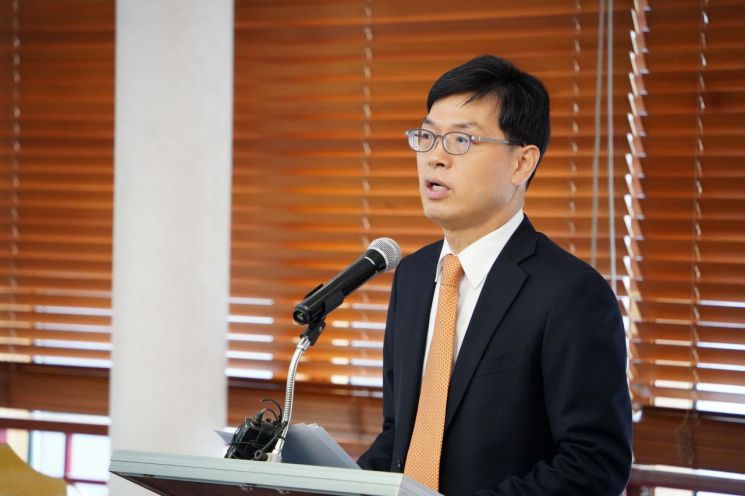
On the 2nd, the Korea Insurance Research Institute held a seminar on the theme of "Current Status and Issues of the SME Insurance Market." Kim Hyesung, an international loss adjuster advisor, and Kim Seokyoung, a senior research fellow at the Korea Insurance Research Institute, presented on the topic of "Current Status and Issues of the Domestic SME Insurance Market," discussing the size of the domestic SME insurance market and the insurance subscription characteristics of manufacturing SMEs.
The global commercial insurance market amounts to $840 billion (approximately 1,157 trillion KRW). Of this, the domestic commercial insurance market accounts for only 0.9%. While SMEs account for over 60% of the commercial insurance market in major countries, the proportion of domestic SMEs remains between 22.3% and 34.2%.
The insurance subscription rate of domestic manufacturing SMEs is quite low except for fire insurance and group accident insurance. Compared to major countries, there is a notably large coverage gap in business interruption insurance and cyber risk insurance. This is due to the financial burden of premiums according to the financial situation of SMEs and a low awareness of insurance as a risk management tool. There is also a lack of awareness about which insurance is necessary depending on the industry and business practices of SMEs. Senior Research Fellow Kim Seokyoung said, "Unlike in Korea, major countries conduct regular surveys on the SME insurance market," adding, "Through this, various studies and surveys are conducted not only on insurance subscription rates and new demand but also on customer strategies and sales channel strategies."
The Korea Insurance Research Institute suggested that to advance SME risk management and minimize coverage gaps, collaboration systems should be established among property and casualty insurers, mutual aid industries, SME-related organizations, and relevant government ministries. Since the main sales channels in the SME insurance market are insurance agents and agencies, it was also emphasized that their risk consulting capabilities need to be enhanced. In a survey, SMEs identified "government or local government premium support" (28.5%) as the most effective support measure to increase their intention to purchase additional insurance in the future.
Choi Yongmin, Executive Director of Munich Re, continued the presentation under the theme "Business Efficiency Improvement Plan Using SME-Big Data Analysis." He presented ideas on what insurance companies should prepare for if SME insurance grows.
Executive Director Choi pointed out that in the case of SME property risks, the frequency of accidents is high, and the possibility of total loss is high compared to the low premiums, resulting in relatively low retention rates by property and casualty insurers. He argued that insurers need to attract more and high-quality SME customers to secure a sufficient reserve fund and establish a profit base. Executive Director Choi said, "By utilizing big data to select target risk customer groups and marketing through appropriate channels, insurers can improve profitability," adding, "It is necessary to develop SME-exclusive products and coverage and prepare industry-specific risk surveys specialized for them."
© The Asia Business Daily(www.asiae.co.kr). All rights reserved.
![Clutching a Stolen Dior Bag, Saying "I Hate Being Poor but Real"... The Grotesque Con of a "Human Knockoff" [Slate]](https://cwcontent.asiae.co.kr/asiaresize/183/2026021902243444107_1771435474.jpg)
















