Memory Market Improvement
Strong Sales of Flagship Smartphones
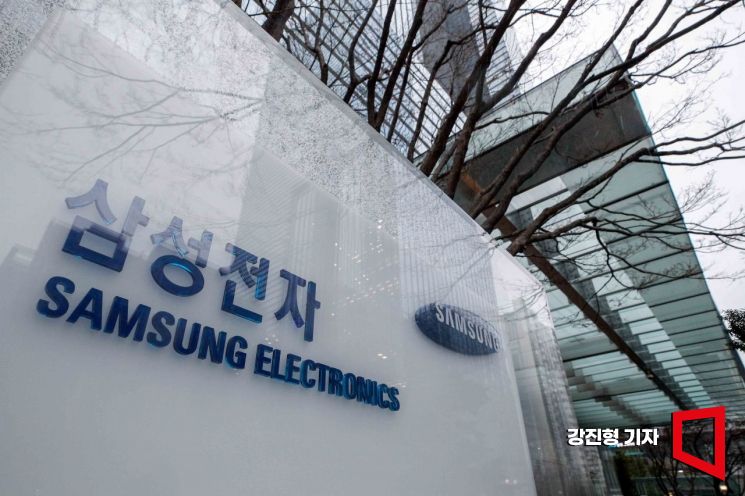
Samsung Electronics recorded a 'surprise performance' thanks to the memory semiconductor division's return to profitability and strong sales of its flagship smartphone, the 'Galaxy S24.'
On the 30th, Samsung Electronics announced that it posted consolidated sales of 71.9156 trillion KRW and an operating profit of 6.606 trillion KRW in the first quarter of this year. These figures represent increases of 12.8% and 931.9%, respectively, compared to the same period last year. Sales and operating profit also rose by 6% and 133.87%, respectively, compared to the previous quarter, the fourth quarter of last year.
Quarterly sales recovered to the 70 trillion KRW level for the first time in five quarters since the fourth quarter of 2022. The first quarter operating profit exceeded the total profit earned throughout last year (6.57 trillion KRW).
By division, the Device Solutions (DS) division, which handles the semiconductor business, recorded sales of 23.14 trillion KRW and an operating profit of 1.91 trillion KRW. The DS division returned to profitability for the first time in five quarters since the fourth quarter of 2022 (270 billion KRW). Last year, it recorded an annual loss approaching 15 trillion KRW due to the semiconductor market downturn.
Profitability improved more than expected due to an increase in the reversal of inventory valuation loss provisions following price rises in DRAM and NAND.
The memory market showed strong overall purchasing demand amid ongoing price increases, and strong demand for DDR5 and high-capacity SSDs continued from the previous quarter, leading to a return to profitability. Samsung Electronics achieved qualitative growth by responding to demand for high-value-added products such as High Bandwidth Memory (HBM), DDR5, and server SSDs.
In the case of System LSI, supply of components such as system-on-chip (SoC) and sensors for major customers' new products increased, but performance improvement was slower than expected due to a decline in DDI sales caused by weakening panel demand.
The Foundry business experienced delayed sales improvement due to inventory adjustments, but the deficit narrowed slightly thanks to efficient fab (semiconductor manufacturing plant) operations, and it recorded the highest order intake ever for a first quarter.
The Device Experience (DX) division posted sales of 47.29 trillion KRW and an operating profit of 4.07 trillion KRW.
The Mobile Experience (MX) division, responsible for smartphones, saw increases in sales and operating profit due to strong sales of the first AI phone, the Galaxy S24, despite a shrinking smartphone market. MX division sales were 33.53 trillion KRW, and operating profit was 3.51 trillion KRW. Compared to the same period last year, sales decreased by 5%, and operating profit decreased by 0.44%.
The Visual Display (VD) and home appliances division recorded sales of 13.48 trillion KRW and an operating profit of 530 billion KRW. Sales slightly declined compared to the same period last year (14.08 trillion KRW), but operating profit improved significantly. The TV business saw a decline in performance compared to the previous quarter due to the off-season, while the home appliance business improved profitability as the sales proportion of high-value-added products such as Bespoke AI increased.
Samsung Display (SDC) posted sales of 5.39 trillion KRW and an operating profit of 340 billion KRW. Harman recorded sales of 3.2 trillion KRW and an operating profit of 240 billion KRW.
Capital expenditure in the first quarter was 11.3 trillion KRW, with 9.7 trillion KRW for semiconductors and 1.1 trillion KRW for displays, representing an increase of 600 billion KRW compared to the same period last year.
© The Asia Business Daily(www.asiae.co.kr). All rights reserved.
![Clutching a Stolen Dior Bag, Saying "I Hate Being Poor but Real"... The Grotesque Con of a "Human Knockoff" [Slate]](https://cwcontent.asiae.co.kr/asiaresize/183/2026021902243444107_1771435474.jpg)















