Major Yoon Gil-byeong Selected as Army Hero of the Korean War
In May, Army Major Yoon Gil-byeong (photo) was selected as a ‘6.25 War Hero,’ and independence activists Chae Chan, Kim Chang-gyun, Jang Chang-heon, and Lee Chun-hwa were chosen as ‘Independence Activists.’
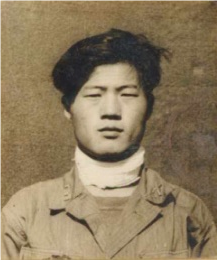 Major Yoon Gil-byeong, Army
According to the Ministry of Patriots and Veterans Affairs on the 30th, Chae Chan, Kim Chang-gyun, Jang Chang-heon, and Lee Chun-hwa were independence activists who attempted to assassinate Governor-General Sait? Makoto of Joseon.
Chae Chan, born in Chungju, Chungbuk (year unknown), graduated from the Shinheung Military Academy in Manchuria and engaged in armed struggle with the Seoro Military Government Office and Tonguiboo. Kim Chang-gyun, born in 1899 in Changseong, Pyeongbuk, joined Tonguiboo in 1922 and carried out attacks on Japanese institutions. Jang Chang-heon, born in 1884 in Yongcheon, Pyeongbuk, and Lee Chun-hwa, born in 1896 in Daedong, Pyeongnam, participated in armed struggles as members of the Korean Tonguiboo Volunteer Army.
On May 19, 1924, Kim Chang-gyun, Jang Chang-heon, and Lee Chun-hwa carried out an assassination attempt against Governor-General Sait?, who was inspecting the border upstream of the Amnok River, under the orders of Chae Chan, then Chairman of the Chamuibu. The Japanese police reportedly fled without responding. Although the assassination attempt was unsuccessful, it was widely reported in many newspapers such as the Independence Newspaper and is regarded as an event that inspired anti-Japanese sentiment. In recognition of their merits, the government posthumously awarded Chae Chan the Order of Independence in 1962, Kim Chang-gyun the Order of Independence in 1995, and Jang Chang-heon and Lee Chun-hwa the Order of Patriotism in 1995.
Army Major Yoon Gil-byeong, the ‘6.25 War Hero of May,’ died in battle during a hill fight. Born in 1931 in Gyeongju, Gyeongbuk, Yoon graduated from Andong Normal School and worked as a teacher at his alma mater, Geoncheon Elementary School in Gyeongju. When the war broke out, he volunteered for the army and was commissioned as a second lieutenant on January 20, 1951. Assigned as a platoon leader in the 2nd Regiment of the 6th Division, he distinguished himself in battles at Sachang-ri, Hwacheon, Gangwon Province, and Yongmunsan, Yangpyeong, Gyeonggi Province.
On January 30, 1953, he was appointed commander of the 10th Company, 3rd Battalion, 12th Division, and was tasked with defending Hill 812, a critical point on the central-eastern front in the Inje area of Gangwon Province. From June 1, the North Korean 45th Division launched an attack on Hill 812, focusing on the 10th Company’s position. Amidst the ongoing battle of losing and retaking the hilltop, Major Yoon, surrounded by the enemy, led his troops into a cave fortification, refused to surrender, and fought until he was killed in action on June 8.
In recognition of his service, the government awarded him the Hwarang Military Merit Medal in 1951 and promoted him one rank from captain to major. In 1953, he was posthumously awarded the Chungmu Military Merit Medal. Major Yoon is currently interred at the National Daejeon Cemetery. In June 2006, the ‘Army Major Yoon Gil-byeong Award’ was established at Geoncheon Elementary School in Gyeongju.
© The Asia Business Daily(www.asiae.co.kr). All rights reserved.
![Clutching a Stolen Dior Bag, Saying "I Hate Being Poor but Real"... The Grotesque Con of a "Human Knockoff" [Slate]](https://cwcontent.asiae.co.kr/asiaresize/183/2026021902243444107_1771435474.jpg)














