Cho Kuk, Leader of the Cho Kuk Innovation Party, Says "Beyond Pro-Japanese, It's an All-Day Regime"
Kim Yong-man, Great-Grandson of Kim Gu, States "Diplomacy Should Be Based on Reciprocity"
Japanese government is pressuring Naver to sell its stake in the messenger application (app) ‘Line,’ prompting opposition politicians to unanimously criticize the Yoon Suk-yeol administration’s diplomatic stance.

Kim Yong-man, the elected member of the 22nd National Assembly from the Democratic Party representing Hanam, Gyeonggi Province, wrote on his social media on the 28th under the title “Submissive Republic of Korea: Pressure to Sell Naver ‘Line’ and a Pleasant Call with Prime Minister Kishida,” stating, “The Yoon Suk-yeol administration must immediately stop its submissive diplomacy toward Japan and establish practical measures to protect our companies.”
Kim, the great-grandson of Baekbeom Kim Gu, pointed out, “The Japanese government is pressuring Naver to sell its stake in Line and leave,” adding, “Line is a messenger app used by 80% of the Japanese population and holds a status similar to Korea’s KakaoTalk.”
He criticized, “Perhaps this was predictable ever since the bizarre solution of third-party compensation for forced labor was proposed,” and said, “While 150 years ago during the imperialist era, they tried to take our land and erase our people, now their intention is to seize influence over technology and platforms.”
He continued, “Reciprocity is the fundamental principle of diplomacy. Japan is aiming for an abnormal relationship with us, yet only our government is shouting for ‘normalization’ and adopting a submissive attitude. Is this truly in pursuit of national interest?” He also sharply criticized, “From the attitude of President Yoon Suk-yeol, who warmly conversed with Prime Minister Kishida despite hearing about Japan’s diplomatic white paper claiming Dokdo as Japanese territory and Japanese history textbooks stating that Korea developed during the Japanese colonial period, the problem starts.”
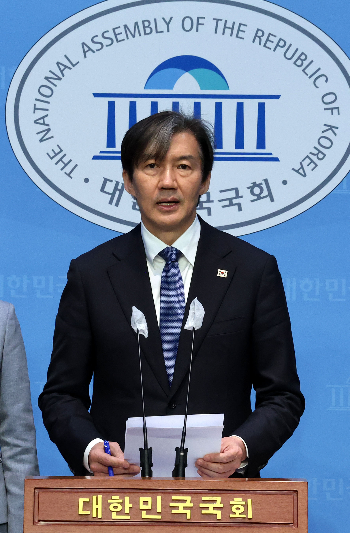
 Kim Yong-man, the elected member of the 22nd National Assembly representing Hanam, Gyeonggi Province, from the Democratic Party of Korea.
 [Photo by Kim, the elected member's Facebook]
The day before, Cho Guk, leader of the Innovation Party, also criticized on his Facebook, “The Japanese government’s refusal to accept the forced labor ruling is tolerated. The discharge of Fukushima contaminated water is tolerated. The pressure to seize Line’s management rights is tolerated,” calling it “a regime that goes beyond being ‘pro-Japan’ (親日) to being ‘subservient to Japan’ (從日).”
Kim Jun-hyung and Lee Hae-min, elected members of the Innovation Party, held a press conference at the National Assembly Communication Office on the 26th, emphasizing, “President Yoon must stop submissive diplomacy toward Japan,” and “Change the diplomatic stance to prioritize national interest and take strong measures to prevent the Japanese government from oppressing our companies.”
They pointed out, “If there are issues with corporate personal information security, it is common to order technical vulnerability remedies and impose fines if not complied with,” adding, “The Japanese government is suddenly pressuring for stake sales, and the ripple effects are spreading throughout the related industries, which is even more serious.”
According to the IT industry, the Japanese government is holding Naver responsible for last year’s Line customer information leak incident and demanding the reorganization of Line Yahoo’s shares.
Line Yahoo is a company that services Japan’s national messenger Line, which Naver has developed over 13 years, and Yahoo, a major portal operated by Japan’s SoftBank. A Holdings, jointly invested by Naver and SoftBank at 50% each, is the major shareholder. If SoftBank buys even a small portion of Naver’s shares as Japan demands, Line Yahoo will become a fully Japanese company.
Meanwhile, the Ministry of Foreign Affairs stated over the past weekend regarding Japan’s demand for Line Yahoo’s stake sale, “We have a firm position that there should be no discriminatory measures against our companies.”
© The Asia Business Daily(www.asiae.co.kr). All rights reserved.
![Clutching a Stolen Dior Bag, Saying "I Hate Being Poor but Real"... The Grotesque Con of a "Human Knockoff" [Slate]](https://cwcontent.asiae.co.kr/asiaresize/183/2026021902243444107_1771435474.jpg)













