The Supreme Court has ruled that storing information unrelated to a crime on the Supreme Prosecutors' Office server (D-Net) and using it for separate investigations is illegal.
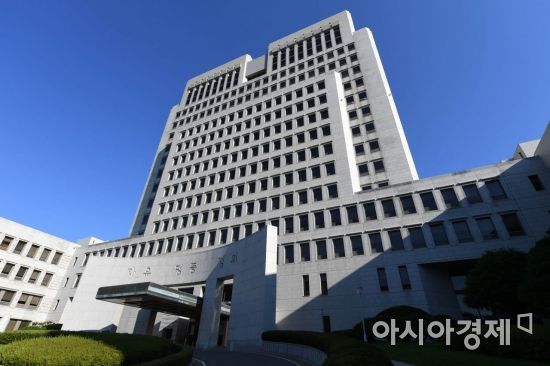
According to the legal community on the 26th, the Supreme Court's First Division (Presiding Justice Kim Seon-su) overturned and remanded the original verdict that found Mr. Kang (63), who was indicted for violating the Improper Solicitation and Graft Act and leaking official secrets, guilty.
This case began during the investigation of the land development corruption case in Wonju, Gangwon Province, in December 2018. At that time, the prosecution obtained a warrant for Mr. Jo, a director-level official at Wonju City Hall, on charges of violating the National Land Planning Act and seized his mobile phone. The prosecution created an image file duplicating the electronic information from Jo's phone and stored it on D-Net. While searching the related information, they accidentally discovered a recording file containing a conversation between Jo and Mr. Kang. The recording suggested that Kang, who was the administrative director of the prosecution branch office, had received and accepted a request from Jo to delay the investigation of a specific case.
The prosecution began investigating the 'investigation request case' by creating transcripts of the recording and examining text messages on the phone without obtaining a separate warrant for this content. The prosecution only applied for a separate search warrant for the investigation request case in January 2019.
However, the prosecution did not execute the issued warrant and continued the investigation based on the existing recording file. It was only in March that they reissued the same warrant and seized digital data uploaded to the Supreme Prosecutors' Office server. Using the evidence collected in this way, they indicted Mr. Kang in April.
The key issue was whether the recording file, which was unrelated information initially intended to be seized, and other evidence collected based on it could be used as evidence. In criminal trials, courts strictly evaluate the admissibility of evidence, and evidence obtained through illegal procedures cannot be used.
The first and second trial courts recognized the admissibility of the evidence and sentenced Mr. Kang guilty, but the Supreme Court overturned this. The Supreme Court stated, "The recording file and the secondary evidence collected based on it are illegally obtained evidence and have no evidentiary value," and overturned the original verdict. The Supreme Court pointed out, "After the execution of the first warrant (related to the land development corruption), the unrelated information was not deleted, discarded, or returned but continuously stored, searched, duplicated, and printed, and all these investigative actions were illegal."
Furthermore, the court noted, "The execution of the third warrant was merely the execution of a warrant issued for electronic information stored on the Supreme Prosecutors' Office server, which contained duplicates seized under the first warrant," and added, "Since this targeted electronic information that should have been deleted or discarded, it is inherently illegal."
© The Asia Business Daily(www.asiae.co.kr). All rights reserved.
![Clutching a Stolen Dior Bag, Saying "I Hate Being Poor but Real"... The Grotesque Con of a "Human Knockoff" [Slate]](https://cwcontent.asiae.co.kr/asiaresize/183/2026021902243444107_1771435474.jpg)















