Community and Child-Led Malaria Eradication Campaign Conducted in Africa Region
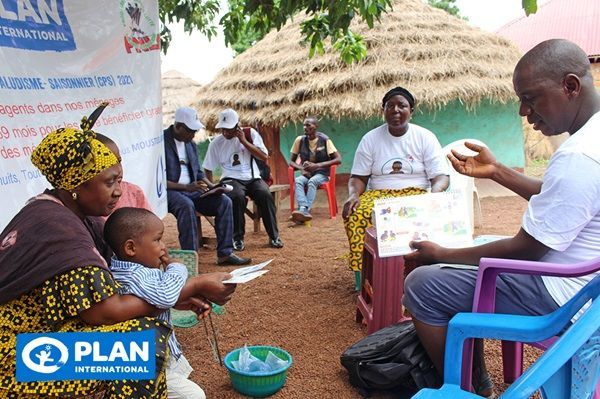
International relief and development NGO Plan marked World Malaria Day on April 25 by reporting on various medical support and awareness improvement activities in the African region and calling for active global support.
According to the WHO, 610,000 people died from malaria in 2022, and 249 million new malaria infections occurred. Progress in malaria eradication has stalled in recent years, and this infectious disease continues to directly threaten human health and take lives, while also causing a vicious cycle of inequality.
In particular, the most vulnerable groups such as pregnant women, infants, children under five, refugees, and migrants are more exposed to disproportionate impacts. Ninety-four percent of malaria cases occur in the African region, and in 2022, it is estimated that four out of five malaria deaths in this region were children under five, making malaria a leading cause of infant mortality.
Pregnancy also reduces women's immunity to malaria, making them more susceptible to infection, which inevitably increases the risk of severe illness and death. If malaria is not treated during pregnancy, it can lead to severe anemia, maternal death, stillbirth, premature birth, and low birth weight, but there is currently no adequate response system in place. Refugees and migrants who lack proper living conditions are also at high risk of contracting this infectious disease and may be exposed to environments favorable to malaria proliferation.
To make matters worse, population movements caused by climate change, natural disasters, and conflicts in malaria-affected countries raise concerns about the spread of the disease in humanitarian emergencies.
Moreover, inequalities in access to education and financial support accelerate the risk, with rural populations in Africa living in poverty and having fewer educational opportunities being the most affected. In fact, children under five from the poorest households in sub-Saharan Africa are five times more likely to contract malaria than those from the wealthiest households.
On World Malaria Day, the WHO called for "accelerating malaria eradication for a more equitable world," emphasizing barriers related to health equity, gender equality, and human rights in global malaria responses and specific measures to overcome them. To achieve the vision of a malaria-free world, everyone has the right to timely access to quality services to prevent, detect, and treat malaria. However, considering the aforementioned cases and statistics, this is not a reality for all. Vulnerable populations remain excluded from services necessary for malaria prevention, detection, and treatment, meaning that achieving this vision will require considerable time and effort.
Accordingly, Plan is conducting various medical support and awareness activities in the African region to eradicate malaria. As part of this, community health workers in Guinea, Africa, visited households to administer medication to children and guided sick children to nearby medical facilities for treatment, leading community-driven malaria prevention campaigns. After the campaign, a decrease in malaria cases in the area was confirmed. Additionally, mosquito nets were distributed in villages, and continuous education on malaria prevention measures was provided to villagers.
Zimbabwe is also a country where malaria is one of the causes of illness and death among children, with more than half of the population living in high-risk areas. Plan operated malaria clubs in 40 schools across four high-incidence regions. Through this, children were empowered to independently implement malaria prevention rules at home and in their communities, and the campaign achieved good results.
A Plan Korea official stated, "The current global funding situation for malaria prevention is not positive, and since mosquitoes that spread malaria continue to evolve, if proper preparations are not made, vulnerable populations will inevitably continue to suffer." He added, "Plan will continue to make every effort to ensure that everyone can equally benefit from medical services."
© The Asia Business Daily(www.asiae.co.kr). All rights reserved.
![Clutching a Stolen Dior Bag, Saying "I Hate Being Poor but Real"... The Grotesque Con of a "Human Knockoff" [Slate]](https://cwcontent.asiae.co.kr/asiaresize/183/2026021902243444107_1771435474.jpg)















