Increasing Trend in Consumer Damage Relief Applications to Korea Consumer Agency
Frequent Cases of Mid-Term Cancellation Refusal and Excessive Penalty Charges
Recently, study cafes, which are becoming popular as alternatives to reading rooms, have been found to have insufficient user guidance regarding refund policies and other usage-related information. In particular, it has been pointed out that there is a lack of systematic legal frameworks and regulatory gaps concerning refunds, highlighting the need to establish clear standards.
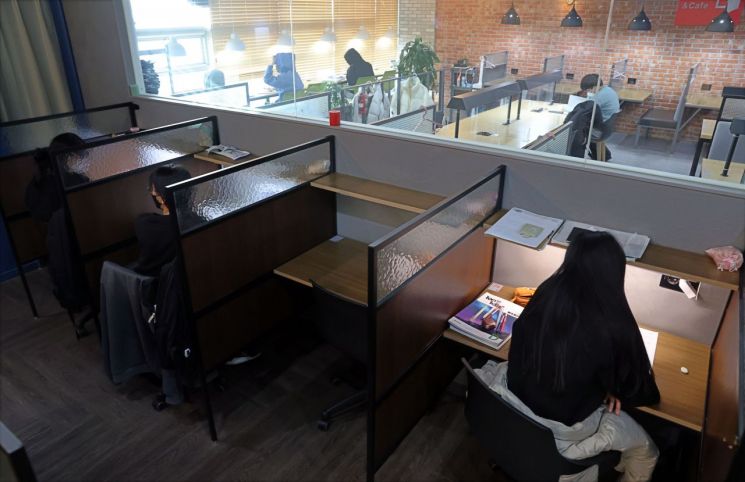
The Korea Consumer Agency announced on the 25th that a total of 174 complaints related to study cafes were filed from 2021 to last year. By year, there were 42 cases in 2021, 55 cases in 2022, and 77 cases in 2023, showing an increasing trend each year.
Study cafes are spaces that combine reading rooms and cafes, where users pay fees based on time or duration to rent the space for studying. They may also sell beverages and snacks. The Consumer Agency explained that as study cafes have become popular alternatives to reading rooms, related consumer damages have also been increasing annually.
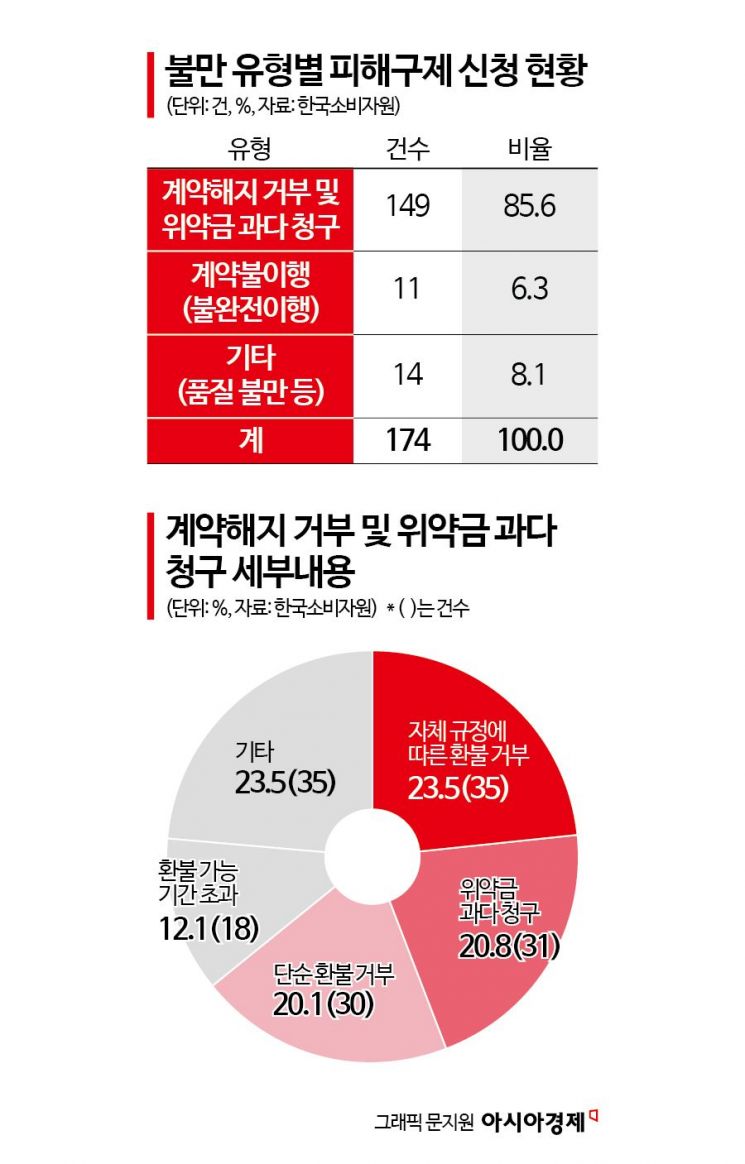
Analyzing the complaints received, the Consumer Agency found that the majority of dissatisfaction cases, 85.6% (149 cases), were related to business operators' 'refusal to terminate contracts and excessive penalty charges.' This was followed by 'contract non-fulfillment' at 6.3%. Looking more closely at the refusal to terminate contracts and excessive penalty charges, the main issues were ▲business operators claiming 'no refunds' based on their own regulations (35 cases), ▲excessive penalty charges (31 cases), and ▲simple refusal of refunds (30 cases).
Among these, in the Daejeon area, 68.6% (24 out of 35 locations surveyed) of study cafes used kiosks for ticket payments, where refund-related information could not be confirmed. When investigating whether refunds were possible upon early termination by checking in-store notices or directly asking the business operators, 62.9% (22 locations) allowed refunds according to their own regulations, while 37.1% (13 locations) did not allow refunds.
Current laws such as the Consumer Protection Act and the Act on Door-to-Door Sales aim to protect consumer rights and interests by establishing refund regulations; however, study cafes are effectively in a blind spot. Due to the varied contract methods and contents, uniform legal application is difficult. For this reason, voices from both inside and outside the industry are calling for relevant standards to be established by related agencies such as the Fair Trade Commission.
The Consumer Agency urged consumers to carefully check the terms of use and refund policies through business operator explanations or in-store notices when purchasing long-term usage passes, especially in the absence of related standards. The agency also advised, "To prepare for potential future disputes, if the usage fee exceeds 200,000 won, it is recommended to use credit card installment payments whenever possible."
© The Asia Business Daily(www.asiae.co.kr). All rights reserved.
![Clutching a Stolen Dior Bag, Saying "I Hate Being Poor but Real"... The Grotesque Con of a "Human Knockoff" [Slate]](https://cwcontent.asiae.co.kr/asiaresize/183/2026021902243444107_1771435474.jpg)
















