'Meal Ticket Vending Machine' Requires Exchange for New Bills
Cost 9 Million Won... Increased Burden on Store Owners
As the Bank of Japan plans to issue new banknotes this summer, ramen restaurants are facing increasing concerns. In Japan, where electronic payments are not yet widespread, ramen orders are taken through 'meal ticket vending machines,' and if new banknotes are issued, all the vending machines currently in use will need to be replaced.
Local media such as TV Asahi and the Tokyo Shimbun recently reported on the struggles of Japanese ramen shops dealing with the cost of replacing vending machines. Most Japanese ramen shops do not have separate cashiers and lack electronic payment methods like cards. Instead, they accept orders through meal ticket vending machines. Customers insert banknotes into the machine and press the button for their desired menu item, which then issues an order ticket.
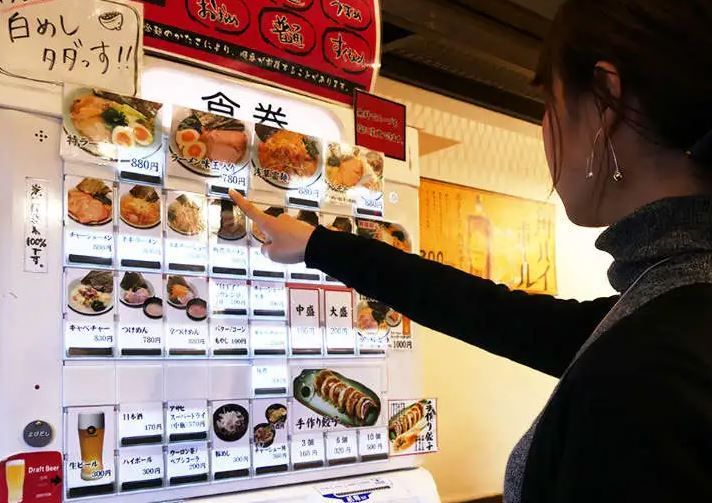 Japanese ramen shops take orders through a 'vending machine' instead of a cash register or electronic payment. [Image source=Live Japan capture]
The problem lies in the Bank of Japan's plan to replace banknotes such as the 1000-yen, 5000-yen, and 10,000-yen bills with new ones starting this July. Existing vending machines are not compatible with the new banknotes, so ramen shops must replace all their machines. The replacement cost is estimated to be around 1 million yen (approximately 9 million KRW).
The 'vending machine replacement cost risk' is expected to be a significant burden for ramen shops. They are already struggling due to the surge in raw material prices following the COVID-19 pandemic. According to a ramen shop owner interviewed by TV Asahi, despite the increased cost of ingredients, they sell a bowl of ramen for 830 yen (about 7,335 KRW). The number of ramen shop bankruptcies reached a 15-year high last year.
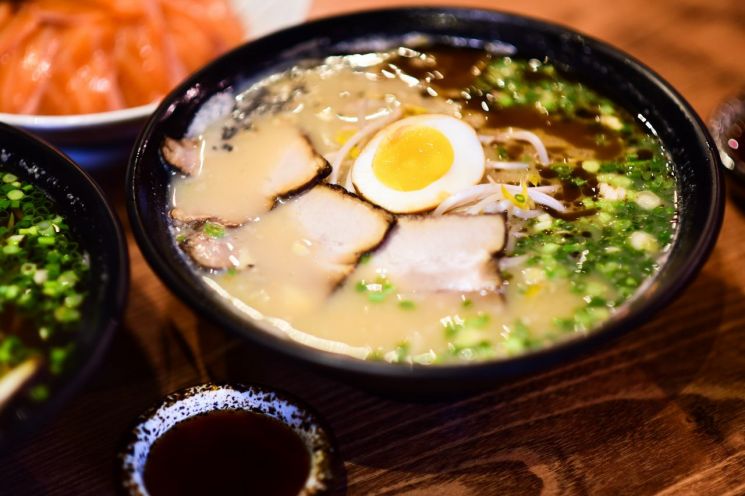 Japanese ramen has a "900 yen wall." No matter how good the quality of the ramen is, if a bowl costs more than 900 yen, consumers tend to turn away.
 [Image source=Pixabay]
Why are ramen shops particularly vulnerable to price increases? A business owner interviewed by TV Asahi said, "We don't want to cross the '900-yen (about 8,000 KRW) wall.'" The 900-yen wall is an unspoken rule passed down in the Japanese ramen industry.
Because ramen has an image as an 'affordable food,' if the price exceeds 900 yen, consumers tend to avoid it regardless of quality. For this reason, even when prices rise sharply, ramen shops find it difficult to raise their prices.
One ramen shop owner who spoke with the media lamented, "Even if we sell 100 bowls a day, it would take six months to a year to save up the 1 million yen needed to replace the vending machines."
Some local governments in Japan have implemented policies to subsidize up to 300,000 yen (about 2.65 million KRW) for businesses replacing vending machines, but ramen shops say this amount is too small to ease their burden. The owner appealed, "We ask the government to take responsibility and bear the cost."
© The Asia Business Daily(www.asiae.co.kr). All rights reserved.
![Clutching a Stolen Dior Bag, Saying "I Hate Being Poor but Real"... The Grotesque Con of a "Human Knockoff" [Slate]](https://cwcontent.asiae.co.kr/asiaresize/183/2026021902243444107_1771435474.jpg)
















