The field of digital healthcare, utilizing medical artificial intelligence (AI) and digital therapeutics (DTx), is expanding. As the related industry continues to grow, products beyond the existing main product groups are being introduced one after another.
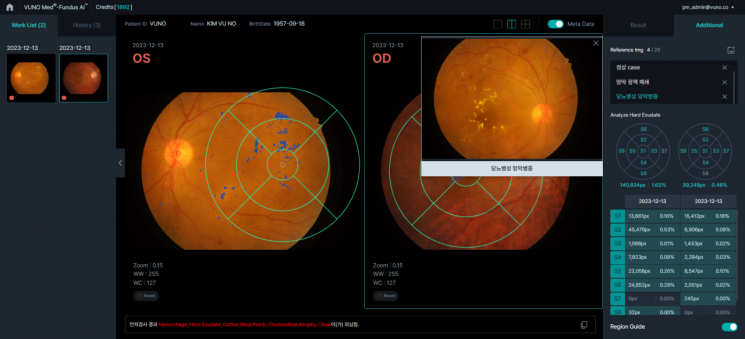 Vuno's AI-based fundus image interpretation assistance solution 'Vuno Med Fundus AI'
 [Photo by Vuno]
Existing AI medical devices mainly assisted diagnosis by quickly identifying problematic areas in diagnostic images taken through X-rays, computed tomography (CT), endoscopy, and the like. However, products have emerged that assist the diagnostic process itself, or even make diagnoses independently, and some have gone beyond diagnosis to predict the prognosis of hospitalized patients, signaling the arrival of the era of the 'AI doctor.'
VUNO, a medical AI developer, recently passed the integrated review for innovative medical devices with its fundus image reading assistance solution, VUNO Med-Fundus AI. It is used for fundus examinations to check for eye abnormalities. Diabetic retinopathy, one of the three major causes of blindness, affects 67% of patients who have had diabetes for more than 15 years. Therefore, annual fundus examinations are recommended for diabetic patients, but half of the patients in Korea do not undergo the examination due to inconveniences such as having to visit an ophthalmologist separately. VUNO's solution enables easy fundus examinations not only in ophthalmology but also in internal medicine, the main department treating diabetes.
Most medical AI still remains at the stage of diagnostic 'assistance' due to issues of reliability and doctors' resistance, but there is an independent medical AI that diagnoses diabetic retinopathy through fundus examinations. This is the U.S. company IDx-DR, which received FDA approval in 2016. It was authorized to make diagnoses such as 'referral to an ophthalmologist for further evaluation' or 're-examination in one year,' earning it the title of the 'first AI doctor.' Although its accuracy is around 90%, considering the low accessibility to healthcare in the U.S., this level of accuracy was deemed sufficient to achieve significant effects, leading to its successful inclusion in the U.S. public health insurance reimbursement system.
An AI that 'predicts' the future condition of hospitalized patients has also emerged. It informs whether there is a risk of cardiac arrest within a few hours based on the patient's blood pressure, pulse, blood test results, and more. AItrics' VitalCare is currently used in about 40 hospitals in Korea, and VUNO's VUNO Med-DeepCARS plans to launch in the U.S. market within this year, expanding beyond Korea.
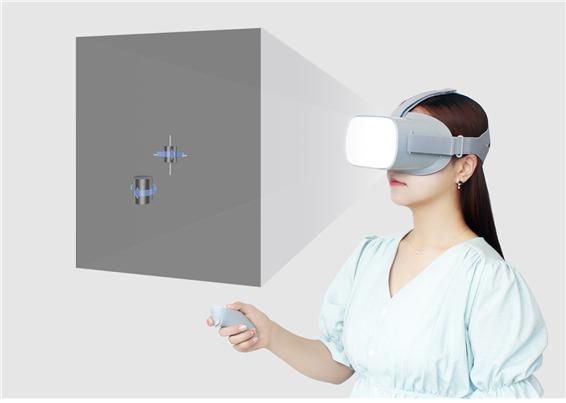
DTx has recently reached a turning point. Although the first domestic product was released last year, the industry has been evaluated as not having achieved proper growth. The biggest obstacle to growth has been the limitation of applicable diseases. The world's first FDA-approved DTx was for drug addiction treatment, and the first and second domestic DTx products, Aimmed's Somzz and Welt's SleepCure, were also mainly for treating mental and neurological disorders such as insomnia.
However, the recently approved third and fourth domestic DTx products were developed for visual field impairment improvement and respiratory rehabilitation treatment, respectively. The third DTx, NewNaps' VividBrain, was approved as a DTx that improves intractable visual field impairment, which affects 20% of stroke patients but has no treatment. It reactivates the damaged visual cortex through repetitive training using virtual reality (VR). The fourth DTx, Share & Service's EasyBridge, enables customized respiratory rehabilitation treatment for patients with chronic obstructive pulmonary disease (COPD) and others.
Professor Shin Jae-yong of Yonsei University College of Medicine's Department of Preventive Medicine (CEO of Evertry) said, "Existing DTx often converted already prescribed cognitive behavioral therapy (CBT) into digital form, which lowered attention. VividBrain implemented treatment for a disease that previously had no treatment, and EasyBridge expanded the treatment target to respiratory diseases, so it is expected to renew awareness of the role of DTx."
Currently, attempts to develop DTx in various fields such as musculoskeletal diseases and immunity are emerging one after another. EverX is conducting clinical trials of Moracure, a musculoskeletal rehabilitation exercise DTx that allows patients to receive rehabilitation exercise therapy, which previously had to be done in hospitals, easily at home. D-Wave is developing a DTx for temporomandibular joint disorder treatment, and SRP Therapeutics, which is developing a pediatric myopia treatment DTx, is also developing an immune-enhancing DTx that provides activity methods to boost immunity after vaccination.
© The Asia Business Daily(www.asiae.co.kr). All rights reserved.
![Clutching a Stolen Dior Bag, Saying "I Hate Being Poor but Real"... The Grotesque Con of a "Human Knockoff" [Slate]](https://cwcontent.asiae.co.kr/asiaresize/183/2026021902243444107_1771435474.jpg)
















