Exception Granted After Long Legal Battle
Euthanasia Allowed Only in Colombia and Cuba Among Latin American Countries
In Peru, where euthanasia and assisted dying are illegal, a woman in her 40s who was paralyzed from head to toe due to a rare degenerative disease ended her life through euthanasia after years of struggle and receiving an exception. On the 22nd (local time), AP News and others reported that Ana Estrada (47), who suffered from a rare degenerative disease, was granted the right to end her life with medical assistance after a long legal battle, and she died by euthanasia on the 21st.
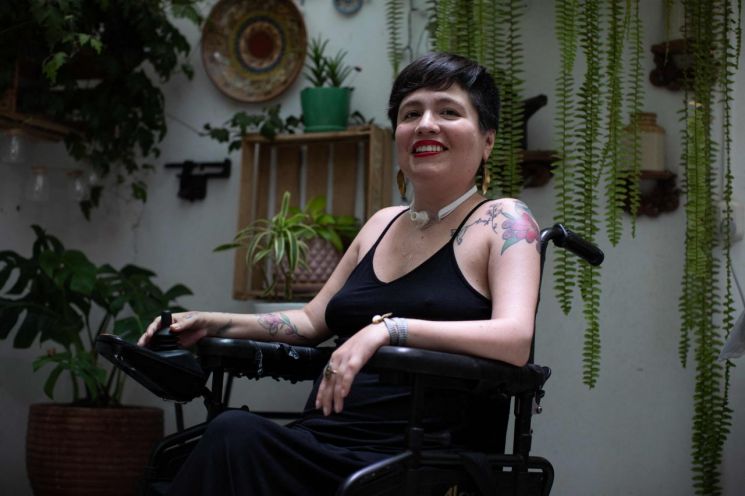 Ana Estrada, who was suffering from a rare degenerative disease, ended her life with medical assistance after a long legal battle.
 [Photo by AFP Yonhap News]
Estrada, a psychologist, won the right to die with medical assistance from the court in 2022. She became the first person in Peru to undergo euthanasia. Estrada was a patient with polymyositis, a degenerative disease characterized by muscle inflammation and weakening. Symptoms appeared in her teenage years, and from the age of 20, she was unable to walk on her own and had to use a wheelchair.
Despite her condition, Estrada entered university, earned a degree in psychology, and became a psychotherapist. She earned enough money to buy her own apartment and became independent from her parents. However, from 2017, her condition worsened to the point where she could no longer get out of bed. Estrada lived lying in bed, relying on a ventilator to sustain her life. Eventually, she filed a lawsuit to be allowed to choose death through euthanasia when she wished.
In an interview with the media, Estrada described her situation as "like a prisoner trapped inside my own body." She explained that her lawsuit was "not about death but about freedom." She also said, "I want to undergo euthanasia when I can no longer endure the pain in life and when I can say goodbye peacefully and calmly to my loved ones." After Estrada died by euthanasia, her lawyer said, "Estrada's fight for the right to die with dignity raised awareness among Peruvians about the importance of this right," adding, "Her struggle transcended borders."
Peru, a predominantly Catholic country, like most other countries in Latin America, prohibits euthanasia and assisted dying. Among Latin American countries, Colombia and Cuba recognize euthanasia, and in Ecuador, the Constitutional Court ruled in February that euthanasia performed under certain conditions is not punishable as a crime.
Countries Allowing Euthanasia Are Gradually Increasing
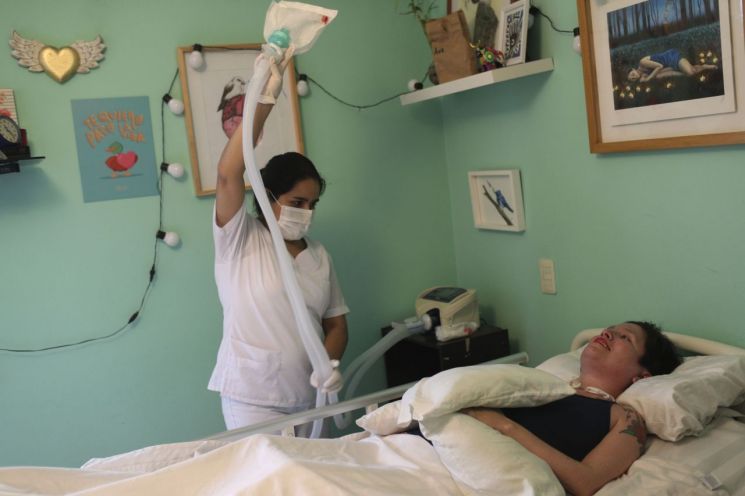 Estrada described her situation as "like a prisoner trapped inside my own body" in an interview with a media outlet. She explained that the lawsuit she filed was "not for death but for freedom."
 [Photo by AP·Yonhap News]
Globally, whether individuals can choose death remains a controversial issue, but the number of countries allowing euthanasia under strict conditions is increasing. Switzerland has permitted assisted death, considered a form of euthanasia, since 1942. In 2002, the Netherlands and Belgium legally allowed euthanasia in which doctors directly administer drugs. In the United States, starting with Oregon in 1997, 11 states as of early this year permit euthanasia or assisted death.
Canada, which legalized euthanasia in 2016, last year became the first country in the world to allow people with mental illnesses to choose euthanasia. In 2020, New Zealand also legalized euthanasia through a national referendum. Some countries have paved the way indirectly by declaring unconstitutional the criminal provisions that punish those who assist euthanasia or assisted death (doctors, family members). Italy in 2019, Germany and Austria in 2020, and Ecuador in 2024 fall into this category.
Debates are intensifying even in countries that currently prohibit euthanasia or assisted death. In the United Kingdom, assisting euthanasia can be punished under current laws as murder or similar crimes. In South Korea, the 'Act on Decisions on Life-Sustaining Treatment' was enacted in 2016. In 2022, a bill was proposed to allow 'assisted dying' where patients with no chance of recovery can end their lives with a doctor's help at their own request.
© The Asia Business Daily(www.asiae.co.kr). All rights reserved.
![Clutching a Stolen Dior Bag, Saying "I Hate Being Poor but Real"... The Grotesque Con of a "Human Knockoff" [Slate]](https://cwcontent.asiae.co.kr/asiaresize/183/2026021902243444107_1771435474.jpg)

















