S&P Global US PMI Release
Composite PMI at 50.9... First Decline in 6 Months
The manufacturing sector in the United States appears to be contracting. The decline in new orders is leading to a slowdown in employment, suggesting that the robust U.S. economy has somewhat lost its growth momentum entering the second quarter.
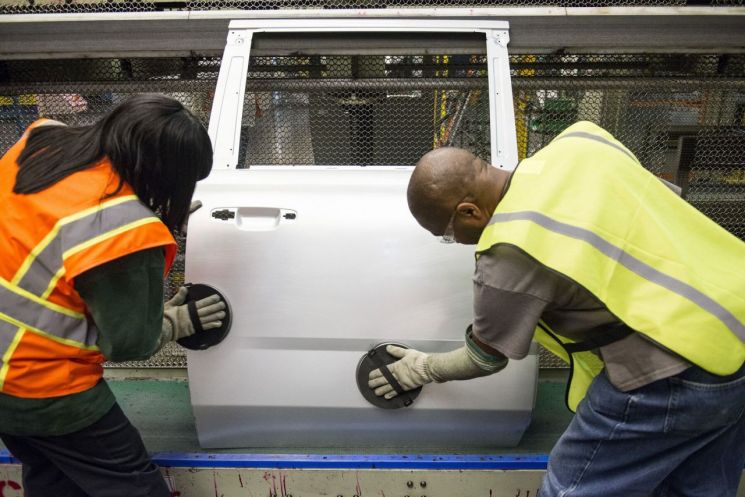
On the 22nd (local time), S&P Global released the preliminary U.S. Manufacturing Purchasing Managers' Index (PMI) for April, which fell to 49.9 from 51.9 the previous month. It also missed the expert forecast of 52.
The manufacturing PMI, a key leading economic indicator, signals expansion when above 50 and contraction when below 50. After entering an expansion phase by surpassing 50 since January, the U.S. manufacturing sector has returned to contraction after four months.
The services PMI continued to expand at 50.9 but fell short of last month’s 51.7 and the forecast of 52.
Consequently, the composite PMI, which covers both manufacturing and services, dropped 1.2 points to 50.9 from 52.1 the previous month. This is the first decline in the composite PMI in six months. The employment index fell 3.2 points to 48 compared to the previous month, due to wage reductions in the service sector and slowing manufacturing growth. The drop in the employment index suggests that companies believe current production capacity is sufficient to meet demand.
With the slowdown in industrial activity growth, the U.S. economy is seen as losing momentum entering the second quarter. The U.S. first-quarter Gross Domestic Product (GDP), to be released on the 25th, is expected to show strong growth at an annualized rate of 2.5% compared to the previous quarter.
Chris Williamson, Chief Business Economist at S&P Global Market Intelligence, stated, "U.S. economic activity lost momentum in early Q2. In April, new business inflows declined for the first time in six months, and concerns about future prospects increased, causing companies’ future production expectations to fall to the lowest level in five months." He added, "As the business environment worsened, companies cut wages to levels rarely seen since the global financial crisis, except for a few months during the COVID-19 pandemic."
© The Asia Business Daily(www.asiae.co.kr). All rights reserved.
![Clutching a Stolen Dior Bag, Saying "I Hate Being Poor but Real"... The Grotesque Con of a "Human Knockoff" [Slate]](https://cwcontent.asiae.co.kr/asiaresize/183/2026021902243444107_1771435474.jpg)
















