FSS "Real Estate PF Normalization Plan to be Announced in May"
Industry Meetings with Banks and Others Concluded Ahead of Announcement
Regulations on Savings Banks' Auction Fund Loans to be Eased
Strengthened Feasibility Assessments, Banks Encouraged to Support New Funding

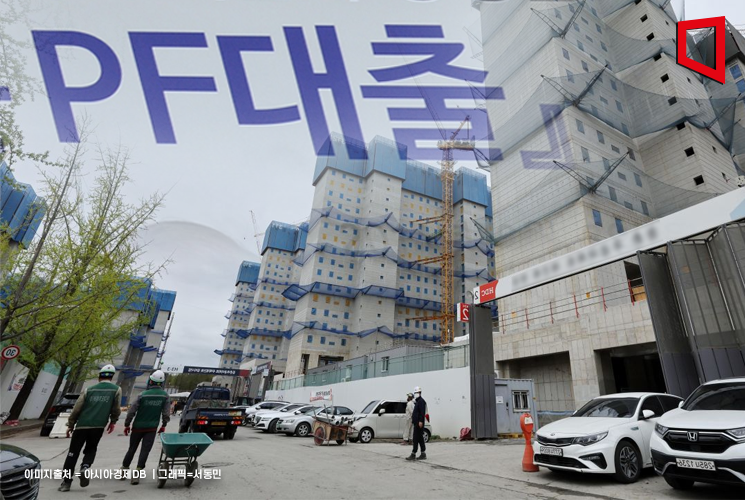
Financial authorities, having concluded sector-specific meetings for real estate project financing (PF) foreclosure and auction sales and restructuring, are accelerating preliminary preparations such as regulatory easing ahead of the announcement of a normalization plan aimed at the smooth landing of the real estate PF market.
According to financial authorities on the 24th, the Financial Supervisory Service (FSS) has settled on announcing the 'Real Estate PF Normalization Plan' in May. Initially, FSS Governor Lee Bok-hyun had stated that the normalization plan would be disclosed as early as April, with efforts to accelerate the normalization process from May to June, but it is now understood that more time is needed for sector-specific consultations and preparatory procedures.
A senior official from the financial authorities said, "It is practically difficult to announce the normalization plan by the end of April, but it will come out in May."
Conclusion of Sector-Specific Meetings... Regulatory Easing on Foreclosure Balance Loans and Related Areas
The FSS is creating an environment to activate foreclosure and auction sales related to PF and restructuring by easing PF loan regulations. Until mid-month, face-to-face meetings or consultations were held with major commercial banks, mutual finance institutions, specialized credit finance companies, savings banks, securities firms, and insurance companies. They listened to sector-specific opinions and mutually confirmed areas requiring coordination on agenda items such as criteria for selecting distressed projects, measures to activate foreclosure and auction sales, and plans for supplying new funds to viable projects.
At these meetings, savings banks and securities firms suggested the need for mediation to ensure that 'new money' input from banks and insurance sectors is well facilitated. Banks and insurance companies pointed out that business feasibility is the top priority for new fund injection. They mentioned responsibility issues if losses occur after new funds are injected, and incentives such as upgrading soundness classification, easing inspections, or granting grace periods for new fund injections were also discussed.
The financial authorities have also taken proactive measures that can be implemented immediately. The FSS's Small Finance Inspection Division 1 and Small Finance Supervision Division recently issued a 'non-action opinion letter' regarding foreclosure balance loans related to distressed PF foreclosure and auction sales. Foreclosure balance loans refer to loans that successful bidders in foreclosure or auction sales borrow from banks or savings banks using real estate as collateral. In cases where savings banks provide foreclosure balance loans to successful bidders during the bridge loan stage land foreclosure and auction sales process, such loans will not be considered violations of PF loan limits. This relaxes the regulation that only allows PF loans up to 20% of the total credit exposure. However, provisions for loan loss reserves must be treated similarly to PF loans.
To apply this regulatory easing, the successful bidder must finance at least 10% of the winning bid price with their own capital. Previously, savings banks could only provide PF loans to projects where the developer could cover at least 20% of the total project cost with their own capital. Additionally, conditions such as the foreclosure or auction winning bid price falling below 85% of the land collateral loan principal and a change in the developer must be met. This reflects a willingness to ease regulations only for genuine restructuring where a new developer reduces project costs and proceeds, rather than simple maturity extensions.
A senior FSS official explained, "This is part of efforts to urge the savings bank sector to clean up non-performing loans as a measure to activate foreclosure and auction sales," adding, "It also aims to encourage foreclosure and auction sales considering loan loss reserves and to accumulate more reserves." A representative from the Korea Federation of Savings Banks said, "We view this positively in terms of regulatory easing."
Strengthening Business Feasibility Evaluation While Encouraging Banks to Support New Funds
The financial authorities plan to emphasize restructuring over new fund injection in the normalization plan to be announced in May. The approach is to prioritize cleanup first by sorting out viable projects through careful selection so that funds circulate to projects with business feasibility while clearing out those without. Accordingly, the authorities are setting criteria to distinguish between normal and distressed projects. The PF business feasibility evaluation criteria will be subdivided into four stages to accelerate the cleanup of severely distressed projects. Currently, the evaluation criteria have three stages: 'Good (normal in asset soundness classification) - Normal (watchlist) - Deterioration Concern (substandard or below),' but projects in the deterioration concern stage that are impossible to proceed will be classified as 'Recovery Doubtful,' creating a four-stage system.
The financial authorities have also requested relatively well-capitalized banks and insurance companies to play a role in injecting new funds. In particular, the authorities are asking for support not only for main PF projects but also for early-stage projects. Typically, savings banks have a high investment ratio in early-stage projects at the bridge loan stage. However, due to rapidly increasing existing loan delinquency rates, savings banks have effectively stopped new lending. Therefore, the authorities have requested banks and insurance companies, which are in relatively better condition, to provide liquidity. The authorities are also considering easing soundness regulations if these financial institutions purchase PF project bonds or land.
However, despite the authorities' expectations, the financial sector's response has been lukewarm. Even if priority is given to reviewing sound projects, most projects have only extended maturities for a year without progressing to main PF, making losses inevitable. The fact that the banking sector's situation is not favorable this year also makes it difficult to respond actively to the authorities' requests. Banks expect to spend over 2 trillion won this year on compensation related to Hong Kong H-Share Index (HSCEI) equity-linked securities (ELS). Last year, six banks bore more than 1.7 trillion won in livelihood finance costs at the authorities' request.
A banking sector official said, "It is burdensome to inject new funds into investment destinations that banks previously judged as risky and did not participate in," adding, "While we agree with the overall direction to revive the PF market, there is concern that the distress triggered in savings banks might spread to banks and other first-tier financial institutions."
© The Asia Business Daily(www.asiae.co.kr). All rights reserved.


















