Statistics Korea, Regional Employment Survey Results for the Second Half of the Year on the 23rd
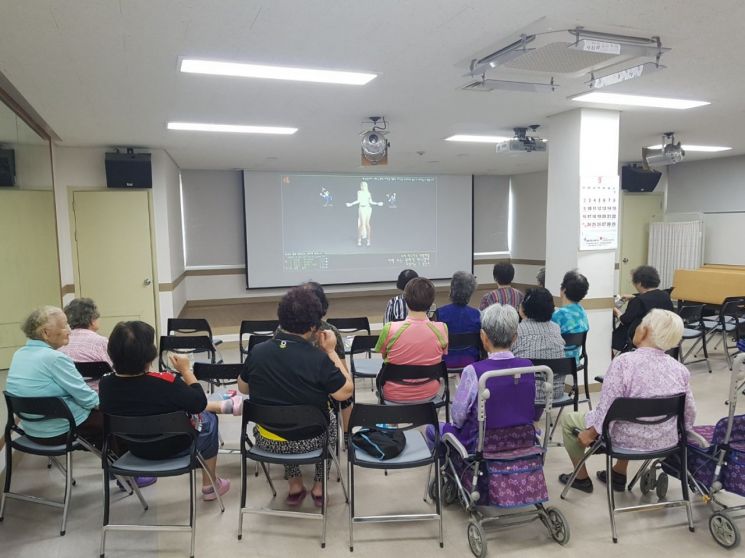
As the aging population increases demand for social welfare, the number of employees in non-residential welfare facility operations nearly increased by 100,000 in the second half of last year.
According to the 2023 second half regional employment survey results announced by Statistics Korea on the 23rd, the number of employees in non-residential welfare facility operations increased by 98,000 compared to the same period last year. The software development and supply industry also saw an increase of 47,000, and the restaurant industry increased by 35,000. A Statistics Korea official explained, "It appears to be due to the increase in government direct employment amid rising demand related to social welfare caused by aging." On the other hand, employment decreased by 28,000 in building construction, 25,000 in home appliances and information and communication equipment retail, and 24,000 in elementary education institutions, in that order.
In the second half of last year (October), the total number of employed persons was 28,764,000, an increase of 346,000 compared to the same period last year. Looking at the number of employees by industry sub-classification (232 categories), restaurant workers were the largest at 1,642,000 (5.7% of total employment). This was followed by 'non-residential welfare facility operations' with 1,506,000 (5.2%) and 'crop cultivation' with 1,467,000 (5.1%).
By industry middle classification (77 categories), the largest number of employees was in the restaurant and pub industry with 2,139,000 (7.4%), followed by retail trade (excluding automobiles) with 2,003,000 (7.0%), and education services with 1,870,000 (6.5%). Compared to the same period last year, employment increased by 96,000 in social welfare services and 53,000 in restaurants and pubs, while it decreased by 44,000 in education services and 34,000 in retail trade (excluding automobiles), in that order.
By occupation sub-classification (153 categories, excluding military personnel), the largest number of employees were management-related clerks with 2,446,000 (8.5%), store sales workers with 1,608,000 (5.6%), and crop cultivation workers with 1,391,000 (4.8%). Compared to the same period last year, management-related clerks increased by 118,000 and computer systems and software experts increased by 43,000. On the other hand, simple workers in construction and mining decreased by 62,000, simple workers related to manufacturing decreased by 38,000, and delivery workers decreased by 33,000, in that order.
© The Asia Business Daily(www.asiae.co.kr). All rights reserved.
![Clutching a Stolen Dior Bag, Saying "I Hate Being Poor but Real"... The Grotesque Con of a "Human Knockoff" [Slate]](https://cwcontent.asiae.co.kr/asiaresize/183/2026021902243444107_1771435474.jpg)















