A technology that identifies weak links in gene communities to enable patient-specific personalized medical care has been developed in Korea. This outcome was inspired by the idea that just as tightly-knit social communities positively influence the health maintenance of individual members, the cohesion of gene communities can also affect an individual's health status.
KAIST announced on the 23rd that Professor Dohun Lee's research team from the Department of Bio and Brain Engineering developed COSINET (COmmunity COhesion Scores in Individualized gene Network Estimated from single Transcriptomics data), a technology that precisely constructs personalized gene networks and accurately measures the cohesion of gene communities within these networks.
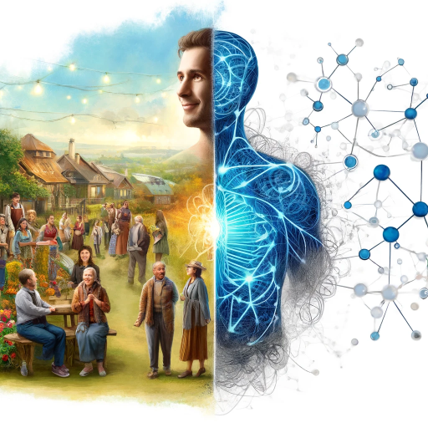
The core of this technology is to identify gene communities with weakened cohesion in personalized gene networks and predict drug targets tailored to individual patients.
The research team conducted the study reflecting the social demand to reduce personal and societal medical costs by providing ‘patient-specific personalized medical care’ that considers individual patient characteristics and improves treatment effectiveness, especially in the context of increasing incidence of complex diseases such as cancer, cardiovascular diseases, and metabolic disorders due to aging and lifestyle changes.
First, the team constructed gene networks of normal tissues based on gene interactions showing significant correlations derived from hundreds of normal tissue gene expression datasets.
Next, they modeled the correlations appearing in gene interactions within gene communities using linear regression analysis and statistically analyzed whether the gene expression levels of individual patients followed the predictive model well.
By removing gene pairs with lost interactions observed in individual patients from the normal tissue gene network, they built personalized gene networks. This allowed them to accurately measure the impact of lost gene interactions on the weakening of gene community cohesion based on the shortest distance between genes in the personalized gene network.
In particular, gene communities with weakened cohesion provide clues to explain patient-specific disease mechanisms. The technology enables the identification of genes that contribute to patient-specific weakening of cohesion within these gene communities, allowing effective patient-tailored drug target proposals. The research team emphasized that this drug target discovery technology is more than four times as effective as existing technologies.

This research, jointly conducted by Professor Dohun Lee and PhD candidate Seunghyun Wang from KAIST’s Department of Bio and Brain Engineering, was supported by the Ministry of Science and ICT’s Data-Driven Digital Bio Leading Project. The research results were published online (April 15) and in the print issue (May) of ‘Briefings in Bioinformatics,’ a scholarly journal in the field of bioinformatics published by the University of Oxford, UK.
Professor Dohun Lee stated, “Complex diseases involving multiple genes should be viewed from a systemic perspective that considers interactions between genes rather than individual genes alone. For the same reason, single-gene-based biomarkers currently used in clinical settings for patient-specific medical care have shown limitations in fully capturing the heterogeneity and complexity of complex diseases.”
He added, “The COSINET technology developed by the KAIST research team, based on the cohesion of gene communities in personalized gene networks, could open new perspectives for realizing patient-specific personalized medical care for complex diseases.”
© The Asia Business Daily(www.asiae.co.kr). All rights reserved.
![Clutching a Stolen Dior Bag, Saying "I Hate Being Poor but Real"... The Grotesque Con of a "Human Knockoff" [Slate]](https://cwcontent.asiae.co.kr/asiaresize/183/2026021902243444107_1771435474.jpg)
















