Samsung Bioepis is accelerating its market entry with the biosimilar of Stelara, an autoimmune disease treatment with a large global market worth 15 trillion KRW annually.
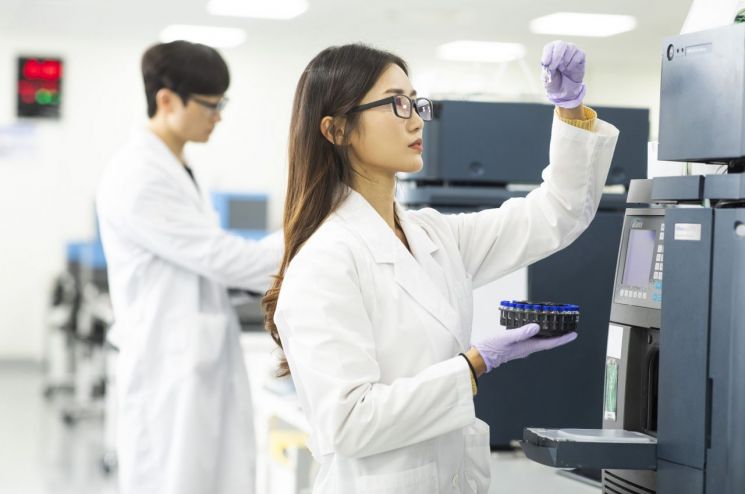 Samsung Bioepis researchers are engaged in pharmaceutical development activities.
 [Photo by Samsung Bioepis]
Samsung Bioepis announced on the 23rd that Piztchiba (development name SB17), developed as a biosimilar of Stelara, has received marketing authorization from the European Commission (EC). This success came just over two months after receiving a positive recommendation from the Committee for Medicinal Products for Human Use (CHMP) under the European Medicines Agency (EMA) in February. It is the same product that was approved earlier this month in Korea under the domestic name Epiztec, becoming the first Stelara biosimilar approved in the country.
Stelara is an autoimmune disease treatment developed by Johnson & Johnson Innovative Medicine (formerly Janssen). It is used to treat plaque psoriasis, psoriatic arthritis, Crohn's disease, and ulcerative colitis. Last year, its global sales reached $10.858 billion (approximately 14.984 trillion KRW). With the expiration of its substance patent in September last year, global competition for biosimilar development has intensified. Among domestic pharmaceutical companies, Celltrion and Dong-A ST have completed development and submitted approval applications in major countries. Overseas competitors include Alvotech’s Selasdi (approved in the US and Europe) and Amgen’s Weszla (approved in the US).
With Piztchiba receiving approval in Europe following Korea, Samsung Bioepis is speeding up its market entry. The company has also submitted an application for FDA approval in the United States. Sandoz will handle overseas sales. Samsung Bioepis and Sandoz signed a partnership agreement last September for sales in Europe and North America.
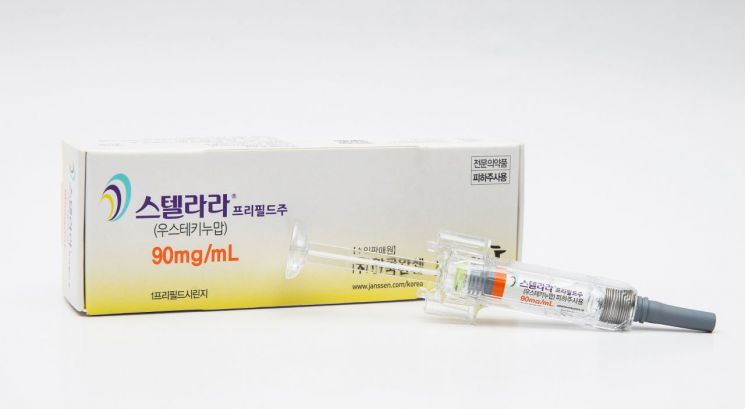 Johnson & Johnson Innovative Medicines (formerly Janssen)'s autoimmune disease treatment 'Stelara (active ingredient ustekinumab)'
Piztchiba is the fourth autoimmune disease treatment biosimilar developed by Samsung Bioepis. Following the development of three tumor necrosis factor (TNF)-alpha biosimilars?Benepali, Flixabi, and Imraldi?Samsung Bioepis has expanded its technology pipeline by developing Piztchiba, an interleukin inhibitor biosimilar.
Jung Byung-in, Head of Regulatory Affairs (RA) at Samsung Bioepis, said, “We are pleased to receive European approval for Piztchiba, which has an interleukin inhibition mechanism. We will continue to strive to provide patients with more treatment options through securing various autoimmune disease treatments and pharmaceutical development.”
© The Asia Business Daily(www.asiae.co.kr). All rights reserved.
![Clutching a Stolen Dior Bag, Saying "I Hate Being Poor but Real"... The Grotesque Con of a "Human Knockoff" [Slate]](https://cwcontent.asiae.co.kr/asiaresize/183/2026021902243444107_1771435474.jpg)

















