"No Change, So Position Cannot Change"
"Medical Reform Special Committee Seems Meaningless"
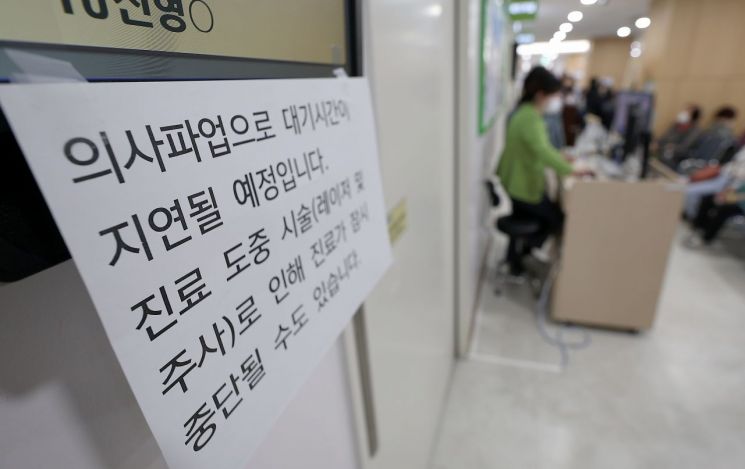
The government has decided to allow each university to autonomously determine the increase in medical school admissions for the 2025 academic year within a range of 50-100%, following proposals from some national university presidents. In response, Choi Chang-min, professor of respiratory medicine at Seoul Asan Hospital and chairman of the Emergency Response Committee of the Korean Association of Medical Colleges (KAMC), warned that "the conflict between the medical community and the government could last more than a year."
On the 22nd, during MBC Radio's 'Kim Jong-bae's Focus,' Chairman Choi commented on the government's announcement, saying, "Ultimately, it means they will admit 50% this year and increase by 2,000 students next year. Since there is no change, positions cannot be altered." He firmly stated the stance of medical students, deans, and residents who cannot accept the government's plan. He said, "They would rather do something else for a year and wait for an opportunity next year. Professors also need to think about how to endure until next year and make efforts."
Chairman Choi emphasized that there is no solution other than a "fundamental re-examination" and also assessed that the upcoming Medical Reform Special Committee, scheduled to start on the 25th, would be meaningless. He said, "We cannot participate under the current circumstances," and added, "If the government makes a progressive statement regarding the (increase in) quota, then we think we should join."
If the medical-government conflict extends for more than a year as Chairman Choi suggests, not only will patients suffer, but the medical community may also face serious difficulties. He expressed regret, saying, "I have been continuously warning about the worsening situation. Politicians need to do politics, but since they are not moving at all in a direction that allows patients to be seen, it is difficult."
Meanwhile, the KAMC (Korean Association of Medical Colleges and Medical Schools) issued an appeal the day before, stating, "The medical school admission quota for the 2025 academic year should be frozen, and a governance structure should be promptly established through consultation with the medical community to scientifically calculate admission quotas from the 2026 academic year onward and to decide on future medical workforce supply and demand." They added, "The association has done its best to normalize the medical school academic schedule under difficult circumstances, but due to repeated delays and cancellations of classes, it will be difficult to meet the legally required number of class days by the end of April." Regarding the 'autonomous increase of medical school quotas' plan, they stated, "It is not reasonable to rely on university presidents' autonomous decisions on the scale of national medical workforce output amid intense conflict."
© The Asia Business Daily(www.asiae.co.kr). All rights reserved.
![Clutching a Stolen Dior Bag, Saying "I Hate Being Poor but Real"... The Grotesque Con of a "Human Knockoff" [Slate]](https://cwcontent.asiae.co.kr/asiaresize/183/2026021902243444107_1771435474.jpg)















