Electric Vehicle Demand Expansion Strategy Forum on the 22nd
Consider Incentives Tangible to EV Owners
Proposal to Establish Dedicated Organization for EV Charger Management
There have been calls to expand domestic electric vehicle (EV) subsidies and allow EVs to enter certain highway bus-only lanes. Voices from the industry emphasize the need for various levels of support to revive the sharply declining domestic EV market demand since last year.
On the 22nd, the Korea Automobile Importers & Distributors Association (KAIA) held an Automobile Industry Development Forum at the Automobile Hall in Seocho-gu, Seoul, under the theme "Core Supply Strategies to Expand EV Demand." Kang Nam-hoon, chairman of KAIA, stated, "Until EV demand recovers, extraordinary measures such as temporarily increasing subsidies and reinstating special discounts on charging fees are necessary."
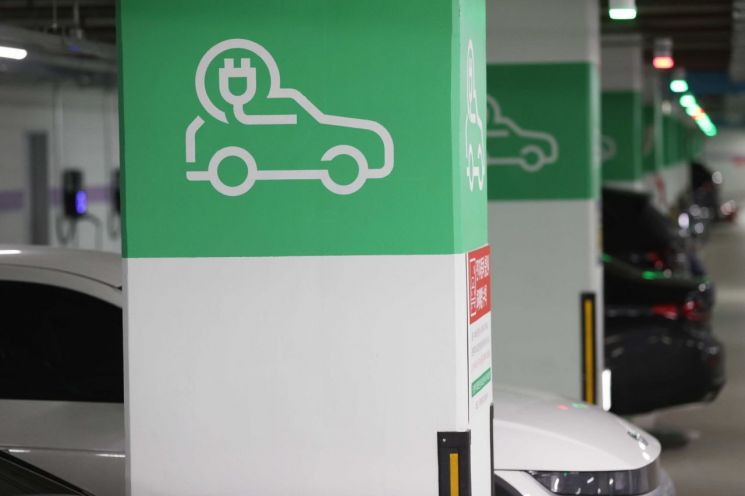
Additionally, at the forum, there were calls to consider bold incentives that EV owners can tangibly feel, such as allowing EVs to enter certain highway bus-only lanes, installing dedicated eco-friendly vehicle lanes, and prioritizing eco-friendly vehicles in resident-priority parking allocations.
Regarding allowing EVs to enter highway bus-only lanes, it was argued that introducing this on a trial basis in some sections with low bus traffic on weekends could help expand EV demand in the short term. Lim Ki-sang, representative of the Automobile Citizens' Union, said, "Considering the limits of financial support, non-financial incentives for EV owners are necessary," adding, "If EVs are allowed to enter certain sections, it could greatly contribute to expanding EV demand in a short period."
Charging-related issues were also raised for the era of EV popularization. It was pointed out that not only smooth access to charging facilities but also aftercare management of chargers is important. Lee Kyu-jung, CEO of NGS, said, "There are policy support measures such as actively utilizing gas station sites with excellent accessibility or imposing occupancy fees after charging ends to improve utilization efficiency," and added, "The establishment of a national dedicated organization to oversee charger management is also necessary."
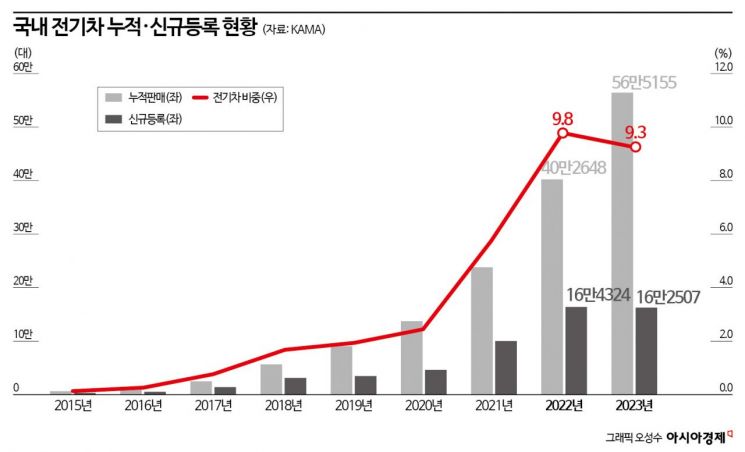
These industry demands come amid the recent sharp decline in domestic EV sales. Korea's cumulative EV supply reached 500,000 units last year. However, looking at annual sales, the number of EVs sold has declined for the first time since the start of EV supply last year. New domestic EV registrations last year amounted to 163,000 units, which is 76% of the supply target. The subsidy execution rate for electric passenger cars was also around 61.3%.
Kwon Oh-chan, chief committee member of the Korea Automobile Mobility Industry Association (KAMA), expressed concern, saying, "If the current market slump continues, the investment burden on domestic manufacturers for EVs will increase, the electrification transition of parts suppliers will be delayed, and it could negatively affect Korea's future vehicle transition."
© The Asia Business Daily(www.asiae.co.kr). All rights reserved.
![Clutching a Stolen Dior Bag, Saying "I Hate Being Poor but Real"... The Grotesque Con of a "Human Knockoff" [Slate]](https://cwcontent.asiae.co.kr/asiaresize/183/2026021902243444107_1771435474.jpg)
















