Korea Wheel "They said no permit was needed, but received demolition order and criminal charges"
Boryeong City "Took legal action after determining it was illegal due to complaints"
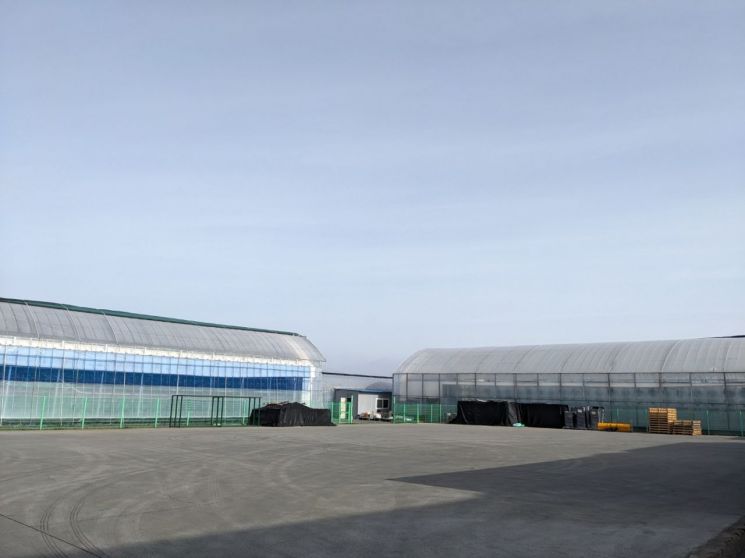
A mid-sized company in Boryeong, Chungnam, invested about 4 billion KRW to build a smart farm based on the claim that no permits were required, but is now engaged in a legal dispute as Boryeong City issued a demolition order.
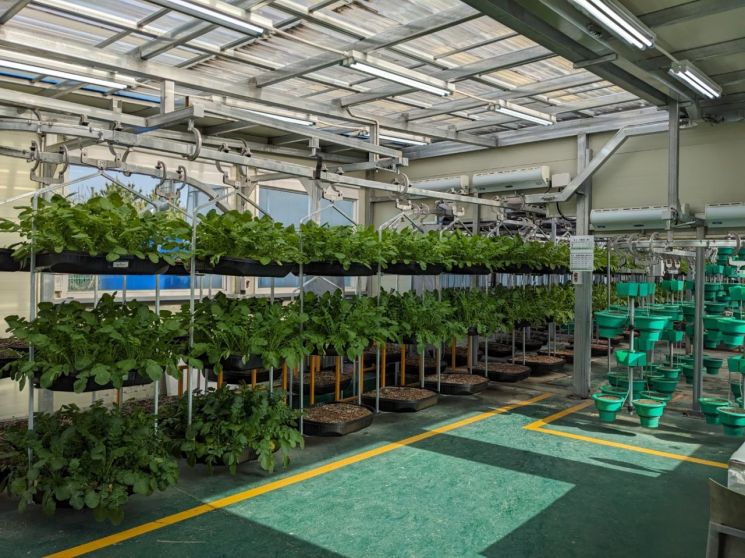
According to Asia Economy's report on the 21st, Korea Wheel Co., Ltd. drew inspiration from the conveyor trolley painting line of its automobile wheel manufacturing line and, in June 2019, installed four vinyl greenhouses and two containers to conduct experimental cultivation of crops such as strawberries, lettuce, young radish leaves, and sprout wraps.
The company explained, "This project is a conveyor trolley moving smart farm where the farmer works comfortably without moving from a fixed place, and the cultivated plants move forward to the worker," adding, "It is an original and innovative new technology that can expand cultivation area and create employment for people with disabilities and farmers."
The smart farm trolley conveyor facility has been recognized for its technological excellence, obtaining nine domestic patents, one new technology certification, and five patents in five countries including the United States.
In July 2020, Boryeong City also signed a business agreement with Korea Wheel for the pilot operation of a circulatory smart farm.
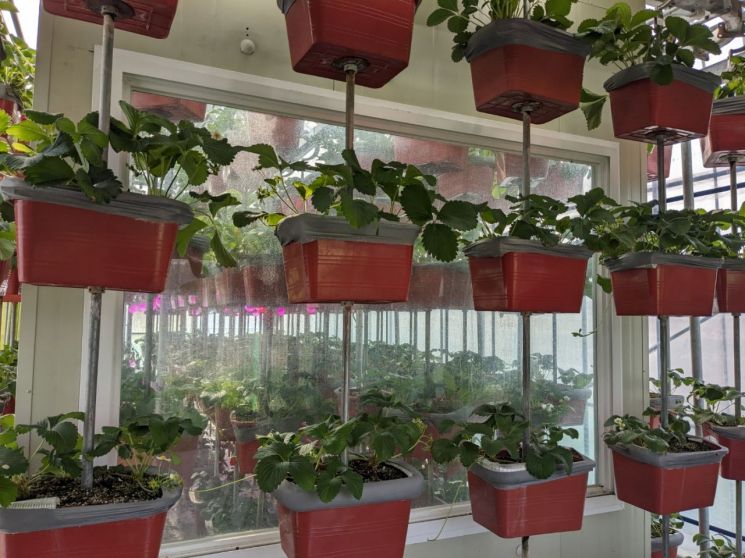
However, after investing 4 billion KRW to build the smart farm facility, Boryeong City issued an administrative demolition order and filed a criminal complaint in October 2021 following a third party's civil complaint, leading the company to file an administrative lawsuit, resulting in an ongoing dispute.
A company official stated regarding Boryeong City's actions, "At the time of the smart farm's establishment in August 2019, local government and city hall officials visited the smart farm facility, highly evaluated its excellence, and encouraged it."
In particular, "When the chairman inquired with the legal advisor, the smart farm installation company, and the local government whether permits were necessary, they said it was not required and that there was no problem, so the smart farm facility was installed and operated," the official claimed.
They added, "It is regrettable that despite the possibility of preparing constructive and reasonable alternatives such as legitimizing the smart farm facility started in good faith, the city insisted solely on legal standards and imposed excessive administrative measures and criminal charges."
Korea Wheel is a mid-sized company with sales of 118.2 billion KRW and a net profit of 8.5 billion KRW last year, employing about 300 people, and has paid tens of billions of KRW in taxes to Boryeong City since 2009.
Regarding this, a Boryeong City official said, "It is true that we encouraged the smart farm facility, but after a complaint was filed and legal review was conducted, it was judged to be illegal, so legal action was taken," adding, "We will wait for the results of the administrative lawsuit."
Meanwhile, in March, the government, including the Ministry of Agriculture, Food and Rural Affairs, the Ministry of Trade, Industry and Energy, and the Ministry of Land, Infrastructure and Transport, jointly issued a press release stating that they plan to revise related laws to allow the installation of smart farms within industrial complexes.
© The Asia Business Daily(www.asiae.co.kr). All rights reserved.
![Clutching a Stolen Dior Bag, Saying "I Hate Being Poor but Real"... The Grotesque Con of a "Human Knockoff" [Slate]](https://cwcontent.asiae.co.kr/asiaresize/183/2026021902243444107_1771435474.jpg)

















