Ruling and Opposition Lawmakers Unite to 'Self-Increase' Salaries
Citizens Outraged: "Economy Is at Its Worst... Shameless"
In Argentina, which is experiencing a severe economic crisis, senators have sparked public outrage by ‘self-raising’ their salaries.
Local media Perfil and others reported on the 19th (local time) that “the senators’ salaries were increased by 170% in just two months, from 1.7 million pesos (2.63 million KRW) after tax to about 4.5 million pesos (7 million KRW).” The roll-call vote on the agenda took only 6 seconds, and all procedures were completed within 50 seconds.
Following the news, President Javier Milei criticized, “The kasta (establishment, incumbent politicians) always behave like this.” He then praised the ruling party, saying, “Only seven senators from the ruling party, the Freedom Advance Party, opposed it, and they will achieve a historic landslide victory in the 2025 general election.”
After the salary increase report, the ruling Freedom Advance Party and the pro-government second opposition party, the Republican Proposal Party (PRO), each announced that their senators opposed the roll-call vote by not raising their hands. However, it later emerged that ruling party lawmakers also voted in favor, escalating the controversy. It is known that all parties had already agreed in advance to the senators’ salary increase proposal the day before.
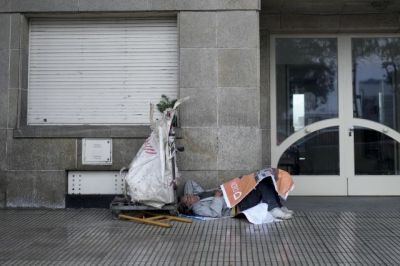 A homeless person sleeping on the streets of Buenos Aires, the capital of Argentina [Image source=Yonhap News]
Moreover, Ezekiel Atauc?, the floor leader of the ruling Freedom Advance Party in the Senate, revealed in a TV interview that “this was something President Milei, Vice President Victoria Villaruel, and the Senate Speaker were all aware of.” In other words, senators from both the ruling and opposition parties united to pass the agenda in just 6 seconds. It was also revealed that all parties signed the related documents after the agenda was passed.
At the time, some senators did not raise their hands, but according to parliamentary rules, in a roll-call vote, opposition must be explicitly expressed by raising one’s hand. As a result, since no one objected, it was tacitly considered approved. Some lawmakers said, “How can such a thing happen during an economic crisis like this?” but after videos of them raising their hands in favor spread on social media (SNS), they hurriedly changed their statements.
Opposition figures harshly criticized the news just a day earlier that “Manuel Adorni, spokesperson for the presidential office, was promoted from deputy minister to minister, resulting in a salary increase,” but it turned out they also supported the salary increase, leading to a backlash.
In response, most citizens expressed anger, saying, “The government did not approve even a 45% wage increase agreed upon by labor and management because it was higher than the inflation rate, and pensioners’ pensions were not even raised by 20%,” and added, “We don’t understand how senators can shamelessly raise their salaries so much.”
Argentina is facing an economic crisis with declining purchasing power within four months due to budget cuts by President Milei, who took office last December advocating ‘anarcho-capitalism.’ The annual inflation rate is 288.9%, one of the highest in the world, and the cumulative inflation rate over the past two months is 26%.
© The Asia Business Daily(www.asiae.co.kr). All rights reserved.
![Clutching a Stolen Dior Bag, Saying "I Hate Being Poor but Real"... The Grotesque Con of a "Human Knockoff" [Slate]](https://cwcontent.asiae.co.kr/asiaresize/183/2026021902243444107_1771435474.jpg)















