82.6% of Respondents Feel Shrinkflation Increases Grocery Burden
Snacks Perceived as Most Affected Food
"Mandatory Notification Required for Size and Volume Changes"
Amid the prolonged trend of high inflation leading to a continuous rise in food expenses, 8 out of 10 consumers perceive ‘Shrinkflation’?reducing quantity while keeping prices the same?as exacerbating the burden of inflation.
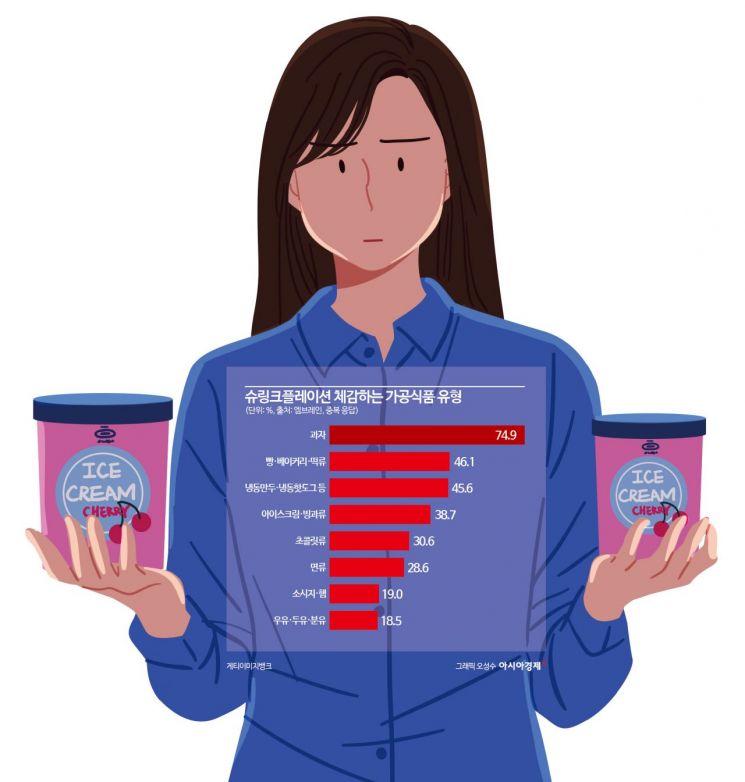
On the 20th, market research firm Embrain conducted a survey on the perception of ‘Shrinkflation & Stealthflation’ among 1,000 adults aged 19 to 59 nationwide. The results showed that 82.6% of respondents felt that shrinkflation has further increased the burden of grocery prices.
Among processed foods where the shrinkflation phenomenon is most felt, 74.9% of respondents pointed to snacks such as potato chips and biscuits, followed by bakery products and rice cakes (46.1%), frozen foods (45.6%), ice cream and frozen desserts (38.7%), and chocolates (30.6%).
Generally, many respondents reported recognizing shrinkflation by ‘directly comparing with previous purchase history (56.3%)’ or ‘noticing changes in quantity and size on the product (39.2%)’. However, a large majority of 86.1% said that shrinkflation involving reducing the content of raw materials in products is particularly difficult for consumers to detect.
For this reason, seeing products with reduced size or volume without prior notice makes consumers angry (81.6%), and there is a strong perception that this is a deceptive act toward consumers (76.6%), confirming a significant level of rejection toward shrinkflation. Notably, respondents showed a tendency to trust products more if changes in size and volume are explicitly indicated on the packaging (87.0%).
As rejection of shrinkflation spreads, consumers are also paying more attention when purchasing products. Two out of three respondents said they have recently been checking product volume (67.9%) or packaging information (64.1%) more often before buying, and 73.9% said they intend to check volume and packaging more carefully in the future.
In particular, there was strong support for making it mandatory to notify consumers when product size or volume changes (89.4%) and for more active monitoring by organizations such as the Korea Consumer Agency (85.3%), indicating a growing need for proactive government regulation. In fact, a significant portion of respondents (65.2%) believe that shrinkflation can be sufficiently improved with active government intervention, suggesting the necessity for continuous and effective measures to protect consumers going forward.
Meanwhile, regarding ‘Stealthflation’?charging for services and products that were previously free?72.9% of respondents overwhelmingly identified the ‘dining out and franchise’ sector as the most prominent. Common experiences included being charged delivery fees for services that were previously free, paying for chicken radish or pickles that were once complimentary at franchise stores, and being charged packaging fees for takeout at restaurants.
As experiences of stealthflation in the dining industry increase, most respondents indicated that even if they use the stores, they would choose alternatives that do not require additional payments. Conversely, when restaurants charged seat fees or when cashiers or staff at places that usually do not accept tips requested them, most respondents said they would refuse to pay and instead patronize other establishments, showing a sensitive reaction to stealthflation phenomena.
© The Asia Business Daily(www.asiae.co.kr). All rights reserved.
![Clutching a Stolen Dior Bag, Saying "I Hate Being Poor but Real"... The Grotesque Con of a "Human Knockoff" [Slate]](https://cwcontent.asiae.co.kr/asiaresize/183/2026021902243444107_1771435474.jpg)
















