Kakao Pay Linked with Samsung Pay and Zero Pay
Naver Pay Collaborates with Samsung Pay and BC Card
Latecomer Toss Plans to Continuously Discover Payment Partners
"Will Secure Offline Presence and Enjoy Lock-in Effect"
The competition among the three major simple payment services (Naver Pay, Kakao Pay, and Toss) is fierce in the offline payment market. Their strategy is to target the offline market, which is larger than the online payment market, and ultimately establish themselves as mobile financial platforms.

According to the financial industry on the 20th, Kakao Pay started linking with Samsung Pay and Zero Pay from the 17th. Kakao Pay users can now use the simple payment service at 1 million domestic online and offline affiliated stores owned by Kakao Pay, 3 million Samsung Pay payment locations, and 1.1 million Zero Pay small business affiliated stores. By partnering with Samsung Pay and Zero Pay, which have broadly secured affiliated stores including small business shops, the offline usability has been enhanced.
Since targeting the offline market in 2018, Kakao Pay has expanded its presence through collaboration with payment platforms such as POS companies and kiosk providers. In 2022, it made a strategic equity investment in OKPOS, the largest POS company in Korea, expanding its offline payment network. Last month, it signed a strategic partnership agreement with Beaver Works, a kiosk solution provider.
Naver Pay, which officially entered the offline market in November 2020, partnered with card companies and payment service providers. By payment method, QR codes were linked with BC Card, and Magnetic Secure Transmission (MST) was cooperated with Samsung Pay. Especially after introducing Samsung Pay for on-site payments in April last year, the on-site payment amount via Samsung Pay within Naver Pay surged by 196% in one year. The total offline payment amount of Naver Pay also grew rapidly, and the first quarter of this year is expected to exceed 2 trillion won for the first time.
On the 18th, Naver Pay launched the ‘QR Remittance’ service to enable convenient payments even at small businesses such as markets or street vendors. This service is explained to eliminate the hassle of guiding or entering account numbers in busy business sites and prevent confusion caused by mistaken remittances due to incorrect account number input.
Toss Pay started its offline payment service in July last year through a partnership with BGF Retail. Last month, it expanded the service to allow payments at baseball stadiums of SSG Landers and Hanwha Eagles through collaboration. As a latecomer, Toss plans to continuously discover various payment locations such as convenience stores, food and beverage outlets, and gas stations.
All three simple payment companies utilize the global simple payment network ‘Alipay Plus (+)’ for overseas payment services. Additionally, Naver Pay, which cooperates with BC Card and Visa Card, is leading by securing service-linked countries in 64 countries. Kakao Pay and Toss have secured about 50 countries.
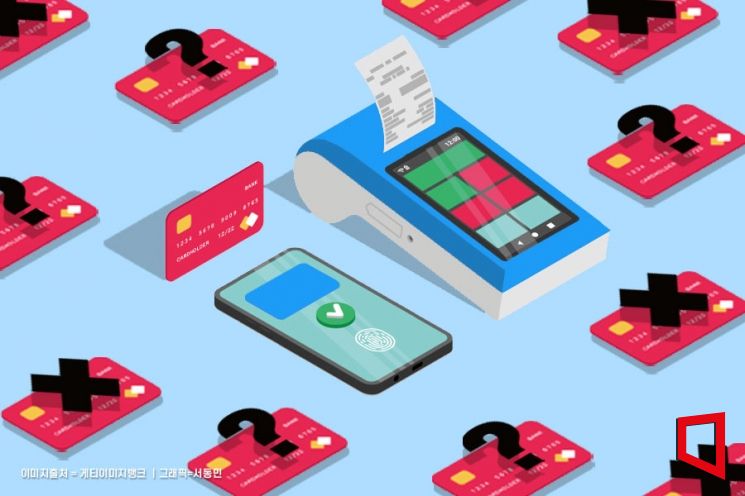
They appear to be turning their attention to the larger offline market as the online simple payment market stabilizes. According to Statistics Korea’s ‘December 2023 and Annual Online Shopping Trends,’ the proportion of online shopping transactions in retail sales last year was only 25.5%. The total retail sales exceeded 635 trillion won, with online commerce accounting for about 161 trillion won. The remaining 474 trillion won exists in the offline market. The offline market still has great potential as the spread of simple payments is not yet widespread.
There is also analysis that this is a step toward the ultimate goal of simple payment companies: becoming mobile financial platforms. The ‘lock-in’ strategy is to attract users with fast and convenient online and offline payment services and then connect them to their own financial services. A representative from the simple payment industry explained, “In fact, payment and remittance services do not generate profits,” adding, “They envision a structure that earns profits by connecting users to financial services such as savings and funds.”
© The Asia Business Daily(www.asiae.co.kr). All rights reserved.
![Clutching a Stolen Dior Bag, Saying "I Hate Being Poor but Real"... The Grotesque Con of a "Human Knockoff" [Slate]](https://cwcontent.asiae.co.kr/asiaresize/183/2026021902243444107_1771435474.jpg)















