Professor Lee Soo-hyung of Seoul National University Graduate School of International Studies and Kim Jong-hwa, President of the Busan International Finance Promotion Agency, were recommended for the next Financial Monetary Committee member positions.
On the 19th, the Bank of Korea announced that the Ministry of Economy and Finance recommended Professor Lee Soo-hyung of Seoul National University Graduate School of International Studies, and the Korea Chamber of Commerce and Industry recommended Kim Jong-hwa, President of the Busan International Finance Promotion Agency, as monetary policy committee members who decide the Bank of Korea's monetary policy. The two will succeed members Cho Yoon-je and Seo Young-kyung, who retire on the 20th.

Professor Lee was born in 1975. This year, the Bank of Korea has been advancing executives born in the 1970s, and with the retirement of Seo Young-kyung, the only female monetary policy committee member, there had been many expectations that a professor with the keywords 'female' and 'born in the 1970s' would be appointed, which has now materialized.
After graduating from Seoul National University with a degree in International Economics, Professor Lee passed the 42nd Administrative Examination as the runner-up and entered public service, staying at the Ministry of Economy and Finance. For seven years, he mainly honed his skills in the International Finance Bureau, then went to the United States to earn his master's and doctoral degrees at Stanford University. He subsequently served as a professor at the University of Maryland and Sogang University before becoming a professor at Seoul National University.
He was in charge of international negotiations such as the Group of Twenty (G20) meetings and the Doha Round of the World Trade Organization (WTO) while at the Ministry of Economy and Finance. He also served as a consultant for international organizations such as the World Bank (WB) and the Asian Development Bank (ADB).
An expert in 'Applied Econometrics,' Professor Lee published papers on the economic effects of plastic surgery and the impact of search costs on inequality in university admissions while in the United States. Last year, he published a book titled To the Parents of Korea, which argued that the purpose of education should shift from university entrance exams to finding a career path.
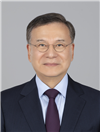
Born in 1959, President Kim served as Deputy Governor during the tenure of former Governor Kim Choong-soo. He graduated from Seoul National University with a degree in Economics and joined the Bank of Korea in 1982, working as head of the Market Operations Team, Director of the International Department, and Deputy Governor. After leaving the Bank of Korea, he served as President of the Korea Financial Telecommunications and Clearings Institute. He is regarded as a figure deeply involved in the formulation of monetary and foreign exchange policies at the Bank of Korea and is recognized for his operational expertise. During the 2008 global financial crisis, he contributed to swiftly supplying liquidity to the market through open market operations.
The Korea Chamber of Commerce and Industry stated the reason for the recommendation as follows: "It is expected that he will greatly contribute to the effective execution of monetary policy by appropriately responding to changes in domestic and international economic conditions, demonstrating outstanding expertise as a financial expert."
© The Asia Business Daily(www.asiae.co.kr). All rights reserved.
![Clutching a Stolen Dior Bag, Saying "I Hate Being Poor but Real"... The Grotesque Con of a "Human Knockoff" [Slate]](https://cwcontent.asiae.co.kr/asiaresize/183/2026021902243444107_1771435474.jpg)














