Trade Act Section 301, Possible Tariff Bomb on China
Up to 25% Tariffs During Trump Administration
Catherine Tai, the United States Trade Representative (USTR), reaffirmed a tough stance on U.S. trade policy toward China on the 16th (local time), suggesting the revival of the high tariffs on China that were used during the Trump administration.
At a hearing of the U.S. House Ways and Means Committee that day, Representative Tai stated, "We have witnessed for years how China's uncontrolled non-market policies and actions have adversely affected the United States across a wide range of sectors including steel, aluminum, solar power, batteries, electric vehicles, and critical minerals," emphasizing, "Trade measures commensurate with these unfair practices are being prepared."
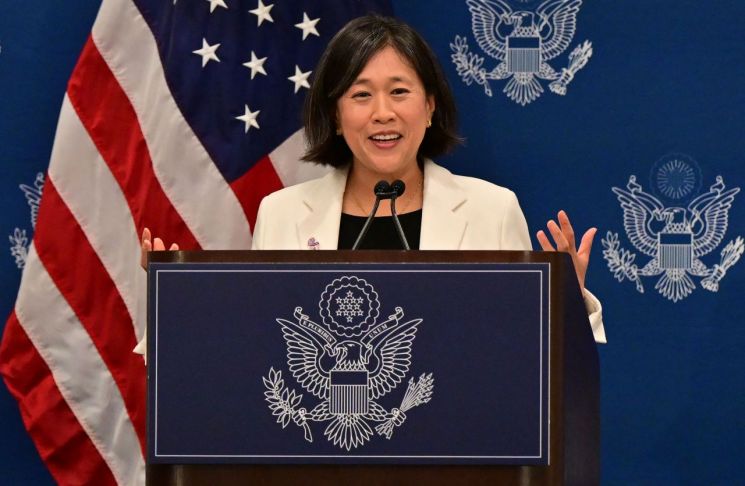
She added, "Over the past four years, we have been reviewing the application of Section 301 of the Trade Act against China, and we are considering tariff measures that can strategically and effectively respond to various harms, including China's forced technology transfers such as hacking."
In her prepared remarks submitted prior to the hearing, Tai also criticized China's trade and economic policies, stating that they "create dependencies and vulnerabilities in multiple areas, harm American workers and businesses, and put our supply chains at risk." She further noted, "We are carefully reviewing petitions from the U.S. labor sector to initiate new investigations under Section 301 of the Trade Act."
Section 301 of the U.S. Trade Act allows for retaliatory measures when unfair trade practices by a trading partner restrict U.S. trade. In the past, the Trump administration invoked Section 301 in 2018 to impose high tariffs of up to 25% on hundreds of billions of dollars worth of Chinese imports. The Biden administration is reportedly finalizing its review on whether to renew these high tariff measures.
U.S. protectionism is expected to be a key issue in the upcoming November presidential election. Currently, U.S. industries, labor unions, and political circles are demanding tariff increases under Section 301 on a broad range of Chinese industries including electric vehicles and shipbuilding. Recently, Democratic U.S. senators have also called for investigations into China’s shipbuilding and shipping industries.
In response, the USTR is reportedly considering whether to initiate an investigation into China’s shipbuilding industry. However, Representative Tai stated, "The economic relationship between China and us is complex," adding, "As President Biden has said, we want genuine competition with China, not conflict." She continued, "Reducing dependencies and vulnerabilities on trading partners and strengthening supply chains are the main priorities for USTR this year."
© The Asia Business Daily(www.asiae.co.kr). All rights reserved.
![Clutching a Stolen Dior Bag, Saying "I Hate Being Poor but Real"... The Grotesque Con of a "Human Knockoff" [Slate]](https://cwcontent.asiae.co.kr/asiaresize/183/2026021902243444107_1771435474.jpg)















