The concrete outline of Gwangsan-gu, Gwangju Metropolitan City's job innovation experiment to overcome complex and diverse social crises and create a better community has emerged. The core is social dialogue led by citizens. The key to sustainable jobs is for citizens to directly set the standards for good jobs, design models to realize them, and implement them.
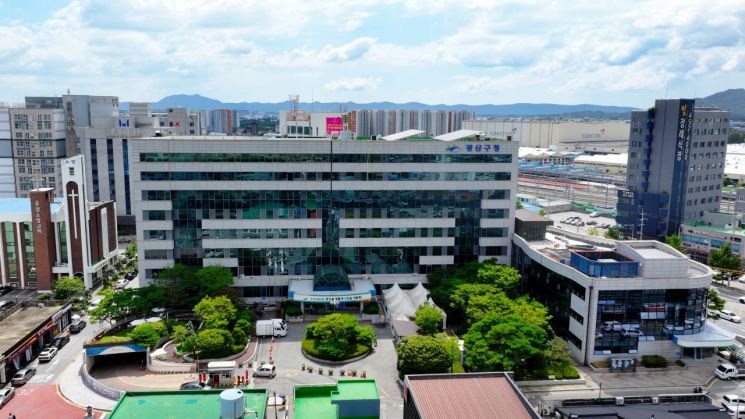
On the 17th, Gwangsan-gu, Gwangju Metropolitan City held the final report meeting for the research project on ‘Creating a Sustainable Job Special Zone in Gwangsan-gu’ at the Yunsangwon Hall in the government building. Attendees included Park Byung-gyu, head of Gwangsan-gu, Kim Tae-wan, chairman of the Gwangsan-gu Council, citizens who participated in the survey and in-depth interviews (FGI) for this research project, advisory committee members for the sustainable job special zone, related organizations, Gwangsan-gu labor-management-government council members, and collaboration departments related to sustainable jobs.
The project was conducted over eight months starting from August last year. The Industry-Academic Cooperation Foundation of Jeonbuk National University (lead researcher Professor Chae Jun-ho), which undertook the project, conducted a survey of about 1,800 people and focus group interviews with 23 stakeholders in jobs such as senior jobs, education, and manufacturing to analyze the industrial and labor environment of Gwangsan-gu and derive the necessity and reform models for sustainable jobs.
At the report meeting, explanations and discussions were held focusing on why sustainable jobs are necessary, why it is a basic local government and why Gwangsan-gu, and why Gwangsan-type social dialogue, presenting short- and mid-to-long-term detailed plans for creating the sustainable job special zone.
In the final report, the Industry-Academic Cooperation Foundation of Jeonbuk National University diagnosed, “To resolve complex crises and risks such as social inequality, climate crisis, and digital transformation and to realize a sustainable society, the solution must be found primarily in ‘jobs.’ The crisis of jobs, such as ‘growth without employment,’ is the most critical crisis and risk for the nation, companies, and citizens alike.”
They continued, “Therefore, to overcome the complex crises of the current era, creating quality jobs is the most urgent and effective method,” and stated, “Gwangsan-gu should attempt a new regional job model that goes one step beyond the existing Gwangju-type jobs.” The goal is to create a special zone that can be applied and expanded to all companies and industries in Gwangsan-gu without limiting to specific fields.
The most emphasized aspect of this project was the design of the Gwangsan-type social dialogue system, and the Industry-Academic Cooperation Foundation proposed a ‘Gwangsan-type social dialogue’ centered on citizens. The idea is that “job issues are not only problems for social elites or experts but must include even the small and low voices that have been marginalized until now.”
Specifically, they proposed to promote a tentative ‘Gwangsan Citizen Sustainable Job Grand Debate “Simun Sidap (市問市答)”’. They plan to recruit 100 members of a ‘Sustainable Job Discovery Group’ related to jobs in four sectors: manufacturing, private services, public services, and villages, and from July this year to June next year, conduct social dialogue in a ‘citizens ask and citizens answer’ manner to reach a social consensus on what ‘sustainable jobs’ are and how to create them.
Gwangsan-gu plans to prepare a promotion plan to actively advance the creation of the sustainable job special zone based on the final research report and the various opinions gathered at the report meeting.
© The Asia Business Daily(www.asiae.co.kr). All rights reserved.
![Clutching a Stolen Dior Bag, Saying "I Hate Being Poor but Real"... The Grotesque Con of a "Human Knockoff" [Slate]](https://cwcontent.asiae.co.kr/asiaresize/183/2026021902243444107_1771435474.jpg)















