Emart Merges with Emart Everyday
Likely to Adopt Integrated MD Strategy Like Lotte Shopping
Workforce Adjustments Alongside Restructuring
Emart is merging with Emart Everyday. The 'integrated Emart' plans to improve profitability by combining purchasing and logistics. Following the sudden dismissal of the CEO of Shinsegae Construction, which triggered Emart's first-ever consolidated operating loss last year, the company is also conducting a company-wide voluntary retirement program. Additionally, it is expected to accelerate restructuring by consolidating overlapping or underperforming businesses.
On the 16th, Emart and Emart Everyday each held board meetings and resolved to merge the two companies, announcing this decision publicly. The merger contract date is April 30, and after related announcements, opinions from shareholders and creditors will be gathered. The scheduled merger date is June 30, and once registration is completed on July 1, the integrated Emart entity will be launched.
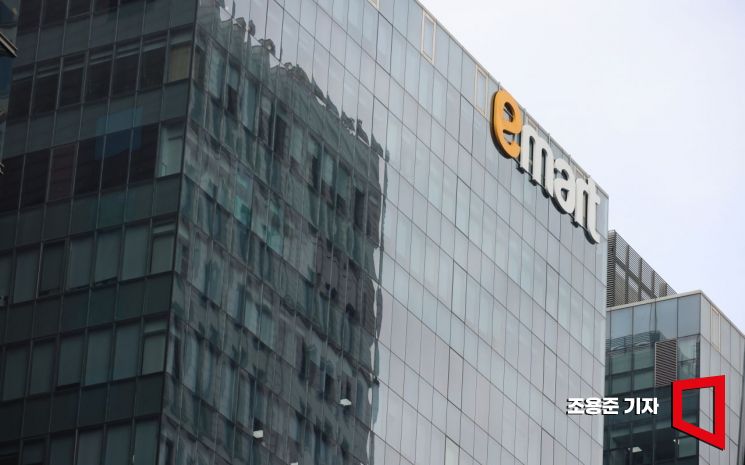
This merger is a measure to strengthen core business competitiveness and secure profitability, pursued since the appointment of CEO Han Chaeyang at Emart.
Shinsegae Group appointed CEO Han in September last year to concurrently lead Emart, Emart Everyday, and Emart24. Along with this, the product divisions of the three companies were reorganized into an integrated system. The retail industry anticipates that Emart’s move will follow a strategy similar to Lotte Shopping’s integrated merchandise planning (MD) approach. In 2021, Lotte Shopping’s CEO Kang Seonghyun concurrently managed Lotte Mart and its supermarket division, and from around November 2022, began integrating the two sectors, achieving increased buying power in the grocery segment.
The launch of the integrated Emart was already anticipated. Previously, in the fourth quarter of 2023, Emart announced in its investor relations (IR) that it would integrate the functions of its three offline companies: Emart, Emart Everyday, and Emart24. This was based on the judgment that the solution to difficult circumstances lies in strengthening the essence of 'offline.' At Emart’s regular shareholders’ meeting on the 28th of last month, Chairman of the shareholders’ meeting and head of Shinsegae Property Support Division Kang Seunghyup stated, "We will focus on Emart’s core business by securing competitiveness in products and pricing," adding, "We will jointly utilize the purchasing capabilities of the three offline companies to secure cost competitiveness and continue developing differentiated ultra-low-price products to strengthen core competitiveness."
The integrated Emart expects synergies from this merger. First, expanding the scale of purchasing can enhance cost competitiveness. In this regard, since February, Emart and Emart Everyday have been jointly selling some planned products under the ‘price reversal’ initiative, offering essential items such as food and daily necessities at ultra-low prices quarterly. This includes ‘Imatssal,’ one of Emart’s signature products.
Additionally, operational efficiency is expected through integrated logistics. By jointly utilizing the logistics centers owned by the two companies, products can be supplied more quickly. Logistics centers located in similar regions can also be consolidated to improve efficiency.
However, further organizational restructuring is inevitable. Since two organizations are becoming one, overlapping areas such as purchasing and logistics will inevitably see a reduction in personnel. Regarding this, the integrated Emart stated that it will lay the groundwork this year by reorganizing for integrated purchasing and will begin full-scale synergy creation from 2025 based on this foundation.
Currently, Emart is undergoing large-scale workforce reductions. For the first time in its 31-year history, Emart has introduced a company-wide voluntary retirement program targeting employees with more than 15 years of service. The aim is to improve profitability by reducing labor costs, which are the largest expense. Emart extended the voluntary retirement application deadline by one week, from the 12th to the 19th of this month, and added benefits such as special retirement pay, living support funds, job transition support funds, and a 10-year discount on Emart shopping after retirement in response to requests from those wishing to retire.
Organizational restructuring is also unavoidable. Mollis, a specialty store for pet products and services, is reducing the number of external specialty stores. Instead, business restructuring is underway to expand 'Mini Mollis,' which strengthens the assortment of pet products within Emart stores. The number of Mollis specialty stores decreased from 36 to 25, while Mini Mollis stores increased to about 100.
Emart is also closing golf specialty stores within its outlets due to declining profitability. So far, about ten golf specialty stores have been closed, and golf products are now sold in general sports stores. The spaces vacated by golf specialty stores are being renovated into other product stores with higher sales and efficiency.
Emart’s company-wide restructuring is due to deteriorating business conditions. Last year, Emart recorded a consolidated operating loss due to large deficits in its construction affiliate, marking a first since its founding. On a standalone basis, sales decreased by 2.1% year-on-year to KRW 16.55 trillion, and operating profit shrank by 27.4% to KRW 188 billion. Emart Everyday’s sales increased by 3.6% to KRW 1.3582 trillion, but operating profit shrank nearly 20% (19.31%) to KRW 18.8 billion. Researcher Park Jongryeol of Heungkuk Securities commented, "Emart is currently undergoing intensive restructuring and cost efficiency efforts," adding, "With improvements in standalone performance and major subsidiaries turning profitable, Emart is expected to start a turnaround in the first quarter."
© The Asia Business Daily(www.asiae.co.kr). All rights reserved.

















