WWF Announces Survey Results from 25,000 Participants
More than 8 out of 10 citizens worldwide believe that unnecessary single-use plastic items such as cups, chopsticks, plates, and shopping bags should be banned. Even more people think that the production of plastic itself should be reduced.
The World Wide Fund for Nature (WWF) commissioned the polling agency Ipsos to conduct a survey from August 25 to October 6 last year, targeting 24,727 citizens aged 16 to 74 across 32 countries, including South Korea, regarding the ban on single-use plastics. The survey was conducted by the Plastic Free Foundation through the polling company Ipsos.
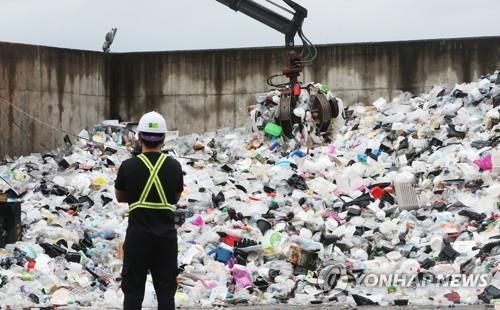
According to WWF, 9 out of 10 respondents consistently supported the need for a binding agreement to prevent plastic pollution.
Among the respondents, 85% said that single-use plastics, which account for more than 70% of marine plastic pollution, should be banned, and 87% expressed support for banning the use of non-recyclable plastic products.
Among the respondents, 87% emphasized that plastic manufacturers should be required to implement reuse and refill systems. Additionally, 84% said that the costs of reuse, recycling, and safe waste management should be borne by plastic manufacturers.
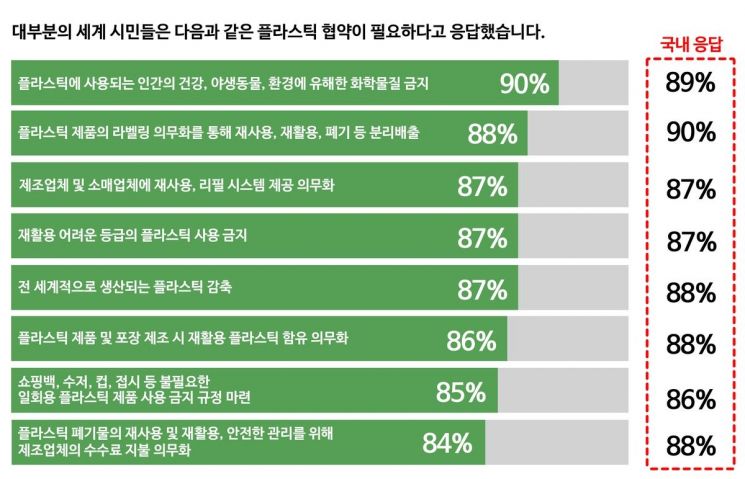
Furthermore, 86% of respondents said that recycled plastic must be included when producing new plastic products and packaging.
Park Min-hye, Secretary General of WWF Korea, stated, "The strong support from global citizens for a plastic agreement and their demand for government action have been confirmed," adding, "With the final negotiation meeting to be held in Busan, it is time for the South Korean government to show leadership."
The international community plans to establish a plastic agreement through five rounds of intergovernmental negotiations by the end of this year. The fourth meeting will be held in Canada on the 23rd of this month, and the final meeting will take place in Busan, South Korea, in November.
Meanwhile, one of the key issues in the international plastic agreement discussions is the reduction of plastic production. Countries seeking a strong agreement argue that production itself must be reduced, while opposing countries, including oil-producing nations, claim that the focus should be on waste management, including recycling. The petrochemical industry, which earns most of its profits from plastic production, has been lobbying by sending lobbyists to negotiation meetings to weaken the effectiveness of the agreement.
© The Asia Business Daily(www.asiae.co.kr). All rights reserved.
![Clutching a Stolen Dior Bag, Saying "I Hate Being Poor but Real"... The Grotesque Con of a "Human Knockoff" [Slate]](https://cwcontent.asiae.co.kr/asiaresize/183/2026021902243444107_1771435474.jpg)
















