Entry of Long-term Care Startup into Senior Housing Market
Caring Prepares CaringStay and CaringVillage
CareDoc Has Been Full-Scale Since Last Year...CareHome and CareStay
“Where will you live when you get older?” New options are emerging for this common concern. This is the change in the so-called “senior housing” market. Leading this change are startups engaged in long-term care businesses. These companies, which have led the digitalization of the offline-centered elderly care market, are recently expanding their business into the housing sector based on the senior care know-how they have built, in line with the government’s measures to revitalize senior welfare housing.
On the 17th, CareRing announced that it is preparing “CareRing Stay,” a new business concept for healthy aging, and “CareRing Village,” which combines housing and medical infrastructure. Both locations, planned to be launched in 2025, will operate based on the “Korean-style Unit Care” model announced by the government last March. Unit Care is a facility model that provides care services by creating private rooms and shared living spaces so that residents can live in an environment similar to home even in care facilities. For safety, CareRing will establish an integrated visiting nursing care center within the housing facility and operate 24-hour on-site nurses and professionals capable of responding to emergencies. Specifically, CareRing Stay will include nursing and medical support, care services, exercise and rehabilitation, physical therapy, meals, sleep management, and cognitive health. CareRing Village will specialize in severe care for long-term care grades 1 to 2.
To this end, CareRing recently signed a business agreement with real estate development company SDAMC for the development and operation of large-scale complex-type senior housing. SDAMC is participating in the development of the senior residence VL Le West, scheduled for completion in the Magok district of Seoul. The two companies plan to jointly participate in future senior housing development and supply public projects. Kim Tae-sung, CEO of CareRing, said, “CareRing plans to participate as a professional operator in the domestic senior housing business in line with the government’s measures to revitalize senior welfare housing.”
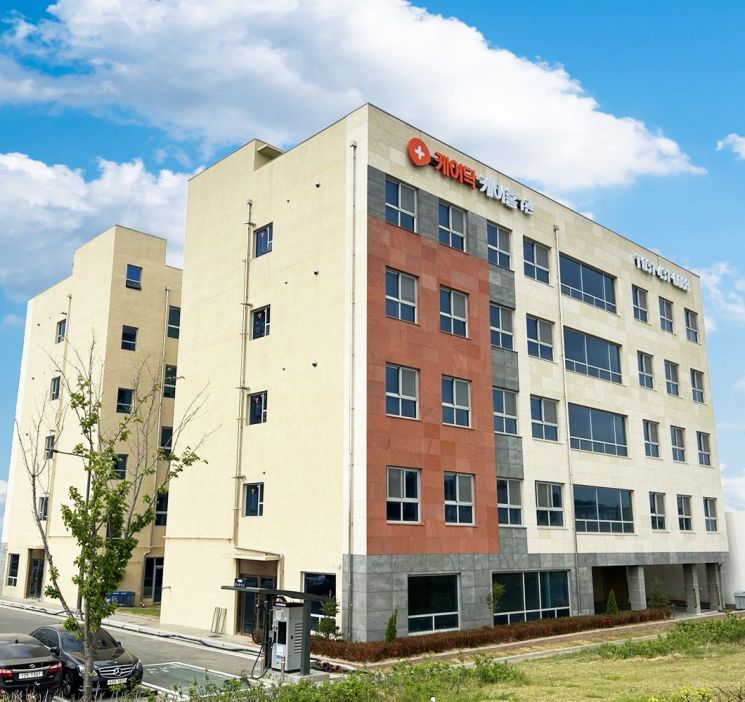
CareDoc, which ranks first and second in the long-term care sector along with CareRing, also began full-scale senior housing business last year. It has launched its own housing brands such as “CareDoc Care Home” and “Care Stay,” providing various types of residential welfare facilities. Care Home is a senior welfare housing where residents aged 60 and over live and enjoy their later years while receiving community services, and Care Stay is a short-term rental housing form for mid- to short-term outpatient treatment. CareDoc’s monthly sales in the housing business sector tripled in December last year compared to the beginning of the year, showing a steep growth trend. Contracts for occupancy at locations such as Baegot New Town, Songchu Forest, and Yongin The First are being signed rapidly. CareDoc plans to increase related facilities to 30 locations within the year and accommodate up to 2,000 seniors.
To supply various types of housing facilities, CareDoc plans to collaborate with Lotte Hotel, HDC I&Cons, Koreit Asset Management, SK D&D, Sun Engineering, STS Development, Zero to One, and others to create urban-type senior towns. It also plans to supply elderly housing in non-metropolitan areas such as Busan and Gyeongnam.
The reason long-term care startups are entering the senior housing market is that they can utilize their existing know-how and the growth potential is significant. The elderly population aged 65 and over is expected to exceed 10 million next year. Although local governments, hotels, and insurance companies are partially engaged in senior housing-related businesses, prices are too high or supply is far below demand. An industry insider said, “Domestic silver towns currently accommodate about 9,000 people, but considering the elderly population, only one out of every 1,100 seniors can use a silver town,” adding, “The elderly population continues to increase, but the domestic senior housing market is still in its early stages, so the growth potential is equally large.”
© The Asia Business Daily(www.asiae.co.kr). All rights reserved.
![Clutching a Stolen Dior Bag, Saying "I Hate Being Poor but Real"... The Grotesque Con of a "Human Knockoff" [Slate]](https://cwcontent.asiae.co.kr/asiaresize/183/2026021902243444107_1771435474.jpg)















