Interview with Former Chief Trade Negotiator Kim Jong-hoon
"I believe that a segmented and fragmented world will persist for a considerable period. In the future, it will be important to form supply chains by bringing together countries with similar political systems and shared perspectives, like the Fab4 (the semiconductor cooperation among the United States, Korea, Japan, and Taiwan)."
On the 16th, Kim Jong-hoon, former Director-General for Trade Negotiations at the Ministry of Foreign Affairs and Trade (now Ministry of Foreign Affairs), shared this advice with Asia Economy regarding the intensifying US-China semiconductor hegemony competition and the recently changing diplomatic and trade environment.
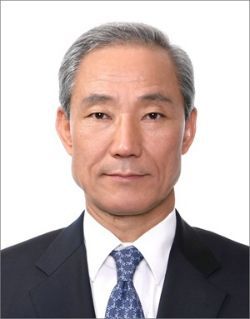 Jonghoon Kim, Former Chief Negotiator for Trade /
 [Photo by Jonghoon Kim]
Even for him, an expert who has observed international affairs for decades, the recent turbulent flow of the international community appears unfamiliar rather than familiar. Kim explained that "I am experiencing an enormously significant change."
He said, "In the past, the major challenge was how we could ride the wave of globalization and open up markets. Now, with China's growth and the full-scale US-China conflict, the situation has changed dramatically within just a few years." He added, "Fragmentation, or segmentation and bloc formation, where countries with similar ideologies or value systems unite, has now firmly taken root."
Kim predicted that this phenomenon would last a long time. This is the background for why our government and companies find it difficult to maintain a foothold in both the US and China as in the past. He explained, "There is no need to antagonize China, but we must form appropriate relationships aligned with the bloc-based international order. It is necessary to respond with principles."
He also emphasized that the government must consider issues related to subsidies for advanced industries such as semiconductors, which have recently become a hot topic. Kim stressed, "In the geopolitical era, the government has many roles to play. There are no companies that transcend blocs, and ultimately, geopolitics is about relations between countries." This means that even if companies develop technology and enhance competitiveness individually, the overall direction of the nation and government has become more important than ever.
Regarding the situation where countries like the US, Japan, and China are rushing to provide large-scale subsidies to companies, he explained, "In the past, there was a call not to give subsidies, but now it has become a competition over who gives more." He continued, "We must do the same. Although there are concerns about preferential treatment for large corporations regarding subsidies, it is necessary under the current circumstances."
© The Asia Business Daily(www.asiae.co.kr). All rights reserved.
![Clutching a Stolen Dior Bag, Saying "I Hate Being Poor but Real"... The Grotesque Con of a "Human Knockoff" [Slate]](https://cwcontent.asiae.co.kr/asiaresize/183/2026021902243444107_1771435474.jpg)














