Korea Zinc, the largest shareholder of Yeongpung, will terminate the contract for handling sulfuric acid following the joint raw material purchasing and sales agreement. Yeongpung has begun preparing response measures, including legal action.
Korea Zinc announced on the 15th that it will terminate the 'Sulfuric Acid Handling Agency Contract' with Yeongpung, which expires at the end of June. Sulfuric acid is a byproduct generated during the zinc smelting process and is a highly toxic hazardous chemical.
Korea Zinc explained that the contract termination is due to reasons such as the disposal of some facilities caused by the aging of sulfuric acid management facilities, the need for additional investment for facility improvements, and the continuous increase in in-house production leading to insufficient space for company use.
Korea Zinc's Onsan Smelter operates 20 sulfuric acid tanks and processes 1.6 million tons of sulfuric acid annually, including 400,000 tons received from Yeongpung's Seokpo Smelter (as of 2023). From 2026, the subsidiary Kemco's 'All-in-One Nickel Smelter' is expected to start full-scale operations, producing an additional 185,000 tons of sulfuric acid annually.
Korea Zinc stated, "In addition to our own emissions, the additional external import of hazardous materials is increasing our social and economic burdens," adding, "The costs to safely convert these for industrial use are also considerable."
Furthermore, Korea Zinc said, "Considering the existing contract and the ongoing cooperative relationship between the two companies, we plan to mutually discuss providing Yeongpung with prior notice and a sufficient grace period to establish its own sulfuric acid management facilities, aside from the current method of processing through Donghae Port."
Korea Zinc also notified Yeongpung on the 9th of the termination of joint raw material purchasing and joint sales. Korea Zinc explained that due to difficulties in securing raw material volumes, increased incidental costs from having to purchase raw materials jointly at high prices, and intensified domestic competition with a surge in imports despite demand decline caused by the economic downturn, differentiated sales and marketing strategies by product are necessary.
Yeongpung stated that Korea Zinc's decision was "unilateral" and that it plans to prepare response measures.
A Yeongpung official said, "Korea Zinc is handling the storage and handling of sulfuric acid, and if Korea Zinc cannot handle sulfuric acid, zinc production will inevitably decrease," adding, "There is not enough time to secure our own storage facilities, and with the recent suspension of joint sales, we will broadly review ways to minimize damage."
The official also pointed out that there was no prior cooperation regarding the grace period following contract termination, and that it would be difficult to establish facilities independently by December, raising concerns about potential violations of the Fair Trade Act.
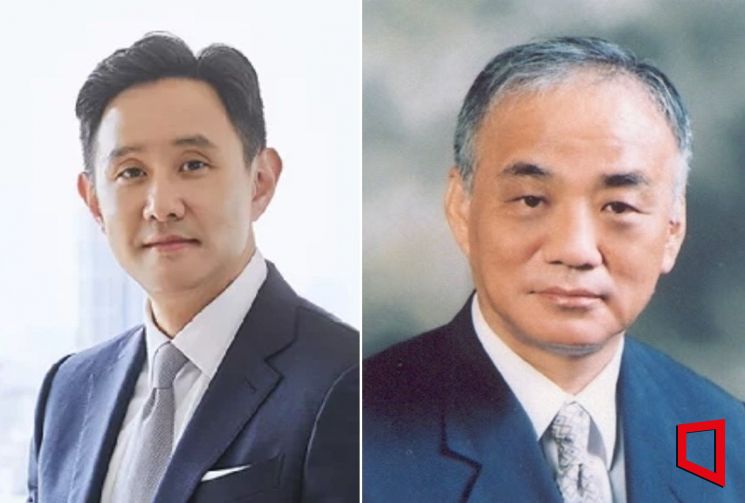
Meanwhile, Yeongpung and Korea Zinc have maintained a partnership for 75 years since their joint founding in 1949 by the late founders Ki-ho Choi and Byung-hee Jang. Currently, Korea Zinc is led by Chairman Yun-beom Choi, the third generation of the Choi family, while Yeongpung's Jang family second generation, Hyung-jin Jang, participates in the board as a non-executive director. Recently, conflicts between the owners surfaced when Yeongpung publicly opposed the amendments to the articles of incorporation and dividend proposals submitted by Korea Zinc's board at the shareholders' meeting.
© The Asia Business Daily(www.asiae.co.kr). All rights reserved.
![Clutching a Stolen Dior Bag, Saying "I Hate Being Poor but Real"... The Grotesque Con of a "Human Knockoff" [Slate]](https://cwcontent.asiae.co.kr/asiaresize/183/2026021902243444107_1771435474.jpg)















