Executive Meeting of Business Groups... Agenda on Middle East Crisis Response Raised
Oil Industry Faces Increased Crude Purchase Burden Due to Soaring Prices
Shipping Industry Alert to Potential Red Sea Risk Recurrence
Monitoring Impact on Israeli Semiconductor Companies' Operations
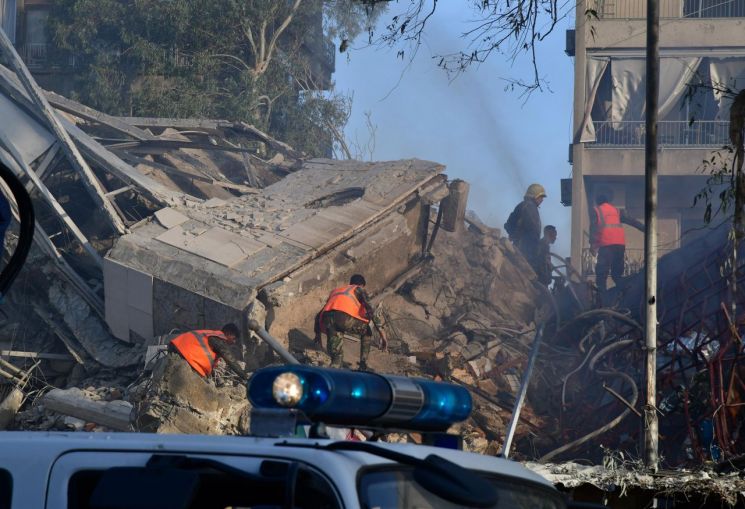
As the Middle East crisis causes fluctuations in international oil prices, exchange rates, and global stock markets, domestic companies are closely monitoring the situation. There are concerns that if the crisis prolongs, disruptions in oil supply and rising international oil prices could lead to increased raw material costs.
On the 15th, the day after Iran launched airstrikes against Israel, economic organizations representing companies moved urgently from the morning. According to the business community, the Korea Chamber of Commerce and Industry (KCCI) and others urgently placed the Middle East crisis response measures on the agenda at a scheduled executive meeting that day. It is reported that they discussed the trends and response directions of Korean companies amid the outbreak of war between Iran and Israel.
Kang Seok-gu, head of the KCCI Research Headquarters, analyzed, "Currently, the exchange rate and oil price trends are unstable," adding, "Just looking at these two factors, it appears that Iran's airstrikes on Israel are directly impacting corporate economics."
In particular, the oil industry, which could be most affected by the Iran-Israel war, is on high alert regarding supply conditions and price fluctuations. In the short term, rising oil prices may increase inventory profits, but if the conflict prolongs, economic contraction could lead to weak demand.
A representative from the Korea Petroleum Association said, "The Strait of Hormuz has not yet been blocked, and since the situation is still recent, we are monitoring oil supply and international oil price fluctuations," adding, "In the long term, profits may decrease due to demand contraction."
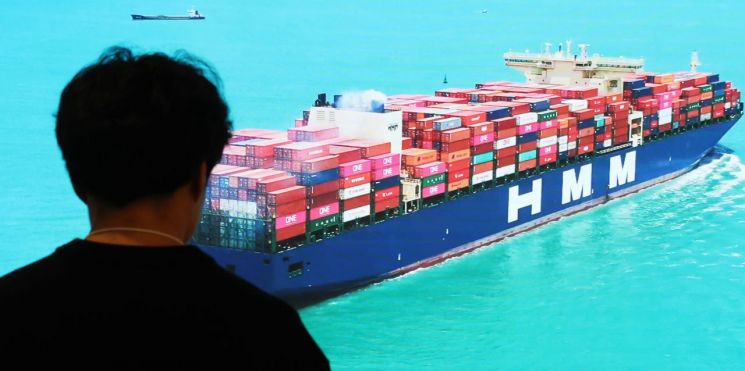
The shipping industry is also on high alert. Last December, the Yemeni Houthi rebels took control of the Suez Canal route, causing logistical delays. Ships are still unable to pass through the Suez Canal route and are detouring thousands of kilometers around the Cape of Good Hope at Africa’s southern tip. Currently, HMM, the largest domestic shipping company, is operating four container ships on Middle East routes. No ships are scheduled to enter the Strait of Hormuz this month. However, one bulk carrier is in operation, and the situation is being closely monitored.
The electronics industry is closely watching the supply chain of semiconductor manufacturing equipment imported from Israel. According to the Korea International Trade Association, semiconductor manufacturing equipment accounts for 26.2% of South Korea’s imports from Israel. Intel has research and development (R&D) centers in various locations including Jerusalem, Israel, and operates production facilities based on front-end processes in Kiryat Gat in the south. It produces major central processing units (CPUs) at Fab 28 and is constructing Fab 38, based on extreme ultraviolet (EUV) processes, with a goal to start operations this year.
Israeli foundry company Tower Semiconductor is also within the sphere of influence. Although its foundry market share is in the 1% range, it produces legacy semiconductors needed for automobiles, medical devices, and industrial equipment. Therefore, if factory operations are disrupted, it could partially affect the downstream market.
© The Asia Business Daily(www.asiae.co.kr). All rights reserved.
![Clutching a Stolen Dior Bag, Saying "I Hate Being Poor but Real"... The Grotesque Con of a "Human Knockoff" [Slate]](https://cwcontent.asiae.co.kr/asiaresize/183/2026021902243444107_1771435474.jpg)
















