As geopolitical risks originating from the Middle East intensify, a large number of U.S. corporate earnings reports, including those from major banks, are scheduled for release this week. Retail sales data and the Federal Reserve's (Fed) Beige Book, which provides insights into economic conditions, will also be published.
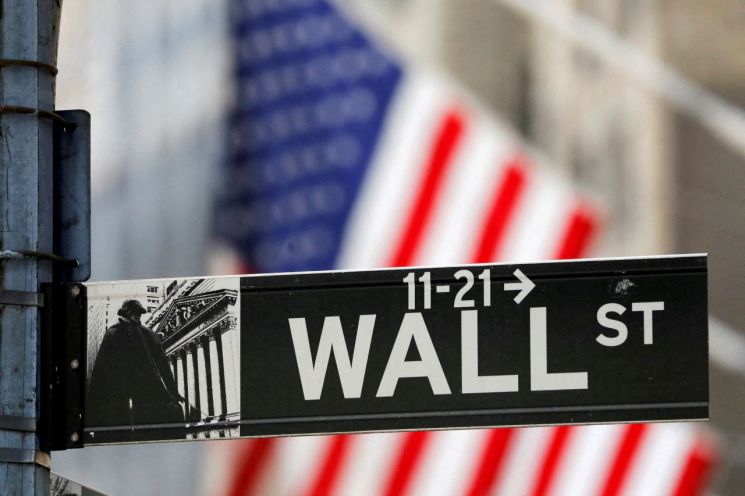
"S&P 500 Companies Expected to Show Three Consecutive Quarters of Growth"
According to economic media outlet CNBC on the 14th (local time), more than 35 S&P 500 companies are set to release their earnings this week. So far, about 30 S&P 500-listed companies have reported quarterly results, with approximately 80% surpassing Wall Street expectations. FactSet currently estimates that the net profits of S&P 500 companies for the first quarter increased by 3.4% year-over-year. If this holds true, it will mark three consecutive quarters of growth.
Notably, this week is packed with earnings announcements from major banks. Following the earnings season kickoff by the largest U.S. bank, JPMorgan Chase, Goldman Sachs will report on the 15th, and Bank of America (BoA) and Morgan Stanley will release their results on the 16th. Hedge fund Blackstone will also disclose its earnings this week. Earnings reports from small and regional banks such as M&T Bank, BNY Mellon, and KeyCorp are also scheduled.
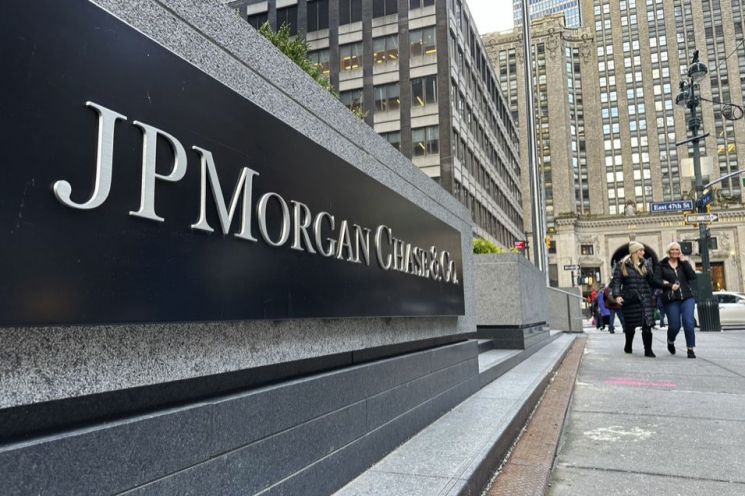 Ahead of this week's earnings announcements from major banks, JP Morgan, which disclosed its results on the 12th, showed a weaker stock performance as its net interest income forecast for this year fell short of Wall Street expectations.
 [Image source=AP Yonhap News]
The key issue is the outlook for net interest income that these banks will present amid expectations of a slowdown in interest income. JPMorgan, which released its earnings on the 12th, saw its stock price weaken after its net interest income forecast fell short of Wall Street expectations. CNBC reported, "Although the results were better than expected, concerns over net interest income pressured the stock price." The financial sector, which had greatly benefited from high interest rates through net interest margin (the difference between deposit and loan rates), is now expected to face a downturn.
Blue-chip companies such as UnitedHealth, United Airlines, Netflix, American Express, P&G, and TSMC will also announce their first-quarter earnings this week. CNBC reported that Netflix, the world's largest streaming service company, is expected to grow by more than 50% year-over-year. Jason Helfstein, an analyst at Oppenheimer, said, "Netflix's stock price has surged more than 27% this year, and this momentum could continue," expressing optimism about the impact of its ad-supported subscription service.
BlackRock stated, "With expectations for Fed rate cuts retreating, how this earnings season unfolds will have a more significant impact on the market rally." Earnings announcements from big tech companies, represented by the 'Magnificent 7,' will begin in earnest starting next week.
Retail Indicators and More to Be Released This Week... Concerns Over Escalation of Middle East Crisis Grow
With strong economic indicators dampening expectations for a rate cut in June, March retail sales and the Beige Book are also scheduled to be released this week. Investors are expected to seek hints about the Fed's monetary policy direction through these reports. March retail sales, which reflect U.S. consumer resilience, are forecasted to increase by 0.4% month-over-month. Wells Fargo assessed that "a meaningful slowdown is not expected to be confirmed." The International Monetary Fund (IMF) will also release its World Economic Outlook (WEO) on the 16th.

Especially as tensions between Iran and Israel escalated over the weekend, the possibility of an expanded Middle East crisis has emerged as a major market variable. Depending on whether Israel retaliates and the intensity of such actions, the overall impact on the market could be much greater. The involvement of groups such as Hezbollah and the Houthi rebels is also drawing attention. The Wall Street Journal (WSJ) reported that Israel is expected to respond as early as the 15th.
Mohamed El-Erian, senior advisor at Allianz Group and former CEO of the world's largest bond management firm PIMCO, wrote in a Bloomberg article titled "The Impact of the Middle East on the Global Economy and Markets" that "as trading resumes on Monday the 15th, the asset markets' reaction will be immediately evident," predicting that "rises in gold and oil prices, along with declines in stock markets and government bond yields, would not be surprising."
El-Erian pointed out, "With fiscal and monetary measures already excessively deployed and U.S. inflation remaining sticky, the threat of stagflation could increase," adding, "Energy price shocks will hinder manufacturing recovery, complicate U.S. inflation, challenge China's structural reforms, and strengthen financial fragmentation trends." He also stated in a post on his X (formerly Twitter) account, "What happens next will have a significant impact on the global economy, policy, and markets," diagnosing that the economic indicators released this week will be overshadowed and the Fed will face difficulties.
© The Asia Business Daily(www.asiae.co.kr). All rights reserved.
![Clutching a Stolen Dior Bag, Saying "I Hate Being Poor but Real"... The Grotesque Con of a "Human Knockoff" [Slate]](https://cwcontent.asiae.co.kr/asiaresize/183/2026021902243444107_1771435474.jpg)

















