The lawsuit filed by former Future United Party (predecessor of the People Power Party) leader Hwang Kyo-ahn's side, claiming that the 2022 June 1 local election for Gyeonggi Province governor was rigged and therefore invalid, was dismissed by the Supreme Court.
According to the legal community on the 15th, the Supreme Court's Special Division 1 (Presiding Justice Kim Seon-su) dismissed the lawsuit filed by Park Yoon-sung, Secretary General of the Anti-Election Fraud Group (led by Hwang Kyo-ahn), against the Chairman of the Gyeonggi Province Election Commission seeking to invalidate the gubernatorial election. Election invalidation lawsuits are handled by the Supreme Court as a single-instance trial.
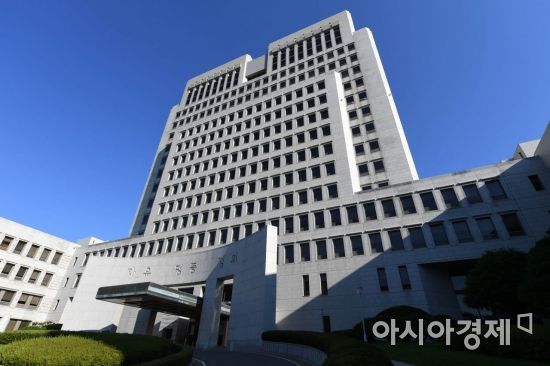
The court stated, "There is no fault on the part of the defendant in violating regulations related to the management and execution of election affairs in this case," adding, "Therefore, unless there is recognition of a 'violation of election-related regulations' that constitutes grounds for invalidating the election process in this case, the plaintiff's claim is without merit without further examination of whether this affected the election results."
Article 224 of the Public Official Election Act (Judgment of Election Invalidity, etc.) stipulates that "the election commission or the Supreme Court or High Court receiving a complaint or petition shall decide or rule on the invalidity of all or part of the election or the invalidity of election of a candidate only when it is recognized that the violation of election-related regulations affected the election results."
In other words, even if a violation of laws related to the election is recognized, an invalidation ruling for all or part of the election can only be made if such violation affected the election results. In this case, the Supreme Court judged that there was no violation of regulations itself.
Park filed a complaint with the Central Election Commission immediately after Kim Dong-yeon, the then Democratic Party candidate, was elected governor of Gyeonggi Province in the 2022 June 1 local election, claiming the election was invalid. After the complaint was dismissed, he filed a lawsuit.
In that election, Democratic Party candidate Kim Dong-yeon won with 2,827,593 votes, narrowly defeating People Power Party candidate Kim Eun-hye, who received 2,818,680 votes, by a margin of 8,913 votes.
In court, Park claimed that ▲ the early voting results were manipulated and ▲ ballots other than the official ones were used, rendering the election invalid.
Regarding the first claim, the court said, "The plaintiff argues that the video showing the operation of the ballot sorting machine filmed at the counting center, photos of ballots bundled in groups of 100 by candidate, and photos of ballots immediately after opening are evidence of forged ballots inserted by the defendant or staff affiliated with the defendant to manipulate the election results in this case," but added, "However, based solely on the evidence submitted by the plaintiff, it is difficult to recognize that the defendant or staff affiliated with the defendant inserted forged ballots in this election."
Regarding the ballots, Park raised issues with ▲ the use of early voting ballots printed with QR codes instead of the previous one-dimensional barcode in the form of a bar, and ▲ the issuance of ballots printed with a seal marked only "Early Voting Manager" instead of the personal seal of the early voting manager whose name was written.
Article 151, Paragraph 6 of the Public Official Election Act states that "the serial number printed on the ballot paper shall be displayed in the form of a barcode (meaning a bar-shaped symbol recognizable by a computer), and the barcode shall not contain any information other than the election name, electoral district name, name of the competent election commission, and serial number."
However, the court ruled on Park's first claim, "A QR code is a type of two-dimensional barcode, and simply printing a QR code on the early voting ballot does not violate Article 151, Paragraph 6 of the Public Official Election Act."
Regarding the second claim, the court stated, "The purpose of Article 158, Paragraph 3 of the Public Official Election Act, which requires the early voting manager to stamp their seal before issuing ballots, cannot be interpreted as requiring the early voting manager's name-engraved seal to be directly stamped on the early voting ballots, and the stamping can be substituted by printed stamping."
The court judged that the early voting manager instructing the election staff to print the early voting manager's seal was a lawful management and execution of election affairs in accordance with the Public Official Election Commission Rules, which allow the early voting manager to give instructions and supervise election staff in handling election management tasks.
© The Asia Business Daily(www.asiae.co.kr). All rights reserved.
![Clutching a Stolen Dior Bag, Saying "I Hate Being Poor but Real"... The Grotesque Con of a "Human Knockoff" [Slate]](https://cwcontent.asiae.co.kr/asiaresize/183/2026021902243444107_1771435474.jpg)















