Container Capacity to Reach 1.5 Million TEU by 2030
Bulk Carriers to Increase from 36 to 110 Vessels
Carbon Neutrality Target Advanced to 2045
HMM plans to double its fleet by 2030 and advance the achievement of carbon neutrality (net zero) by five years. This move aims to secure mid- to long-term competitiveness in response to the rapidly changing shipping environment, including the restructuring of shipping alliances.
On the 15th, HMM unveiled its "2030 Mid- to Long-Term Strategic Plan" containing these details. Amid growing uncertainties such as global economic slowdown, strengthened environmental regulations, and the restructuring and competition of shipping alliances, the company decided to strengthen its core business competitiveness and secure a stable business foundation. After establishing the mid- to long-term plan at the company level, the final details will be confirmed following external consulting.
According to the plan, HMM will significantly increase the number of vessels. For the container business, to respond to the global shipping alliance restructuring and strengthen the competitiveness of its core business, the current fleet capacity of 920,000 TEU (84 vessels, based on the year-end plan for this year) will be expanded to 1.5 million TEU (130 vessels) by 2030. Additionally, the company plans to increase market share through service network expansion and route diversification.
The bulk business will also be expanded. The fleet will grow from the current 6.3 million DWT (36 vessels) to 12.28 million DWT (110 vessels) by 2030. HMM plans to build a competitive fleet portfolio by vessel type and strengthen sales based on major domestic and international shippers. In line with service network expansion, the company will enhance logistics infrastructure by securing new terminals, diversifying revenue streams. The total number of container and bulk vessels, currently 120, is expected to double to 240 by 2030.
HMM will also expedite responses to environmental regulations. It is actively considering advancing the net zero achievement target to 2045 through orders for eco-friendly newbuild vessels and securing eco-friendly fuel supply chains. Furthermore, the company plans to secure future competitiveness by promoting digital transformation and developing new businesses.
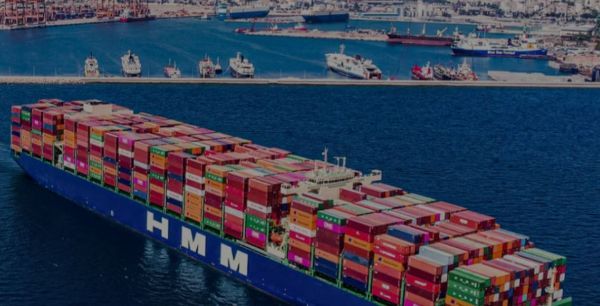
The reason HMM is expanding its scale is primarily to secure its presence in the restructured shipping alliances. Shipping alliances are systems where carriers operating specific routes share routes and negotiate freight rates collectively. The international shipping alliance, which had been maintained as a three-power system, is undergoing significant changes this year. Early this year, Maersk, the world's second-largest shipping company, parted ways with MSC, the largest. This was to form a new shipping alliance called the "Gemini Cooperation" with Germany's Hapag-Lloyd, ranked fifth globally, which had been part of the "THE Alliance" along with HMM.
Japan's ONE, also part of "THE Alliance" with HMM, is upgrading its scale. Last month, ONE announced plans to invest $35 billion (approximately 47.4 trillion KRW) over the next six years to increase its fleet capacity to a total of 3 million TEU. This is 700,000 TEU more than the target announced in 2022. Achieving this would elevate ONE to the world's fifth-largest level.
An industry insider explained, "Japan's ONE has shown its determination to have the capability to survive without a shipping alliance. Even if it does not survive independently, increasing its scale can give it an advantage in future shipping alliance restructuring negotiations."
HMM plans to announce detailed contents within the first half of the year after conducting consulting related to this "2030 Mid- to Long-Term Strategy." A company official said, "We will build a stable portfolio by expanding the bulk and integrated logistics businesses centered on the container business."
© The Asia Business Daily(www.asiae.co.kr). All rights reserved.
![Clutching a Stolen Dior Bag, Saying "I Hate Being Poor but Real"... The Grotesque Con of a "Human Knockoff" [Slate]](https://cwcontent.asiae.co.kr/asiaresize/183/2026021902243444107_1771435474.jpg)
















