Expert Group and 500 Citizen Representatives Participate
At a National Assembly forum on pension reform, positions clashed between those emphasizing 'financial stability' and those advocating for 'expanding retirement income security.'
The Public Deliberation Committee under the National Assembly Special Committee on Pension Reform held its first deliberative forum on the 13th, with experts and a delegation of 500 citizen representatives participating.
Kim Dohyung, a professor in the Department of Economics at Myongji University and an expert on financial stability, stated at the forum, "If the pension fund is depleted by 2055, the contribution rate will surge about threefold from the current 9% to 26%. It is projected to reach up to 35% thereafter, but is it fair for the younger generation to bear a contribution rate of over 30% for a 40% income replacement rate?" The income replacement rate refers to the ratio of pension benefits received relative to the average income during the pension contribution period.
Professor Kim added, "Experts supporting financial stabilization do not fundamentally oppose raising the income replacement rate. The problem is that to increase the income replacement rate sustainably, the contribution rate must be 25%, not 13%. I do not believe our people are willing to bear a 25% contribution rate."
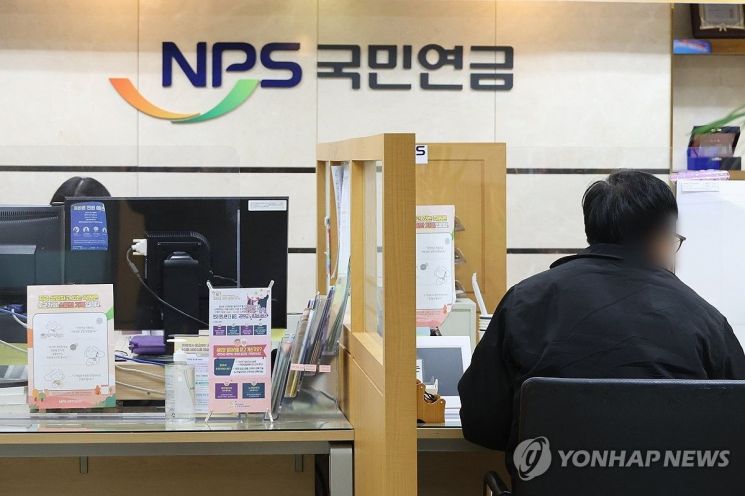
Seok Jaeun, a professor in the Department of Social Welfare at Hallym University, also said, "The pension must provide basic retirement security while remaining sustainable. The government is responsible for elderly poverty through other means such as the basic pension. It is also right that more resources should be allocated to the impoverished through the basic pension."
Yoon Hongsik, a professor in the Department of Social Welfare at Inha University and an expert advocating for retirement income security, argued, "An elderly poverty rate of 40% means a significant portion of our people could face poverty when they become elderly. A 50% income replacement rate for the National Pension is something an advanced country like South Korea can afford."
Professor Yoon stated, "Securing finances is very important and contribution rates should be raised, but they must be increased to a level that the current younger generation can bear. Raising them indiscriminately shows a poor understanding of the reality of people's lives. Pension contributions do not necessarily have to be levied only on wages; they can also be imposed on asset income, and the government's (financial) role can be expanded."
Jegal Hyunsuk, a professor in the Department of Social Welfare at Hanshin University, said, "The high elderly poverty rate in Korea is due to the low coverage of the National Pension. The National Pension is not a savings account but a social system that allows people aged 65 and over to use part of the social product."
Joo Hoyoung, chairman of the Pension Special Committee, promised, "We consider the opinions of the citizen delegation as the opinions of the people and regard them as the most important. We will do our best to legislate the pension reform bill within the term."
© The Asia Business Daily(www.asiae.co.kr). All rights reserved.
![Clutching a Stolen Dior Bag, Saying "I Hate Being Poor but Real"... The Grotesque Con of a "Human Knockoff" [Slate]](https://cwcontent.asiae.co.kr/asiaresize/183/2026021902243444107_1771435474.jpg)















