Seoul Metropolitan Area Apartment Prices Stable for 4 Consecutive Weeks
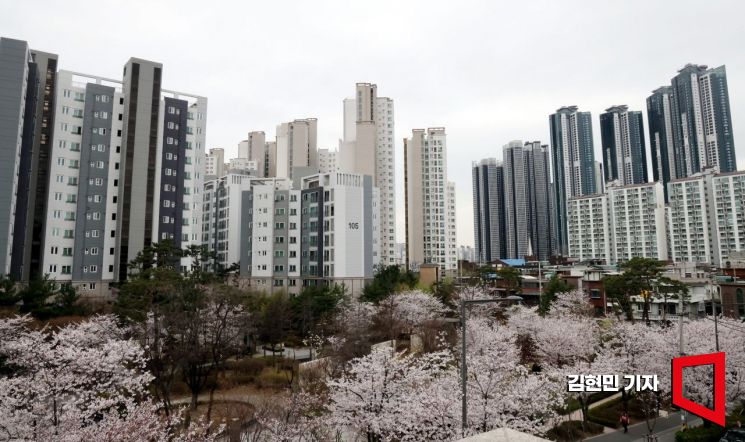
With the April 10 general election resulting in a landslide victory for the opposition party, the momentum for implementing policies announced through the January 10 measures is expected to weaken somewhat. According to Real Estate R114 on the 13th, this influence is likely to deepen the cautious atmosphere among demand groups regarding the recent intense price competition in the housing market. However, the rental market, which is more affected by supply and demand conditions or seasonal factors (moving season) than election issues, seems to be regaining an upward trend after a temporary pause last week.
Seoul apartment sale prices have remained flat (0.00%) for the fourth consecutive week. There were no significant price changes in both reconstruction and general apartments. New towns also recorded a flat trend (0.00%). In Gyeonggi and Incheon, the downward trend stopped in 2024, but from January, limited movements have been observed at a flat level for three consecutive months.
In Seoul, individual areas such as Guro (-0.02%), Yangcheon (-0.02%), Nowon (-0.01%), and Seongbuk (-0.01%) declined, while Songpa rose by 0.01%. The remaining areas stayed flat (0.00%). Among new towns, Pyeongchon fell by 0.01%, and other new towns showed limited price movements. In Gyeonggi and Incheon, most individual areas showed little movement, with Yangju dropping 0.04% and Ansan rising 0.01%.
The jeonse (long-term lease) market saw localized price increases as demand continued steadily amid a shortage of properties and the moving season effect. Seoul rose by 0.01%, turning upward from the previous week’s flat (0.00%), while new towns and Gyeonggi·Incheon remained flat (0.00%).
In Seoul, individual areas such as Nowon (0.05%), Seongbuk (0.03%), Mapo (0.03%), Yeongdeungpo (0.02%), Songpa (0.02%), and Seongdong (0.01%) increased, whereas Gangdong fell by 0.03%. Among new towns, Gwanggyo rose by 0.04%, while other areas remained flat (0.00%). In Gyeonggi and Incheon, Uijeongbu (0.02%) and Suwon (0.01%) rose, while other areas showed little price movement.
Real Estate R114 stated that major bills requiring parliamentary approval among the government’s real estate policies include tax reforms (covering transaction and holding taxes), rental business (Special Act on Private Rental Housing), the three rental laws, reconstruction and redevelopment (Urban and Residential Environment Improvement Act), and the Housing Act (mandatory residence, etc.), each of which could significantly impact the housing market.
They added, "In a situation where the opposition holds a majority, cooperation with the opposition party is essential to maintain the continuity of government policies. While some bills related to taxation may face difficulties due to issues like tax cuts for the wealthy, bills aimed at revitalizing reconstruction and redevelopment to activate urban supply are essential for securing quality rental housing and stabilizing the jeonse and monthly rent supply and demand, so continuous legislative revisions are expected to proceed."
© The Asia Business Daily(www.asiae.co.kr). All rights reserved.
![Clutching a Stolen Dior Bag, Saying "I Hate Being Poor but Real"... The Grotesque Con of a "Human Knockoff" [Slate]](https://cwcontent.asiae.co.kr/asiaresize/183/2026021902243444107_1771435474.jpg)















