Exposing Flaws in US Judicial System at the Time
Fall from American Football and Film Star to Murder Suspect
O. J. Simpson, who was a top running back in the 1970s American professional football (NFL) but fell from grace as a defendant accused of brutally murdering his divorced ex-wife, has died. On the 12th (local time), foreign media including CNN reported that Simpson recently passed away at the age of 76 after battling cancer.
Simpson was a football superstar in the 1970s and was greatly loved, even appearing in the movie series "The Bullet Man." As a Black man, his story of overcoming racial discrimination further propelled him to stardom. However, his life changed when his ex-wife and her boyfriend were found stabbed to death at their home in June 1994. He was immediately named a suspect.
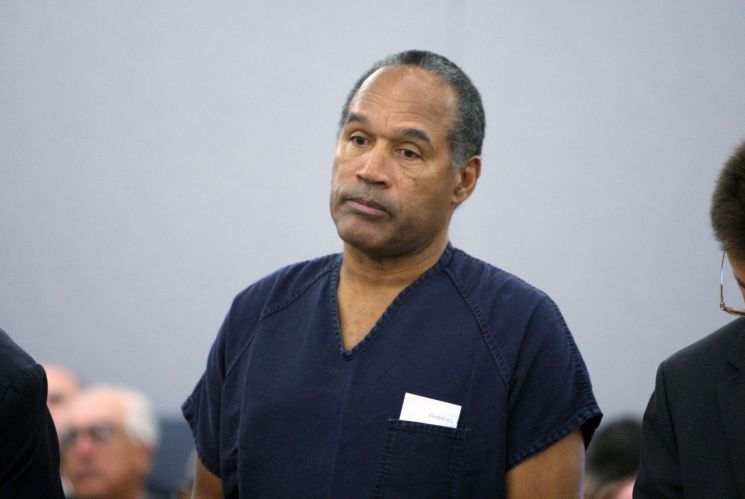 O. J. Simpson, who was a top running back in the 1970s in American professional football (NFL) but later became a defendant accused of brutally murdering his ex-wife, has died. On the 12th (local time), foreign media including CNN reported that Simpson passed away recently at the age of 76 after battling cancer.
 [Photo by AFP·Yonhap News]
Simpson, charged with murder, underwent what was called the "trial of the century" and after intense legal battles, was ultimately acquitted. Especially, Simpson, backed by a high-profile legal team, consistently denied the charges. Regarding the verdict, opinions in American society were divided along racial lines between Black and White communities, sparking widespread controversy. At the time, Black supporters viewed Simpson as a victim of law enforcement.
Above all, the Simpson case sparked debate not only in American society but worldwide about the criminal justice system known as the "jury system." Simpson’s defense team focused on the fact that 9 of the 12 jurors were Black, relentlessly highlighting the issue of "police racial discrimination." The jurors, composed of ordinary citizens, were easily swayed by the emotional tactics of the defense rather than the physical evidence before them. The New York Times at the time stated, "Despite substantial scientific and circumstantial evidence that Simpson was the perpetrator, the jury delivered a not guilty verdict," and assessed that "this trial left a stain on the judicial system."
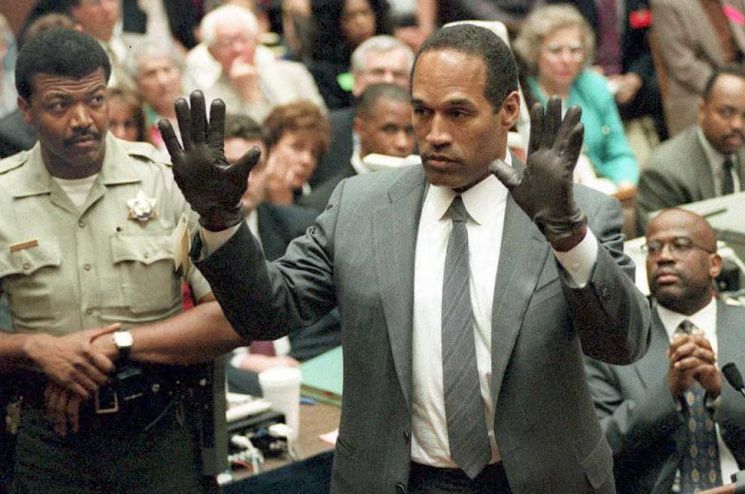 The glove presented as evidence by the prosecution in the trial became known as "the greatest legal mistake of the 20th century." The prosecution asked Simpson to try on the bloodstained glove found at the scene. They believed it fit perfectly and could confirm his guilt. However, during the trial, Simpson struggled to wear the glove, claiming it was too small.
 [Photo by AFP·Yonhap News]
Additionally, the glove evidence presented by the prosecution during the trial remains known as "the biggest legal mistake of the 20th century." The prosecution asked Simpson to try on a blood-stained glove found at the scene, believing that a perfect fit would confirm his guilt. However, during the trial, Simpson struggled to wear the glove, claiming it was too small. In a civil case separate from the criminal trial, Simpson was found liable, but he continued to assert his innocence. Although his assets were seized, he did not pay most of the damages awarded. Later, Simpson served nine years in prison for robbery and kidnapping offenses committed at a hotel.
© The Asia Business Daily(www.asiae.co.kr). All rights reserved.
![Clutching a Stolen Dior Bag, Saying "I Hate Being Poor but Real"... The Grotesque Con of a "Human Knockoff" [Slate]](https://cwcontent.asiae.co.kr/asiaresize/183/2026021902243444107_1771435474.jpg)

















