Ahead of the 19th Yeongyang Wild Vegetable Festival
The healthiest festival held in the most natural Yeongyang-gun, Gyeongbuk Province (Governor Odohchang), has firmly established itself as the representative festival of the Gyeongbuk region: the ‘Yeongyang Wild Vegetable Festival (May 9?12)’. Before the festival, let's learn about the wild vegetables that represent Yeongyang.
▲ A regular guest at the king’s royal table, Eosuri greens
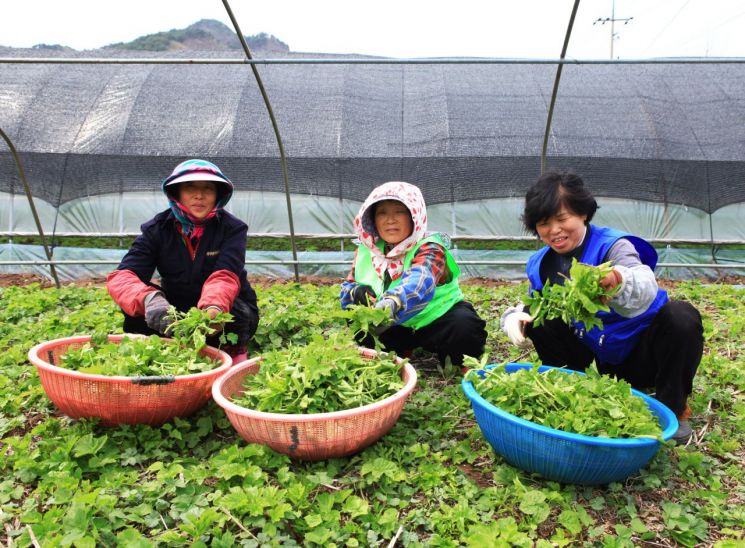
Mt. Ilwol in Yeongyang-gun, filled with pure energy, was historically famous for its abundance of Chunyang trees, but due to large-scale logging in the 1960s to 1980s, most of the large pine trees disappeared.
Taking their place is the wild vegetable called Eosuri. Growing naturally at high altitudes of 700?800m or more, Eosuri is referred to as ‘Wangsam’ in the Donguibogam (a traditional Korean medical book), known for purifying the blood and being effective against inflammation. It was also used as a medicinal herb and was served at the king’s royal table, receiving special treatment.
Sprouting under the snow during harsh winter in this pristine area, Eosuri carries a unique vitality and is the first to greet us in spring. Especially prized for its excellent aroma and tender texture, it has recently gained popularity as a well-being food. The Eosuri from the foothills of Mt. Ilwol is renowned nationwide for its rich taste and fragrance. When the main harvest season begins in April, orders can be backed up by one to two weeks, so those who want to welcome spring early are advised to place orders in advance.
▲ Blanched Deureup, Deureup, Deureup
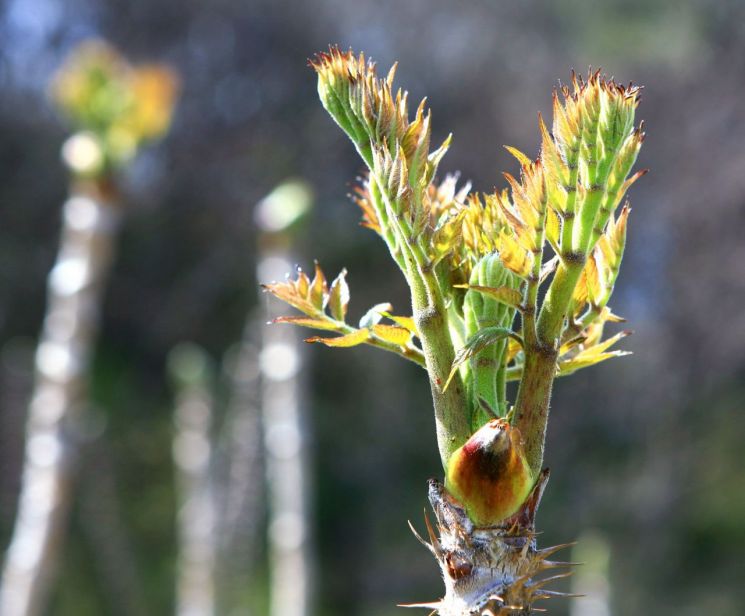
While the prefix ‘gae-’ often carries a negative connotation as in ‘gae-salgu’ (meaning ‘useless apricot’), ‘Gae-Deureup’ is different. Gae-Deureup, the young shoots of the Acanthopanax tree, has a slightly bitter taste with a strong aroma and is rich in vitamin C, vitamin B1, and calcium. It is highly valued for its medicinal effects and is considered the best among Deureup varieties. Because it is difficult to cultivate in greenhouses, most Gae-Deureup is wild-harvested and commands a higher price than other Deureup.
Cham-Deureup, which grows on the Deureup tree, contains carbohydrates, proteins, iron, potassium, phosphorus, and minerals, and is also rich in vitamins. Compared to Gae-Deureup, its aroma is milder, making it enjoyable for people of all ages. The essential oils in Deureup’s aroma, combined with calcium, help stabilize nerves and soothe the mind.
Containing chlorogenic acid, which helps prevent various adult diseases and promotes blood circulation, Deureup, when lightly blanched and dipped in chojang (spicy vinegar sauce), offers a luxurious taste of spring in your mouth.
▲ Gomchwi is love
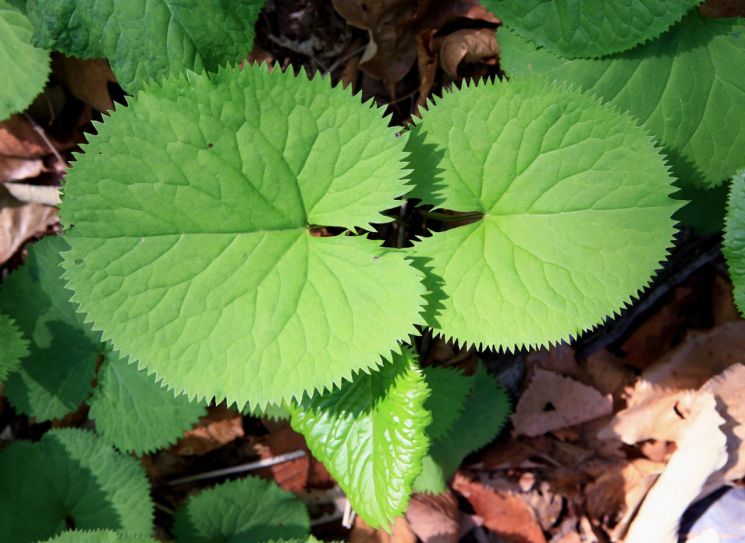
Gomchwi, resembling a heart shape, is an indispensable wild vegetable for spring wraps. Its slightly bitter taste is unmatched in cutting the greasiness of samgyeopsal (pork belly), a favorite among Koreans. Gomchwi is rich in protein, calcium, vitamin A, and vitamin C, and in China, it has been used as a medicinal herb for bruises, back pain, and hemoptysis.
To enjoy Gomchwi for a long time, pickling it as jangajji (soy sauce pickles) is a good method. When well-prepared Gomchwi is soaked in soy sauce, vinegar, and maesil-cheong (plum syrup), the bitterness is balanced with sweetness, allowing it to be enjoyed as a side dish for rice or a perfect companion to samgyeopsal for a long time.
▲ The pungent garlic scent spreading from the leaves, Sanmaneul (wild garlic)
Sanmaneul, a perennial plant belonging to the Allium genus, grows in high mountain areas. True to its name, it offers a subtle blend of chive and garlic aromas, allowing you to experience two scents at once. When eaten raw, it has a crisp texture and is mainly consumed as jangajji alongside meat.
The allicin in Sanmaneul activates vitamin B1 and has antibacterial effects, while lowering cholesterol, making it a perfect nutritional match with meat, not just in taste but also in nutrients.
Sanmaneul, which takes 4 to 5 years to mature for edible use, is a precious wild garlic that wilts quickly within a day after harvest, making it difficult to find fresh outside the production area. However, in Yeongyang, where Sanmaneul grows, you can try fresh Sanmaneul wraps that are hard to find elsewhere.
The healthiest festival where fragrant spring gathers, Yeongyang Wild Vegetable Festival
This year, the Yeongyang Wild Vegetable Festival will be held from May 9 to 12 in Yeongyang-eup and around Mt. Ilwol. You can find wild vegetables with great aroma and health benefits such as Eosuri, Deureup, Gomchwi, Sanmaneul, and Chwinamul all in one place, and even experience harvesting directly in the pristine Mt. Ilwol area (reservation period April 15?26).
During the festival, the Wild Vegetable Quality Management Committee will oversee the quality of wild vegetables sold throughout the venue, allowing you to purchase trustworthy wild vegetables transparently with price tags.
Besides the wild vegetable market, enjoy the Meat Square, special performances, and various experiential events filled with food, sights, and fun at the ‘19th Yeongyang Wild Vegetable Festival’ to welcome a ‘healthy spring’.
© The Asia Business Daily(www.asiae.co.kr). All rights reserved.
![Clutching a Stolen Dior Bag, Saying "I Hate Being Poor but Real"... The Grotesque Con of a "Human Knockoff" [Slate]](https://cwcontent.asiae.co.kr/asiaresize/183/2026021902243444107_1771435474.jpg)

















