Establishing Public-Private Partnership-Based Solitary Death Response and Support System for Comprehensive Welfare of Vulnerable Groups
Promoting 25 Projects in Four Key Areas: Risk Group Identification, Social Safety Net Construction, Expansion of Customized Service Linkage, and Strengthening Response Capacity
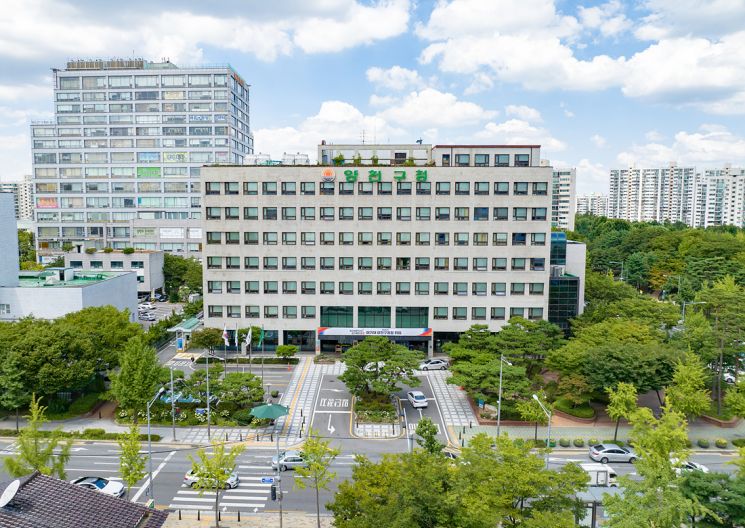
H, a person in their 60s living in Mok 3-dong, Yangcheon-gu, is a basic livelihood security recipient living alone. Suffering from asthma and chronic lung disease, they lived with a 24-hour oxygen respirator within a limited range of movement. One day, their condition suddenly worsened, putting them in critical condition. At this critical moment, the person who called 119 and accompanied H to the emergency room was none other than the ‘Yangcheon-gu Our Neighborhood Care Group,’ who contacted H for a regular check-in. Thanks to this, H was able to receive treatment within the golden hour and, after discharge, was able to return to daily life through temporary home care services provided by the district.
In this way, Yangcheon-gu (District Mayor Lee Gijae) announced that to implement robust welfare for the vulnerable, it has established the ‘Yangcheon-type Solitary Death Prevention and Socially Isolated Household Support Plan’ for this year, investing 3.9 billion KRW?an increase of 600 million KRW compared to last year?to promote 25 isolation prevention policies across four major areas.
Currently, over 32% of all households in Yangcheon-gu are single-person households, with 55.7% of them being middle-aged and older adults aged 50 and above. The number of people at risk of solitary death is rapidly increasing every year.
Accordingly, the district plans to strengthen its capacity to identify solitary death risk groups through this comprehensive solitary death countermeasure, establishing a seamless public-private cooperation support system utilizing advanced technology and local communities.
To this end, under the vision of ‘Yangcheon without worries of social isolation through dense connections,’ the district will promote 25 projects in four major areas: ▲strengthening the identification of solitary death risk groups and socially isolated households ▲building a social safety net using information and communication technology and local communities ▲expanding linkage and support services for solitary death prevention and socially isolated households ▲strengthening field response capabilities and public relations.
First, the identification of solitary death and isolated households will be strengthened. The ‘Together Finding Missing People on the 25th Day’ program, introduced last year with 13 cases identified, will continue this year. Welfare community leaders in 18 neighborhoods will focus on identifying households with accumulated mail during the monthly neighborhood leader meetings on the 25th, carefully detecting easily overlooked crisis signals. Additionally, the crisis information in the welfare blind spot detection system will be expanded from 39 to 45 types, focusing on identifying blind spot subjects through four tasks including surveys centered on single-person basic livelihood security recipients and crisis household investigations linked to moving-in reports.
Second, a social safety net will be built using information and communication technology and local communities. First, the ‘Together Finding Missing People Task Force,’ composed of about 1,000 local human resources such as workers in daily life industries, neighborhood community security councils, and neighborhood leaders, will be operated. Alongside this, seven projects will be promoted, including the ‘AI Phone Check-in Service,’ the ‘Smart Plug’ that detects dangerous situations through changes in power consumption and illumination, and the ‘Safety Management Solution’ that uses the Internet of Things (IoT) to monitor movement, humidity, and total volatile organic compounds in real-time for about 500 safety-vulnerable elderly households to check their well-being.
Third, linkage and support for solitary death and isolated household services will be expanded. Newly added this year are the ‘Yangcheon Banollim Side Dish Support Project (new),’ where socially isolated single-person households at risk of food insecurity regularly visit side dish stores to purchase side dishes and communicate with the local community, and the ‘Happy Bubble Visiting Laundry Service (new),’ which provides one-stop collection, washing, and delivery services for large laundry items to vulnerable groups.
In addition, the district operates the ‘Single-Person Household Support Center,’ which helps single-person households with counseling, education, leisure culture, and social network formation, and ‘Care SOS,’ where care managers assess welfare needs and provide ten major welfare services such as temporary home care, accompaniment support, and meal delivery. Furthermore, the ‘Youth Mental Health Voucher’ offers professional psychological counseling to youth preparing for independence and extended protection children to support emotional stability; the ‘Middle-Aged Single-Person Household Support Project’ supports leisure culture programs and human network building centered on five regional comprehensive social welfare centers; and the ‘Yangcheon-gu Welfare Counseling Center’ connects emergency welfare resources with a single phone call in crisis situations such as arrears or medical expenses. These 11 projects expand the support system.
Finally, field response capabilities and publicity for risk group identification will be strengthened. The district plans to operate ‘field-centered capacity-building training’ for welfare officials and residents to study response measures for each case. In the second half of the year, a ‘Solitary Death Prevention Pilot Project’ will be promoted, providing check-in items to managed subjects selected as solitary death risk groups. Additionally, the district will strengthen customized publicity for target groups and raise public awareness for solitary death prevention by distributing the ‘Welfare Informer Hope Notebook,’ which contains guidelines for detecting welfare blind spots and contact information for support agencies.
Lee Gijae, Mayor of Yangcheon-gu, said, “Preventing solitary death is important not only through the efforts of local governments and the state but also through the warm interest of citizens toward our neighbors and social awareness improvement.” He added, “Through this comprehensive policy based on local community solidarity and volunteer spirit, we will create a Yangcheon city where walking together with the vulnerable becomes a reality.”
© The Asia Business Daily(www.asiae.co.kr). All rights reserved.
![Clutching a Stolen Dior Bag, Saying "I Hate Being Poor but Real"... The Grotesque Con of a "Human Knockoff" [Slate]](https://cwcontent.asiae.co.kr/asiaresize/183/2026021902243444107_1771435474.jpg)
















